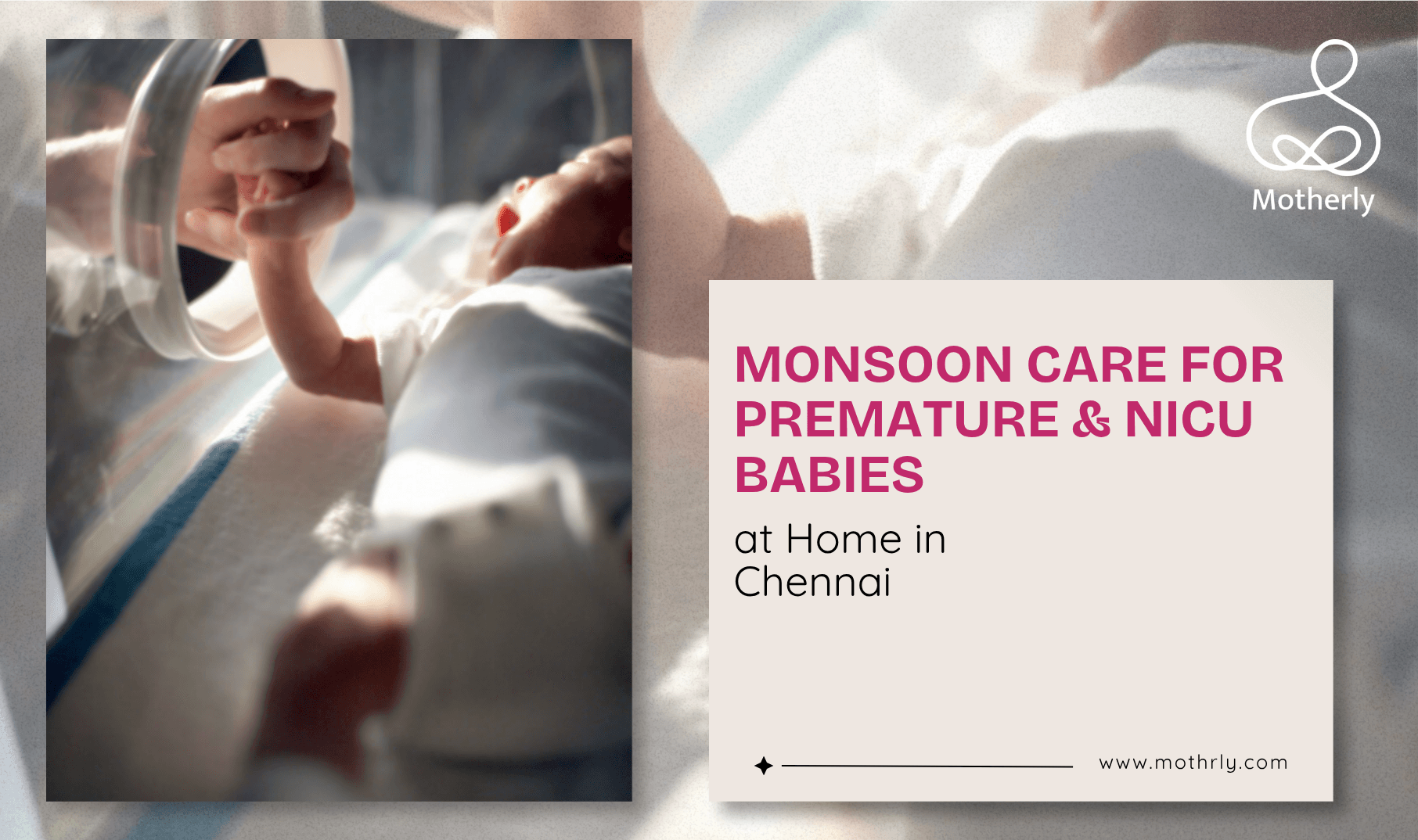
Monsoon Care for Premature & NICU Babies at Home in Chennai
August 29, 2026 · Motherly Clinical Team
Monsoon Care for Premature & NICU Babies at Home in Chennai
Reviewed by Mothrly’s Clinical Team — Obstetricians, Gynaecologists, Paediatricians & Postnatal Specialists | Evidence-based content for Chennai mothers
Chennai's monsoon brings sharp swings between humid heat and sudden cool, damp spells — exactly the instability that premature and NICU-graduate babies are least equipped to handle in their first months home. This guide covers what actually needs to change.
Premature and NICU-graduate babies need tighter temperature control, stricter infection precautions, and closer skin and feeding monitoring during monsoon than they do in drier months, because their immune systems and ability to regulate body temperature are still catching up. In Chennai, Motherly's NICU-trained baby care support at home puts a trained caregiver alongside your family through exactly this kind of higher-risk season.
Why Is Monsoon Riskier for Premature and NICU-Graduate Babies?
- Less body fat, making it harder to maintain body temperature as humidity and room temperature fluctuate
- An immature immune system, so common monsoon illnesses hit harder and faster than in a full-term baby
- More sensitive skin, which reacts more visibly to humidity, dampness, and prolonged nappy contact with moisture
- Smaller airways, making respiratory infections — more common in the rainy season — a bigger concern
This is why monsoon-specific precautions matter more for babies who came home via the NICU — see our guides to NICU Baby Care at Home in Chennai: What Happens After Discharge and Premature Baby Care at Home in Chennai: After NICU Discharge for the general discharge-period care model this builds on.
How Do You Manage Temperature and Humidity at Home?
What room temperature should you aim for?
A steady room temperature, generally around 24–26°C for a premature baby (or whatever your NICU discharge team recommended), matters more during monsoon because outdoor humidity swings can pull indoor temperature down faster than expected, especially at night.
How do you dress a premature baby for monsoon weather?
- Layer rather than relying on one thick garment
- Keep a cap on during cooler spells — babies lose a disproportionate amount of heat through the head
- Avoid damp clothing sitting against the skin — monsoon air keeps fabric from drying fully
- Use a room thermometer rather than judging by feel alone
| Monsoon Condition | Home Precaution |
|---|---|
| Sudden temperature drop | Layered clothing, consistent room temperature |
| High indoor humidity | Keep skin folds dry, use a dehumidifier if needed |
| Damp air, mould risk | Ventilate briefly on dry spells, check for damp walls |
| Visitors with monsoon colds/flu | Limit visitors during active illness in the household |
Temperature swings are exactly what NICU-trained home care is built to monitor.
What Changes About Infection Control During Monsoon?
- Handwashing before every handling, not just before feeds
- Limiting visitors during any active cold, flu, or stomach illness in the family
- Boiled or filtered water for anything that touches feeding equipment
- Watching for early signs of respiratory distress — fast breathing, flaring nostrils, or a persistent cough
If your baby is still within the first weeks home after a NICU stay, our guide to NICU Baby Care at Home in Chennai: What Happens After Discharge covers the general warning-sign and caregiver-support model in more depth.
What About Feeding and Skin Care in Humid Weather?
- Feed on the usual schedule your NICU or paediatrician set — reduced feeding interest is a sign to check in, not wait out
- Change nappies more frequently in humid weather to prevent trapped-moisture rash
- Pat skin folds (neck, underarms, groin) fully dry after any bath
- Keep a close eye on weight gain trends — monsoon illness can show up in slower weight gain before other symptoms are obvious
Mothers managing feeding for twins born early face an even tighter margin for error here — see our guide to Twin Baby Care at Home in Chennai: What Changes With Two for what changes when there are two babies to monitor at once.
When Should You Call for Help Immediately?
- Fast or laboured breathing, grunting, or visible chest retractions
- A fever, or a body temperature that's unusually low and not responding to warming
- Refusing feeds for more than one feeding cycle
- Unusual lethargy or difficulty waking for feeds
- Any rash that's spreading quickly or looks infected (pus, increasing redness, warmth)
A NICU-trained caregiver at home means someone is watching for these signs even when you need to rest.
Frequently Asked Questions
Is it safe to take a premature or NICU-graduate baby outdoors during monsoon?
Generally, it's best to limit outings to what's necessary in the early months. Ask your paediatrician when it's appropriate to start regular outings based on your baby's specific health history.
Does a humidifier or dehumidifier help more during Chennai's monsoon?
It depends on your home — very high indoor humidity can worsen skin and mould issues, while overly dry air from air conditioning can irritate airways. A room hygrometer and your paediatrician's guidance are more reliable than assuming either device is needed.
How is monsoon care different for a premature baby versus a full-term baby?
The precautions are similar in kind but matter more in degree — a full-term baby's immune system and temperature regulation can absorb more variation before it becomes a real risk.
Should visitors be limited more strictly during monsoon than other seasons?
Yes, particularly if anyone visiting has any cold, cough, fever, or stomach symptoms — a fragile baby has less capacity to fight off circulating monsoon illnesses.
For more on the weeks after NICU discharge, see our guides to NICU Baby Care at Home in Chennai: What Happens After Discharge and Premature Baby Care at Home in Chennai: After NICU Discharge, our companion piece on Joint Family Support for Twin or NICU Newborn Care at Home in Chennai, or browse the full Motherly blog.
Related Reading on the Motherly Blog
- NICU Baby Care at Home in Chennai: What Happens After Discharge
- Premature Baby Care at Home in Chennai: After NICU Discharge
- Twin Baby Care at Home in Chennai: What Changes With Two
- Joint Family Support for Twin or NICU Newborn Care at Home in Chennai
- Newborn Care Made Easier: What a Baby Care Specialist Does in Chennai
⚠ Medical Disclaimer
This article is written by Mothrly's clinical team for educational purposes only. It does not constitute medical advice and must not replace consultation with a qualified healthcare professional. Individual circumstances vary — always seek personalised guidance from your doctor, gynaecologist, paediatrician, or specialist.
You Deserve Proper Care Too — Not Just Your Baby
Book online or download the app to find your verified support specialist in Chennai.