Trying to Conceive
The IVF Cycle Failed. What Happens Now — to Your Body, to Your Relationship, and to Your Hope.
motherly·May 29, 2026
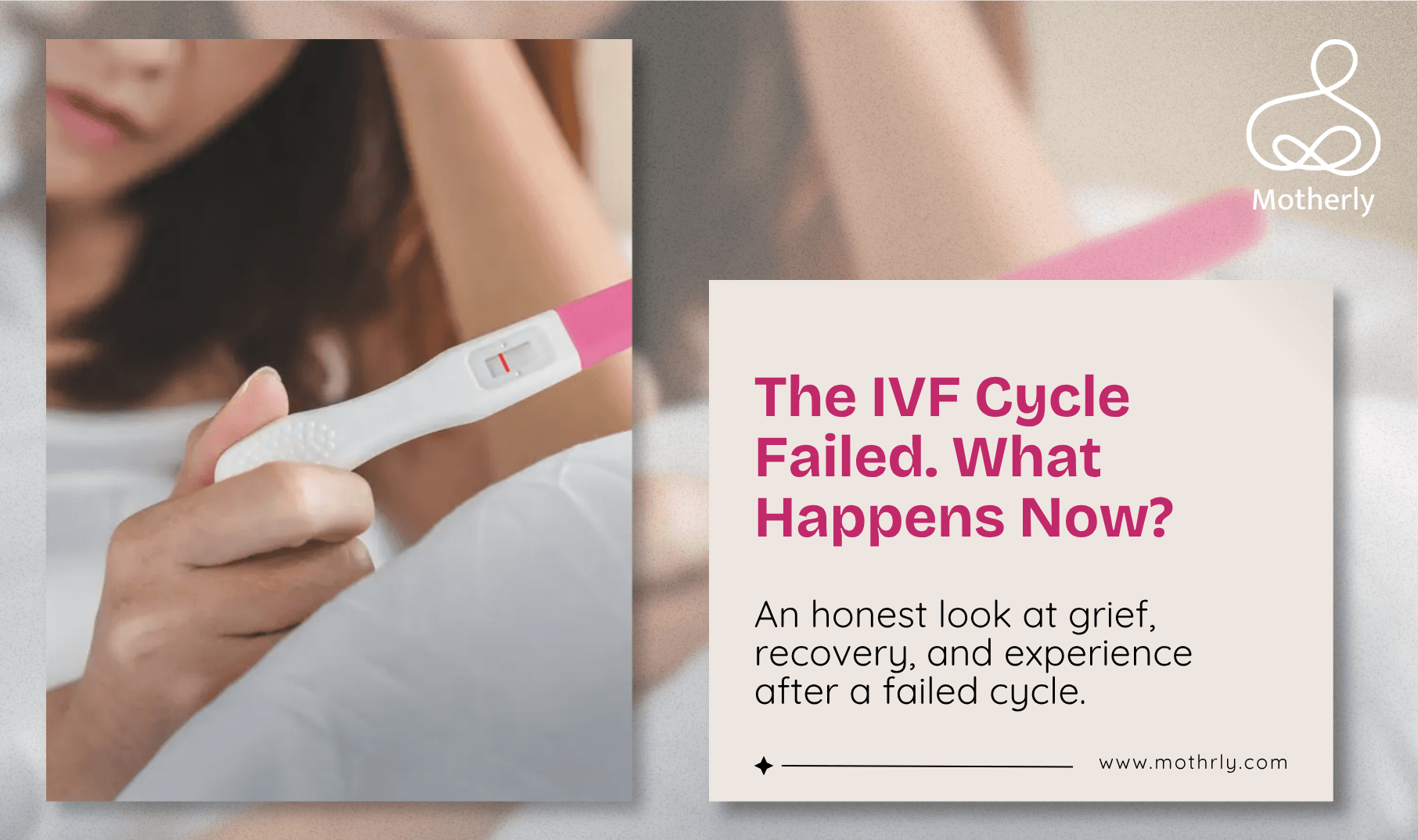
Motherly — A failed IVF cycle is a grief most people cannot see. There is no correct way to feel, and this is not the end of your story even when it feels like it might be.
The call comes, or the test shows, and in a single moment weeks of daily injections, early morning monitoring appointments, surgical egg retrieval, anxious waiting, and carefully constructed hope collapse into a result that the human heart is simply not designed to receive with equanimity. The IVF cycle failed. The embryo did not implant, or the pregnancy test was negative, or a pregnancy started and ended in the first weeks. The language of the result is clinical. The experience of it is devastation. If you are reading this in the immediate aftermath of that call, the first thing to know is that there is no correct way to feel and no timeline on which you are supposed to feel better. The second thing to know is that this is not the end of your story, even though right now it feels like it might be.
What happens to your body after a failed cycle
After a failed IVF cycle, the medications are stopped and the body begins to return to its baseline hormonal state. This process takes one to two weeks and is often accompanied by emotional volatility, physical symptoms including bloating, breast tenderness, and cramping, and the arrival of a period that many women find unexpectedly difficult to experience, not just physically but as a concrete marker of the loss. The physical recovery from a retrieval cycle is typically complete within two weeks. Most clinics recommend waiting one to three natural cycles before attempting another stimulated cycle, both for physical recovery and for the ovaries to return to baseline. Frozen embryo transfers, where frozen embryos from the previous cycle are being used, can often be planned sooner.
"The language of the result is clinical. The experience of it is devastation."
What happens to the relationship
IVF puts extraordinary pressure on intimate relationships. The partners have often been living under medical, financial, and emotional stress for months or years. They may have coped differently throughout the process, one more outwardly distressed, one more apparently composed, and these differences can become sources of conflict and misunderstanding in the aftermath of failure. Research shows that couples who navigate IVF failure together, with deliberate effort to communicate about their different experiences rather than assuming they are processing the same way, maintain relationship quality far better than those who retreat into separate grief. The most important conversation to have in the immediate aftermath is not about the next cycle. It is about how each of you is doing right now, and what you each need from the other.
The debrief that changes the next attempt
Give yourself a defined period, two weeks or a month, in which the only expectation is rest and recovery, without plans or decisions about what to do next. Then, when you are ready, have a structured debrief conversation with your clinical team. A good clinic will analyse exactly what happened in your cycle: how many eggs were retrieved, the fertilisation rate, embryo quality and development, any concerns about the uterine environment, and use this data to inform the approach for the next attempt. If the clinic cannot offer a specific analysis of what might be done differently, it may be worth seeking a second opinion from another fertility specialist. A failed cycle is not simply bad luck. It is information. The purpose of the debrief is to extract that information and use it constructively.
You Are Not Alone
Motherly holds you through the hardest moments of this journey. You are not alone.
Keep Reading

DOULA CARE
The Complete Guide to Choosing the Right Doula for Your Birthing Journey
Choosing a doula? Learn what a doula does, how to interview candidates, check training and costs, and spot red flags be…
September 30, 2026

BREASTFEEDING
Overcoming Early Breastfeeding Challenges: Expert Advice from Lactation Consultants
Struggling with early breastfeeding? Lactation consultants explain how to fix latch problems, sore nipples, low milk wo…
September 30, 2026