Newborn Care
Breast Milk Is Your Baby’s First and Most Sophisticated Immune Education. What Colostrum Is and Why the First Feeds Are So Critical.
motherly·May 28, 2026
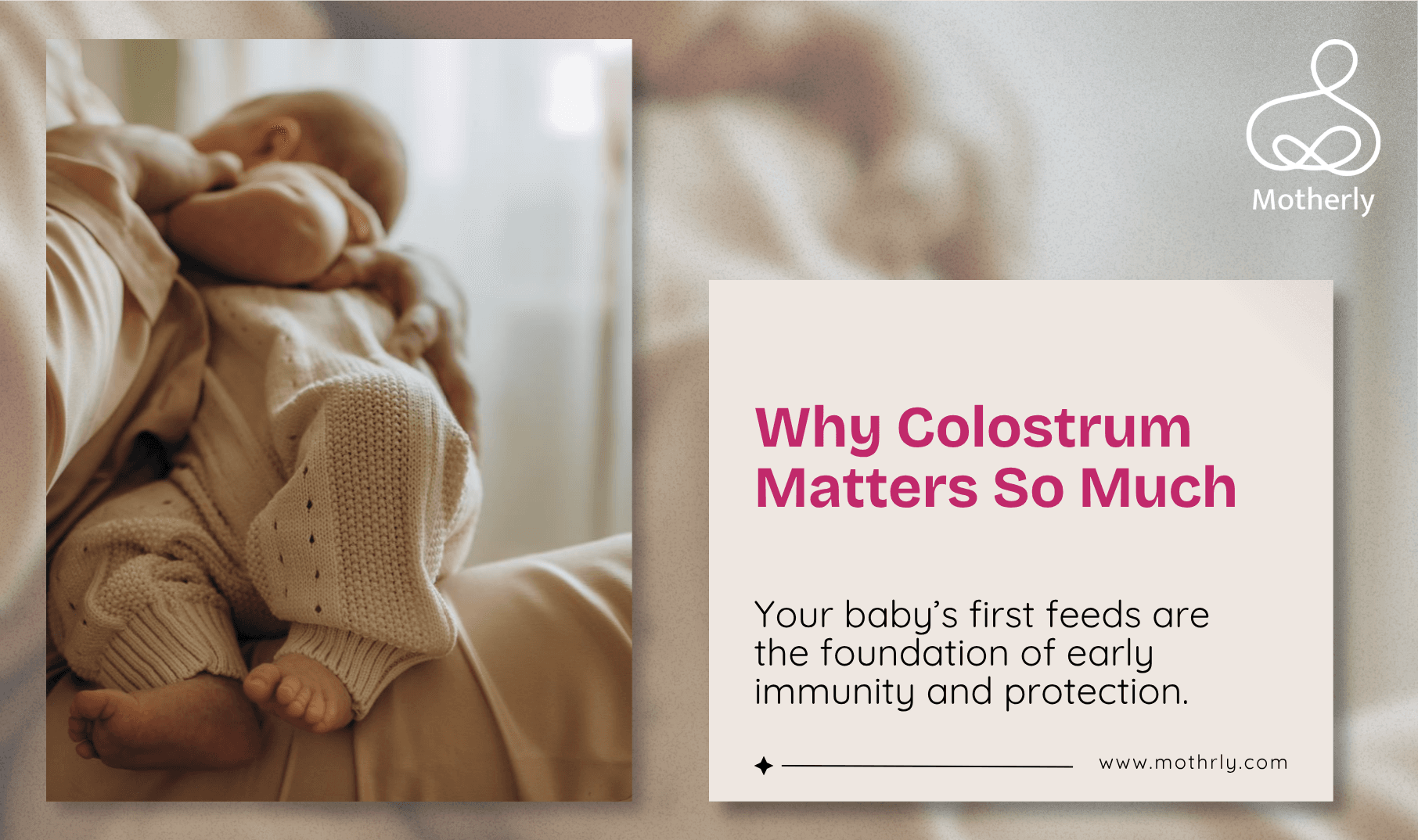
Motherly — Colostrum is your baby's first immune protection: a concentrated, precisely designed first milk that provides extraordinary defence in the earliest and most vulnerable days of life.
Colostrum, the first milk produced from late pregnancy and in the first days after birth, is among the most concentrated nutritional and immunological substances in the natural world. It is yellow, thick, and produced in small quantities, typically 20 to 40 ml per feed in the first days, compared to the 100 to 150 ml per feed of mature milk. This small volume is not a sign of insufficient supply. It is appropriate: the newborn stomach is the size of a marble in the first day of life, and the concentrated nature of colostrum means that small volumes provide enormous nutritional and immunological benefit.
What colostrum contains that mature milk does not
Colostrum contains secretory IgA (sIgA) at concentrations ten to one hundred times higher than mature milk. This immunoglobulin coats the infant's gut lining, providing passive immune protection against the pathogens the baby is now encountering in the external environment for the first time. Colostrum contains significantly higher concentrations of lactoferrin, an iron-binding protein with potent antimicrobial activity. It contains growth factors that promote the maturation of the newborn gut. And it contains a high concentration of white blood cells, approximately one million per millilitre, that actively patrol the infant's gut and provide immune surveillance.
The traditional Indian practice of discarding colostrum, based on the belief that it is impure or insufficiently nutritious, denies the newborn this extraordinary immunological resource at the most vulnerable period of life. This practice is one of the most impactful and most correctable contributors to infant mortality and morbidity in India.
"The first feeds are not just nutrition; they are immune protection delivered exactly when it matters most."
Why the WHO recommends exclusive breastfeeding for six months
The WHO recommendation for exclusive breastfeeding, breast milk only, no water and no other foods for the first six months, is based on a substantial evidence base. Exclusively breastfed infants have significantly lower rates of gastrointestinal infection, respiratory infection, ear infection, and urinary tract infection than non-exclusively breastfed infants. The protective effect is dose-dependent: more breastfeeding produces greater protection. In the Indian context, where access to safe water for formula preparation is not universal and where infectious disease burden remains significant, the protection conferred by exclusive breastfeeding is among the most important preventive health interventions available to a family.
Protect the First Feeds
Motherly helps Indian mothers understand the extraordinary value of colostrum and supports exclusive breastfeeding through education, community, and practical guidance.
Keep Reading
DOULA CARE
The Complete Guide to Choosing the Right Doula for Your Birthing Journey
Choosing a doula? Learn what a doula does, how to interview candidates, check training and costs, and spot red flags be…
September 30, 2026
BREASTFEEDING
Overcoming Early Breastfeeding Challenges: Expert Advice from Lactation Consultants
Struggling with early breastfeeding? Lactation consultants explain how to fix latch problems, sore nipples, low milk wo…
September 30, 2026