Mother's Health
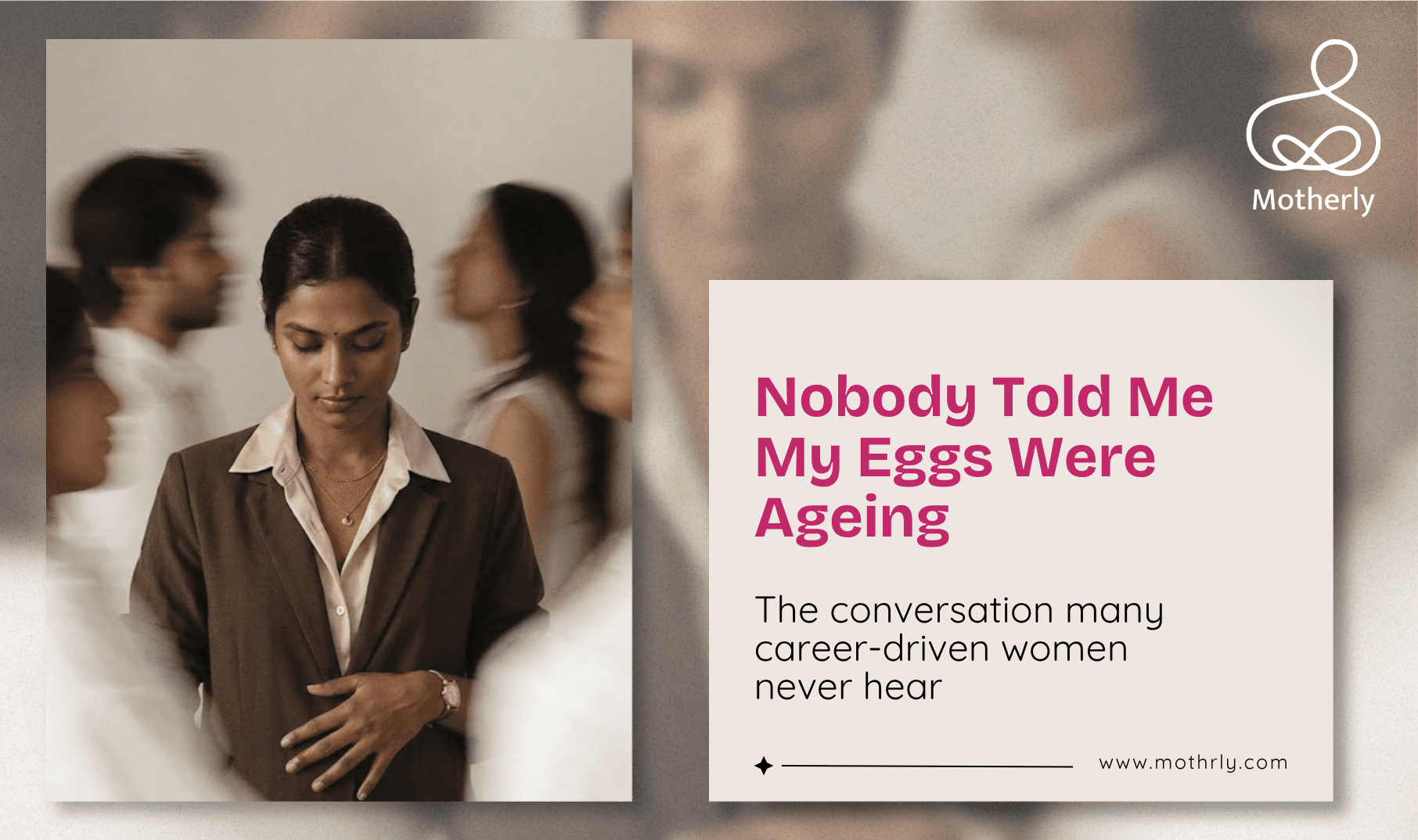
Nobody Told Me My Eggs Were Ageing While I Was Building My Career. The Conversation That Could Have Changed Everything
motherly·May 25, 2026
Motherly — The honest conversation about age, egg quality and fertility that career-focused
women never have until it is late. Read this before you decide.
She is sitting across from a reproductive endocrinologist at 36, listening to words like ‘diminished ovarian reserve’ and ‘egg quality’ and ‘the window is narrowing,’ and what she is feeling is not just medical concern. It is a particular kind of grief that comes from believing you had time that you did not, in fact, have. Not because you were told and ignored the information. But because nobody told you. Not your doctor at 28 who gave you a general health check. Not your mother, who had her children in her early twenties without difficulty. Not your school or college, which educated you brilliantly about your career but never once discussed your reproductive biology.
This experience—of learning about the reality of female fertility after the most flexible period of decision-making has passed—is one of the most common and least necessary sources of pain in the lives of educated Indian women. It is unnecessary because the information exists. It is simply not being communicated in the places and at the times when it would be most useful.
“This experience—of learning about the reality of female fertility after the most flexible
period of decision-making has passed—is one of the most common and least necessary sources of pain in the lives
of educated Indian women.”
What every woman in her twenties should know about her fertility
A woman is born with all the eggs she will ever have—approximately one to two million at birth, declining to around 300,000 to 500,000 by puberty, and continuing to decline throughout reproductive life. The rate of decline accelerates in the early thirties. The quality of eggs also changes with age, with older eggs more likely to have chromosomal abnormalities that prevent viable pregnancy or lead to miscarriage. This is not a tragedy. It is biology. But it is biology that women deserve to understand before rather than after it has clinical relevance for their lives.
The AMH test and why every woman over 25 should consider it
Anti-Mullerian Hormone, measured through a simple blood test, provides an estimate of a woman’s ovarian reserve—the quantity of eggs she has remaining. It is not a perfect predictor of fertility, and it says nothing about egg quality. But it gives a woman meaningful information about where she stands relative to the average for her age, and it can inform decisions about fertility preservation if her results are lower than expected. This test is widely available, reasonably affordable, and almost never offered to healthy young women as part of routine healthcare. It should be.
Knowledge Is Power
Motherly provides fertility awareness information, AMH testing guidance, and personalised support for women at every stage of the reproductive journey. Visit mothrly.com.
Keep Reading
DOULA CARE
The Complete Guide to Choosing the Right Doula for Your Birthing Journey
Choosing a doula? Learn what a doula does, how to interview candidates, check training and costs, and spot red flags be…
September 30, 2026
BREASTFEEDING
Overcoming Early Breastfeeding Challenges: Expert Advice from Lactation Consultants
Struggling with early breastfeeding? Lactation consultants explain how to fix latch problems, sore nipples, low milk wo…
September 30, 2026