Lactation
How to Increase Breast Milk After C-Section Delivery
motherly·March 25, 2026
The fear of insufficient milk after a caesarean is one of the most common and most distressing concerns among new mothers. And it is a completely valid concern — because learning how to increase breast milk supply after C-section delivery is genuinely different from the vaginal birth experience. But different does not mean impossible. For most mothers, it is entirely achievable with the right knowledge, the right timing, and the right support.
This guide gives you everything you need to know — from the biology of why C-sections affect milk supply, to a day-by-day timeline, to the most effective natural methods, foods, and professional support that can make all the difference.
Why C-Section Delivery Affects Breast Milk Supply
Understanding how to increase breast milk supply after C-section delivery starts with understanding why C-sections create milk supply challenges in the first place. This knowledge is empowering — because once you understand the cause, the solutions become clear.
In a vaginal delivery, the cascade of hormones that trigger labour — particularly oxytocin — also signals the body to begin transitioning from colostrum to full milk production. In a planned C-section, especially one performed before labour begins, this hormonal cascade does not occur in the same way. Progesterone drops more slowly, and the prolactin surge that drives milk production can be delayed.
Additionally, the medications used during a C-section — particularly IV fluids, anaesthesia, and post-operative pain relief — can temporarily affect milk flow. The physical separation of mother and baby during recovery, and the reduced ability to move freely and feed on demand, further delays the establishment of supply.
How to increase breast milk supply after C-section delivery is not about working harder than other mothers. It is about working smarter — and asking for help sooner.Day-by-Day Timeline — What to Expect and What to Do
One of the most important things a mother can know is the realistic timeline. Many mothers panic unnecessarily because their milk has not come in by Day 2 — when in fact, a 3–5 day timeline after a C-section is completely normal.
| Days Post C-Section | Milk Stage | What to Expect | Action to Take |
|---|---|---|---|
| Day 1–2 | Colostrum Only | Small drops of thick, golden colostrum. May feel like 'nothing is there'. | Start hand expressing within 1–6 hours of delivery. Every drop matters. |
| Day 2–3 | Transitional Milk Begins | Milk may feel 'delayed' after C-section. This is normal — not a failure. | Nurse or pump every 2–3 hours. Skin-to-skin as much as possible. |
| Day 3–5 | Mature Milk Coming In | Breasts feel fuller. Milk volume increases. May experience engorgement. | Keep feeding or pumping frequently. Do not skip feeds. Add galactagogue foods. |
| Week 1–2 | Supply Establishing | Supply should stabilise to meet baby's demand if stimulation is consistent. | Maintain 8–12 feeds/pumps per 24 hours. Stay hydrated. Add lactation foods. |
| Week 2–4 | Supply Regulated | Supply should match baby's needs. Seek help if supply is still low. | If still struggling, book a Motherly lactation consultant immediately. |
The Most Important Rule: Start as Early as Possible
The single most critical piece of advice for any mother learning how to increase breast milk supply after C-section delivery is this: begin breast stimulation within the first 1–6 hours after surgery, as soon as it is medically safe to do so. Every hour of delay in the first 24 hours makes the path longer.
This does not mean you need to be sitting upright and nursing perfectly one hour after a C-section. It means hand expression — gently massaging and squeezing the breast to collect even small drops of colostrum — should begin as soon as you are awake, alert, and given clearance by your medical team.
If your baby is with you, attempt skin-to-skin contact and nursing as soon as you are able. If your baby is in the NICU or separated from you for medical reasons, ask for a hospital-grade breast pump and begin pumping within the first 6 hours. Early and frequent stimulation is the foundation of every approach after surgery.
10 Proven Methods to Increase Breast Milk Supply After C-Section
Here are the most effective, evidence-backed natural methods:
1
Frequent Feeding or Pumping — Every 2–3 Hours
The most powerful driver of supply is consistent stimulation. Feed your baby or pump every 2–3 hours — including at least once or twice through the night when prolactin is highest. If your baby cannot latch or is in the NICU, a hospital-grade double pump is your most important tool in the early days.
2
Skin-to-Skin Contact — As Much as Possible
Skin-to-skin contact — holding your baby chest-to-chest — triggers oxytocin, the let-down hormone. Even 20–30 minutes of skin-to-skin between feeds makes a measurable difference in prolactin levels and milk flow.
3
Hand Expression in the First 48 Hours
In the first 48 hours after a C-section, hand expression is often more effective than a pump for collecting colostrum and stimulating the breast. Use gentle massage and rolling motions to express even small drops — every drop is a signal to your body that milk is needed.
4
Power Pumping — Mimic Cluster Feeding
Once milk begins to come in, power pumping is one of the most effective strategies. The technique: pump 20 minutes, rest 10 minutes, pump 10 minutes, rest 10 minutes, pump 10 minutes — all within one hour. Do this once daily for 3–5 consecutive days. It powerfully stimulates prolactin.
5
Never Skip Night Feeds
Prolactin — the hormone responsible for milk production — peaks between 1 AM and 5 AM. Night feeds and night pumping sessions are among the most effective tools. Many mothers find that adding one consistent night session dramatically improves their supply within 3–5 days.
6
Ask About Galactagogue Medications if Needed
In cases where natural methods are not sufficient, your doctor may prescribe medications like domperidone (which stimulates prolactin). This is more commonly needed after C-sections than vaginal births. Always discuss with your doctor before taking any medication after surgery.
7
Warm Compress and Breast Massage
Before each feed or pump session, apply a warm cloth to the breasts for 3–5 minutes and gently massage. This stimulates circulation and the let-down reflex, making milk flow more efficiently. A Motherly lactation consultant can teach you breast massage techniques specific to C-section recovery.
8
Hydrate, Hydrate, Hydrate
Breast milk is over 87% water. Dehydration reduces milk volume faster than almost any other factor. After a C-section, aim for 12–14 glasses of fluid daily — warm water, milk, coconut water, jeera water, and soups. Keep a large bottle of water at your bedside at all times.
9
Rest — Even Short Bursts
Cortisol — produced when you are exhausted and stressed — actively suppresses prolactin. Rest is not a luxury after surgery. It is a medical necessity. Sleep when your baby sleeps. Accept every offer of help. This is why Motherly's postnatal nannies and care professionals exist.
10
Book a Lactation Consultant — Immediately
Success rates are significantly higher when mothers receive professional lactation support within the first 48–72 hours. A certified lactation consultant can assess your latch, help with hand expression and pumping technique, and create a personalised plan. Book through the Motherly app — the earlier, the better.
What to Eat and Drink to Increase Breast Milk Supply After C-Section
What you eat and drink plays a direct role in your recovery and milk supply. Your body is simultaneously recovering from major surgery and producing milk — it needs more nutritional support than at almost any other time in your life.
Top Foods for C-Section Mothers
| Oats and Dalia | iron and beta-glucan to stimulate prolactin. The breakfast foundation of recovery. |
| Methi (Fenugreek) seeds | the most researched galactagogue. Soak 1 tsp overnight and eat with water each morning. |
| Moringa (drumstick) leaves | clinically proven to increase milk supply. Add to dal or soup daily. |
| Garlic | 2–3 cloves in daily cooking. Stimulates prolactin and the let-down reflex. |
| Masoor and moong dal | iron and protein at every meal. Essential while recovering from C-section. |
| Ragi (finger millet) | highest plant calcium. Supports both milk quality and maternal bone recovery. |
| Sesame seeds (til) | calcium and iron. Til laddoos are a classic Indian postpartum preparation. |
| Dates (khajoor) | iron, natural energy, potassium. 4–6 daily after surgery aids both healing and supply. |
| Jaggery (gud) instead of sugar | iron in every spoonful. Replace all sugar with jaggery during recovery. |
Top Drinks for C-Section Mothers
| Plain warm water | 12–14 glasses daily. The foundation of milk supply. |
| Warm milk | 2–3 glasses daily. Calcium, protein, B12. |
| Fenugreek tea | 1–2 cups daily. The strongest galactagogue drink. |
| Moringa tea | 1 cup daily. Clinically supported for milk supply. |
| Jeera (cumin) water | sipped throughout the day. Iron, digestion, prolactin support. |
| Coconut water | 1–2 glasses daily. Natural electrolytes and hydration. |
| Warm dal water or rasam | protein, iron, and fluids together. |
Note for C-section recovery: In the first week after surgery, focus on easily digestible, warm, non-gas-forming foods. Avoid raw vegetables, heavy meats, and gas-producing foods like rajma and chana in the first 3–4 days post-surgery.
Common Myths About Breastfeeding After C-Section
Many of the fears mothers have are rooted in myths. These myths cause unnecessary distress — and sometimes cause mothers to give up before their body has had the chance to fully produce. Here is the truth:
MythC-section mothers cannot breastfeed successfully. FactThis is entirely false.Millions of mothers who deliver by C-section breastfeed successfully and for extended periods. The path requires more intentionality — but the destination is entirely the same.
MythIf milk hasn't come in by Day 2, it never will. FactThis is a timing difference, not a failure.Milk taking 3–5 days to come in is completely normal after a C-section. The answer is patience and persistent stimulation — not panic.
MythFormula is the only option after a difficult C-section. FactBreastfeeding is achievable for most mothers.Formula may be needed as a supplement in some situations — but for most mothers, with the right support, breastfeeding after a C-section is fully achievable. A Motherly lactation consultant can guide you through supplementing safely while protecting your supply.
MythPain medication after surgery ruins your milk. FactMost medications are compatible with breastfeeding.The pain medications typically used after a C-section — common NSAIDs, paracetamol, and appropriate opioids — are generally considered compatible with breastfeeding. Always confirm with your doctor, but pain medication alone is not a reason to stop.
MythSmall breasts mean less milk after a C-section. FactBreast size has no effect on milk production.Milk supply is determined by glandular tissue and feed/pump frequency — not by breast size. This is as true after a C-section as for any breastfeeding mother.
When Your Baby Is in the NICU
One of the most challenging situations after a C-section is when your baby requires NICU care and cannot be with you to feed. The separation adds emotional pain to physical recovery — and makes establishing supply exponentially harder without professional support.
If your baby is in the NICU, here is the approach that gives you the best chance:
- Begin pumping within 1–6 hours of surgery — this is the most critical action when your baby cannot nurse
- Use a hospital-grade double electric pump — the most effective tool when direct nursing is not possible
- Pump every 2–3 hours, including once at night — maintain this rhythm even when exhausted
- Bring a photo or item of clothing from your baby to each pump session — the scent and image trigger oxytocin
- Ask the NICU team about skin-to-skin visits — even brief kangaroo care sessions dramatically support supply
- Ask your hospital's lactation team for daily support
- Bring expressed milk to the NICU — it is the most powerful medicine your baby can receive
A Motherly lactation consultant with NICU experience can support you through this specific and challenging journey. Book through the app as early as possible.
Get Expert Support — Book a Motherly Lactation Consultant
How to increase breast milk supply after C-section delivery has one factor that consistently separates mothers who succeed from those who struggle: professional lactation support. A certified lactation consultant can assess your specific situation — your surgery, your recovery, your baby's latch, your pumping technique — and create a personalised plan that generic advice cannot provide.
Lactation Consultants
Personalised plans for milk supply after C-section, latch support, pumping guidance, and NICU consultation.
Doulas
Emotional and physical postpartum support — reduces cortisol that suppresses milk supply.
Postnatal Nannies
In-home newborn care so you can rest and focus on feeding during C-section recovery.
Gynaecologists
Post-C-section health assessments, wound care, and hormonal support for breastfeeding.
Book Your Lactation Consultant Today — Motherly Is Ready
Certified lactation consultants, doulas, postnatal nannies, and gynaecologists — all in one app, available across Chennai.
Free to download · Android & iOS · Book in under 2 minutes · mothrly.comYou Had a C-Section. That Changes Nothing About Your Right to Breastfeed.
Your birth was different from what you imagined. The path to increasing milk supply after a C-section is different too — a little more deliberate, a little more supported, a little more time. But the destination is the same.
Every mother who chooses to learn how to increase breast milk supply after C-section delivery after surgery is showing extraordinary love and courage. You are not less of a mother because of how your baby arrived. You are not failing because your milk took longer. You are simply on a slightly different path — one that thousands of mothers before you have walked successfully, with support.
How to increase breast milk supply after C-section delivery is one of the most courageous things a mother can do after surgery. Every drop is a victory.FAQs — How to Increase Breast Milk Supply After C-Section Delivery
Why is milk supply lower after a C-section compared to vaginal birth?
How to increase breast milk supply after C-section delivery is more challenging because the hormonal cascade that triggers full milk production — particularly the oxytocin surge of labour — may not occur in the same way during a planned C-section. Additionally, IV fluids, anaesthesia, pain medications, physical separation of mother and baby, and delayed first feed all contribute to a slower start. However, with early, frequent breast stimulation and professional support, it is achievable for most mothers.
When should I start trying to breastfeed or pump after a C-section?
The first step should begin within 1–6 hours of delivery — as soon as you are medically cleared and awake. Begin hand expression or nursing at the breast as soon as possible. If your baby is in the NICU, request a hospital-grade pump immediately. The golden window is the first 24 hours — every hour of stimulation in this period matters enormously.
How long does it take for milk to come in after a C-section?
For most mothers after a C-section, mature milk comes in between Day 3 and Day 5 post-surgery — compared to Day 2–4 for most vaginal births. This delay is normal and not a sign of failure. Consistent feeding and pumping during this window maintains the demand signal. If milk has not come in by Day 5, contact a Motherly lactation consultant immediately.
Can I take fenugreek (methi) to increase milk supply after a C-section?
For most healthy mothers, fenugreek is safe and one of the most effective galactagogue foods after a C-section. However, because fenugreek can interact with some post-surgical medications and blood thinners, always confirm with your doctor before using it. If cleared, soak 1 tsp overnight and drink the water each morning.
I had an emergency C-section and my baby is in the NICU. Can I still breastfeed?
Yes — and this is one of the most important situations where support matters most. Begin pumping as soon as medically possible after surgery. Use a hospital-grade double pump every 2–3 hours. Bring your expressed milk to the NICU — it is the most beneficial thing you can provide your baby right now. Motherly's certified lactation consultants have experience with exactly this situation. Book through the app at mothrly.com.
Does pain medication after C-section affect breast milk quality?
Most pain medications used after a C-section — common NSAIDs, paracetamol, and the opioids typically used in the first 24–48 hours — are considered compatible with breastfeeding at the doses prescribed postoperatively. They do not prevent milk supply and should not stop you from breastfeeding or pumping. Always confirm the specific medications with your doctor.
How many times should I pump per day to increase supply after a C-section?
Aim for 8–12 pumping or nursing sessions per 24 hours, spaced approximately 2–3 hours apart. This includes at least one session between 1–5 AM when prolactin is highest. In the first week, quantity per session matters less than frequency — every session sends a demand signal to your body. Add power pumping once daily from Day 3–5 onwards for maximum impact.
How does Motherly help mothers with breast milk supply after C-section delivery?
Motherly connects mothers with certified lactation consultants who specialise in milk supply after C-section delivery. Our consultants provide in-home or online support for hand expression, pumping technique, latch assessment, galactagogue guidance, and personalised plans. We also provide postnatal nannies so you can rest and recover — which directly supports supply by reducing cortisol. Book through the Motherly app — free on Android and iOS — or visit mothrly.com.
Useful Resources & Guides
Keep Reading

DOULA CARE
The Complete Guide to Choosing the Right Doula for Your Birthing Journey
Choosing a doula? Learn what a doula does, how to interview candidates, check training and costs, and spot red flags be…
September 30, 2026
BREASTFEEDING
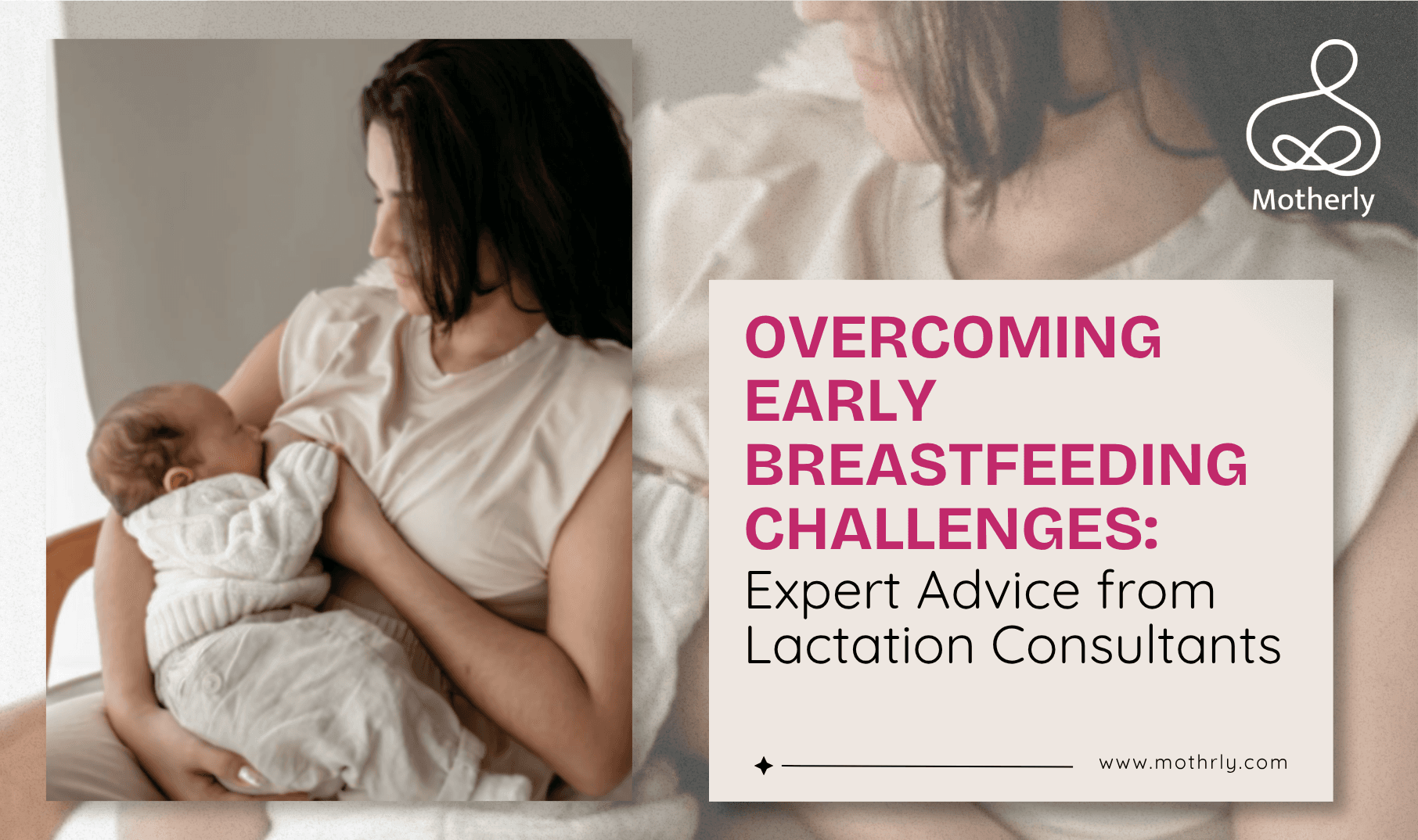
Overcoming Early Breastfeeding Challenges: Expert Advice from Lactation Consultants
Struggling with early breastfeeding? Lactation consultants explain how to fix latch problems, sore nipples, low milk wo…
September 30, 2026
Contact
© 2026 Motherly Home Care. All rights reserved. Your health, our heartbeat.
Made with favorite love for mothers everywhere