Lactation
Is Two-Wheeler Travel Safe During Pregnancy? Guide
motherly·May 4, 2026
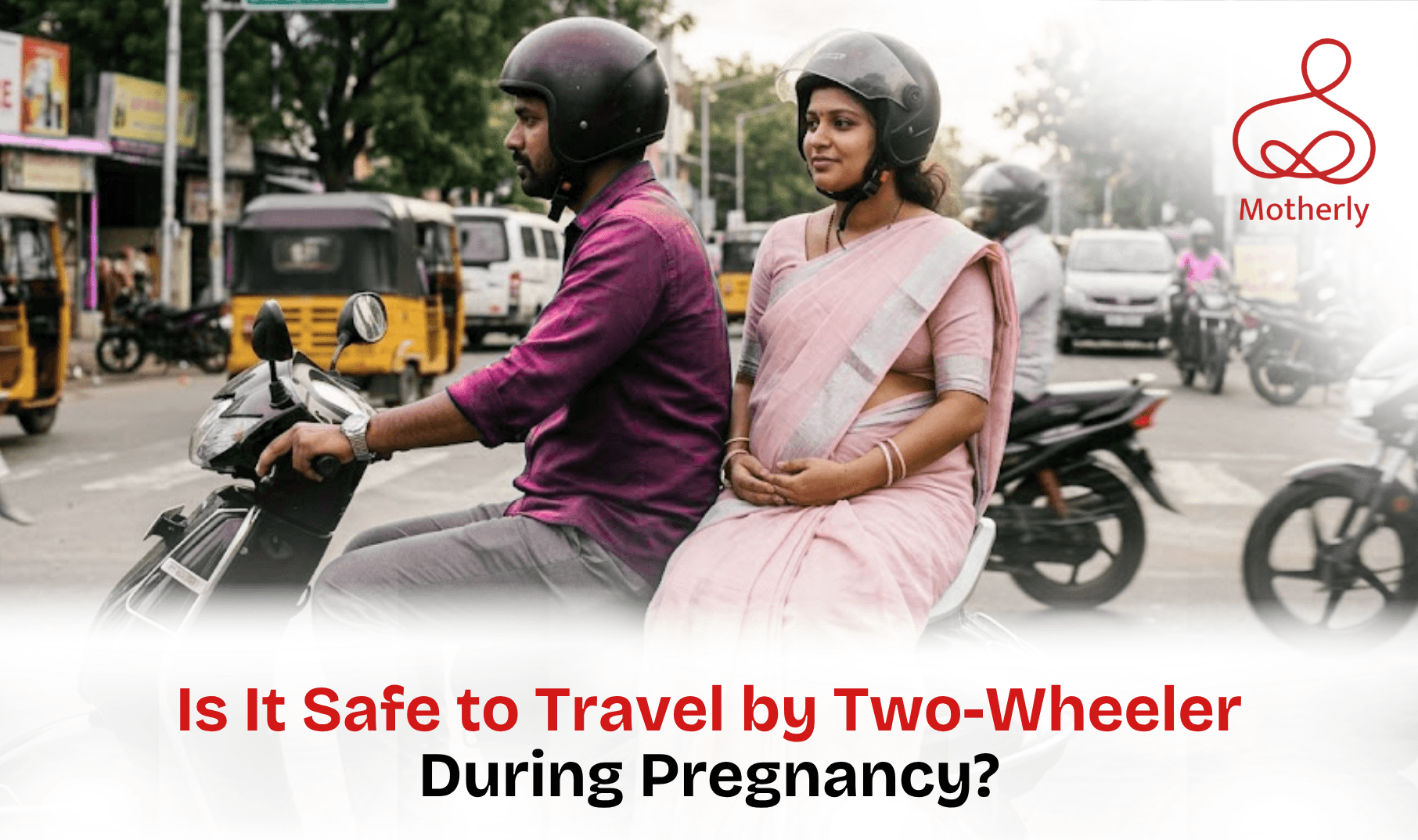
This article gives you honest, trimester-wise guidance on two-wheeler travel during pregnancy — what the risks actually are, when to stop, and what the safer alternatives look like.
The Core Concern
The primary risks associated with two-wheeler travel in pregnancy are:
- Vibration and jolting — continuous vibration from road surface can cause discomfort and, in rare cases, may affect the pregnancy (particularly if there are existing complications)
- Fall and accident risk — the consequences of a fall or collision are significantly higher during pregnancy due to the expanding uterus, altered centre of gravity, and vulnerability of the foetus
- Exhaust and pollution exposure — two-wheeler riders have direct, unfiltered exposure to traffic exhaust, a concern for both maternal health and foetal development
- Heat exposure — riding in India’s summer heat increases the risk of dehydration and overheating, both concerning in pregnancy
- Balance changes — pregnancy shifts your centre of gravity, particularly visible from the second trimester onward, making balance on a two-wheeler less reliable
Trimester-Wise Guide
First Trimester (Weeks 1 to 12): Proceed With Caution
The first trimester presents the highest miscarriage risk (for reasons unrelated to travel — primarily chromosomal). However, the uterus is still entirely within the pelvic bowl and relatively protected. Short, careful two-wheeler trips on smooth roads are generally considered low risk in an uncomplicated early pregnancy.
What to avoid in the first trimester
Long-distance or highway riding — risk of accidents increases significantly • Very potholed or rough roads — the jolting is uncomfortable and potentially concerning • Riding alone — always have someone with you if possible • Riding if you are experiencing morning sickness, dizziness, or extreme fatigue — do not ride if you feel unwell
Second Trimester (Weeks 13 to 27): Increasing Caution
By the second trimester, the uterus rises above the pelvic brim and becomes more exposed. Your centre of gravity shifts noticeably. Balance on a two-wheeler becomes less secure. Most gynaecologists in India advise transitioning away from two-wheelers by weeks 16 to 20 at the latest for daily commuting. If you must ride in the early second trimester: keep trips extremely short and on smooth roads only; wear a properly fitted helmet always; dress in comfortable, non-restrictive clothing; avoid peak traffic hours; and do not ride pillion for long distances.
Third Trimester (Weeks 28 to 40): Stop Riding
Third trimester two-wheeler travel — as rider or as pillion — is strongly advised against by virtually all obstetricians. The combination of a large, protruding uterus, significant balance changes, reduced reaction time, and the severity of potential fall consequences makes it genuinely dangerous. Please make other arrangements.
Myth vs. Reality: Two-Wheeler Travel in Indian Pregnancy
| ❌ Myth | ✔ Fact |
|---|---|
| Sitting pillion is safer than riding | Both carry similar risks of jolting, falling, and accident exposure. Pillion is not ‘safe’ simply because you’re not driving. |
| A short ride is always fine | Even short rides carry fall and vibration risk. The road quality matters as much as the distance. |
| Indian women have been doing this for generations so it must be safe | Survival bias applies here. We don’t hear about the cases that went wrong. Safer options now exist. |
| An auto-rickshaw and a two-wheeler carry the same risk | An enclosed auto-rickshaw or car with a seatbelt is significantly safer than any two-wheeler in pregnancy. |
Safer Alternatives for Indian Pregnant Women
Auto-Rickshaw
A good middle ground for shorter distances. Choose autos with smoother rides, avoid the front seat, and use a cushion if roads are rough. Not ideal for long distances but much safer than a two-wheeler.
Car (Private or Cab)
The safest option. In a car, you are protected, seated comfortably, and shielded from falls and direct exhaust. App-based cabs (Ola, Uber, Rapido) are now widely available across Indian cities including Chennai, Mumbai, Bengaluru, and Delhi.
Metro or Public Transport
Metros in cities like Chennai, Mumbai, Delhi, and Bengaluru are clean, air-conditioned, and relatively safe for pregnant women — though peak-hour crowding can be a concern. Take advantage of reserved seating for pregnant women.
Walking (Short Distances)
For distances under 500m to 1km on clean footpaths, walking is excellent and actively recommended for pregnancy health. In the Indian summer, time walks for early morning or after sunset.
If You Must Ride — Absolute Safety Rules
Wear a properly fitted helmet — every single time Keep speed low — under 30km/h on internal roads wherever possible Avoid riding in rain — roads are significantly more slippery and dangerous Choose the smoothest road available — avoid construction areas and broken roads Never ride alone — always have someone with you Stop immediately if you feel dizzy, nauseous, or unwell Keep emergency numbers saved and accessibleWhen to Get Expert Support — Motherly Is Here
Navigating pregnancy in a busy Indian city? Motherly’s care team is here to help you with practical, expert guidance — from travel safety to postpartum recovery. Your birth companion, every step of the way.
Gynaecologists
Personalised guidance on activity, travel, and safety at every stage of your pregnancy.
Doulas
Practical and emotional support through daily pregnancy challenges — including commute and lifestyle adjustments.
Lactation Consultants
Plan ahead for breastfeeding — early preparation makes all the difference postpartum.
Postnatal Nannies
Trusted in-home newborn care professionals — book early for the support you deserve.
Navigating Pregnancy in a Busy Indian City? Motherly Is Ready
Certified gynaecologists, doulas, lactation consultants, and postnatal nannies — all in one app, available across Chennai.
Free to download · Android & iOS · Book in under 2 minutes · mothrly.comFAQs — Two-Wheeler Travel During Pregnancy
I take my scooty to work every day. When should I stop?
Most doctors recommend stopping two-wheeler commuting by 16 to 20 weeks at the latest, and earlier if you experience any complications, dizziness, or discomfort. Speak to your gynaecologist at your next appointment for personalised advice.
My office is only 3 km away and the road is good. Can I still ride?
In a healthy, uncomplicated pregnancy in the first trimester, a short ride on a smooth road carries relatively low risk — but ‘low risk’ is not ‘no risk.’ As your pregnancy progresses, the advice shifts towards stopping entirely. The safest decision is always to choose an alternative if one is available.
Can the vibration from a two-wheeler cause a miscarriage?
There is no strong evidence that normal two-wheeler vibration directly causes miscarriage in a healthy pregnancy. The greater risk is falls and accidents — which in pregnancy can be significantly more dangerous than in a non-pregnant state.
My city has terrible public transport. What are my options?
This is a genuine challenge faced by many Indian women. Options include carpooling with a colleague, speaking to your employer about remote working options or adjusted timings, exploring cab subscriptions, or using e-rickshaws where available. Your health, and your baby’s safety, is worth the additional planning.
How does Motherly support pregnant mothers with travel and daily life guidance?
Motherly connects you with verified gynaecologists who can provide personalised activity and travel guidance at every stage of your pregnancy, as well as doulas who can support you through the practical challenges of pregnancy in a busy Indian city. All professionals are available through the Motherly app — free to download on Android and iOS — or at mothrly.com.
Useful Resources & Guides
Keep Reading

DOULA CARE
The Complete Guide to Choosing the Right Doula for Your Birthing Journey
Choosing a doula? Learn what a doula does, how to interview candidates, check training and costs, and spot red flags be…
September 30, 2026

BREASTFEEDING
Overcoming Early Breastfeeding Challenges: Expert Advice from Lactation Consultants
Struggling with early breastfeeding? Lactation consultants explain how to fix latch problems, sore nipples, low milk wo…
September 30, 2026
Contact
© 2026 Motherly Home Care. All rights reserved. Your health, our heartbeat.
Made with favorite love for mothers everywhere