Mother
The Indian Pantry Contains Some of the Most Scientifically Validated Health Foods in the World. Most Indian Mothers Are Not Eating Enough of Them.
motherly·June 2, 2026
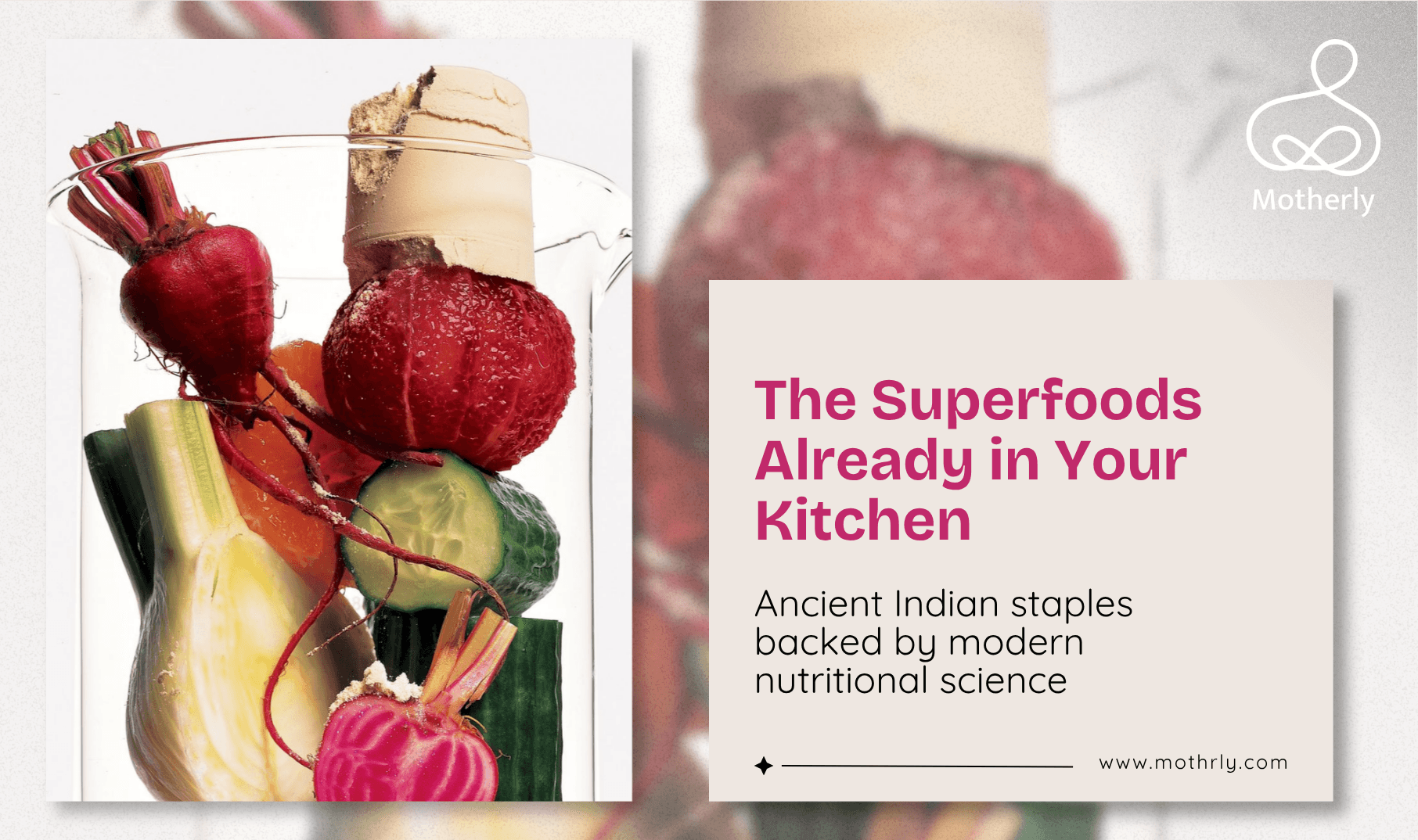
Motherly — The Indian kitchen contains some of the world's most nutritionally powerful foods. Here is what the science says about the traditional Indian foods every mother should be eating.
Long before the global nutrition industry discovered goji berries and spirulina, the Indian kitchen contained ingredients whose nutritional density and health properties are now being validated by modern nutritional science. Moringa, amla, sesame, turmeric, fenugreek, drumstick, curry leaves, and a dozen other traditional ingredients in the Indian pantry are not simply historical curiosities — they are among the most nutrient-dense foods available anywhere in the world. And yet modern urban Indian diets are moving away from these ingredients, replacing them with processed convenience foods that are nutritionally inferior by every measurable standard.
Moringa — perhaps the most nutrient-dense plant on earth
Moringa oleifera, the drumstick tree that grows across South India and is a routine ingredient in Tamil and South Indian cooking, has nutritional properties that have attracted significant scientific research interest. The leaves contain high concentrations of iron, calcium, vitamin C, vitamin A precursors, and a complete amino acid profile unusual for a plant source. For vegetarian and vegan mothers, moringa leaf powder offers a genuinely significant nutritional contribution that can help address deficiencies that are common in plant-based diets. The traditional South Indian use of drumstick in sambar and other preparations is not just culinary tradition — it is nutritional wisdom that was developed through observation long before the science was available to explain it.
"The traditional Indian kitchen contains ingredients whose nutritional density and health properties are now being validated by modern nutritional science."
Amla — the vitamin C source that outperforms every synthetic supplement
Indian gooseberry contains among the highest concentrations of vitamin C of any food in the world — vastly higher than oranges, and in a form that is significantly more bioavailable than synthetic ascorbic acid supplements because it is bound to bioflavonoids and tannins that enhance absorption and antioxidant activity. The Ayurvedic classification of amla as a rasayana — a rejuvenating substance — is consistent with its documented effects on oxidative stress, immune function, and collagen synthesis. For pregnant and postpartum mothers, where vitamin C is involved in iron absorption, immune function, and tissue repair following birth, amla provides a nutritional contribution that synthetic supplements imperfectly replicate.
Sesame, fenugreek, and the galactagogue tradition
The traditional Indian practice of giving new mothers sesame-based sweets — til ke ladoo, various sesame and jaggery preparations — is a galactagogue tradition that research increasingly supports. Sesame is rich in calcium, iron, and compounds that may support prolactin activity. Fenugreek, another traditional galactagogue in widespread use across India, has the most research support of any herbal galactagogue, with multiple studies documenting increases in milk volume with supplementation. Ajwain, the traditional postpartum spice added to everything from foods to tea in the confinement period, has documented effects on digestion and is consistent with the Ayurvedic principle of addressing Vata-related digestive issues in the postpartum period.
You Are Not Alone
Motherly celebrates and restores the nutritional wisdom of the Indian kitchen for modern mothers. Your tradition is your strength.
Keep Reading

DOULA CARE
The Complete Guide to Choosing the Right Doula for Your Birthing Journey
Choosing a doula? Learn what a doula does, how to interview candidates, check training and costs, and spot red flags be…
September 30, 2026

BREASTFEEDING
Overcoming Early Breastfeeding Challenges: Expert Advice from Lactation Consultants
Struggling with early breastfeeding? Lactation consultants explain how to fix latch problems, sore nipples, low milk wo…
September 30, 2026