Lactation
Is Brown Discharge Normal in Early Pregnancy?
motherly·May 4, 2026

This article explains every major cause of brown discharge in early pregnancy, when to watch and wait, and when to go straight to a doctor.
Why Does Brown Discharge Happen in Early Pregnancy?
Brown discharge is essentially old blood — blood that has taken longer to exit the body turns brown as it oxidises. In early pregnancy, there are several reasons this can happen, most of them harmless.
Common (And Usually Normal) Causes
1
Implantation Bleeding
This is the most common reason for brown spotting in very early pregnancy. When the fertilised egg burrows into the uterine lining (around 6 to 12 days after conception), it can cause light bleeding. By the time it exits the body, it may appear brown or pink-tinged. It lasts 1 to 3 days and is much lighter than a period.
2
Cervical Sensitivity
The cervix becomes more vascular (blood-rich) during pregnancy. Activities like sexual intercourse, a vaginal examination, or even a pelvic floor sneeze can cause minor bleeding that appears brown. This is especially common in the first trimester.
3
Old Blood from Your Last Period
Sometimes, leftover blood from your previous menstrual cycle exits slowly over a few days after your period has ended. This can appear brown and is entirely normal.
4
Subchorionic Haematoma
This is a collection of blood between the placenta and uterine wall. Small subchorionic haematomas are fairly common and often resolve on their own. They can cause brown spotting, sometimes for weeks. Your doctor will monitor this via ultrasound.
5
Hormonal Shifts
Oestrogen and progesterone fluctuations — particularly around the time your period would have been due (at 4 weeks, 8 weeks) — can cause light spotting. This is sometimes called a ‘breakthrough bleed’ or hormonal spotting.
When Brown Discharge Could Signal a Problem
While brown discharge is usually benign, there are warning signs that require immediate medical attention:
Ectopic Pregnancy
If a fertilised egg implants outside the uterus (most commonly in a fallopian tube), it can cause brown discharge or light spotting alongside sharp, one-sided abdominal pain. An ectopic pregnancy is a medical emergency. If you have brown discharge with severe pain on one side, go to the emergency room immediately.
Threatened Miscarriage
Brown discharge that progresses to red, heavier bleeding — with or without cramping — may indicate a threatened miscarriage. This requires urgent medical evaluation. Not all threatened miscarriages result in loss, but medical monitoring is essential.
Molar Pregnancy
Rare but serious, a molar pregnancy (abnormal tissue growing instead of a normal placenta) can cause brown discharge alongside unusual nausea and a uterus that grows faster than expected. Diagnosed via ultrasound and hCG levels.
Infection
Sexually transmitted infections or bacterial vaginosis can cause unusual discharge in pregnancy, sometimes tinged brown. Discharge with a foul smell, unusual colour, or accompanied by pain or burning while urinating needs prompt treatment.
What to Do If You Notice Brown Discharge in Early Pregnancy
Stay calm — panic increases stress hormones which can worsen discomfort Note the colour, consistency, and volume (use a pantyliner to track) Note whether there is any associated pain, cramping, or clots Contact your gynaecologist or obstetrician and describe what you see Do not use tampons — use only pads or pantyliners Avoid intercourse until your doctor gives the all-clear Attend all recommended ultrasound scans to monitor foetal heartbeat and placenta positionWhen to Go to the Emergency Room
Bright red, heavy bleeding (soaking a pad in under an hour) Severe abdominal or pelvic pain, especially one-sided Passage of tissue or clots Dizziness, fainting, or shoulder tip pain (sign of ectopic) Fever with dischargeWhen to Get Expert Support — Motherly Is Here
Brown discharge in early pregnancy can feel terrifying. Motherly’s verified gynaecologists and midwives are available to answer your questions and put your mind at ease. Download the app today.
Gynaecologists
Early pregnancy assessment, ultrasound monitoring, and expert guidance when bleeding concerns arise.
Doulas
Emotional support and reassurance through the uncertainty and anxiety of early pregnancy symptoms.
Lactation Consultants
Plan ahead for breastfeeding from the first trimester — early preparation makes all the difference postpartum.
Postnatal Nannies
Trusted in-home newborn care professionals — book early for the support you deserve.
Brown Discharge in Early Pregnancy Can Feel Terrifying. Motherly Is Here.
Motherly’s verified gynaecologists and midwives are available to answer your questions and put your mind at ease.
Free to download · Android & iOS · Book in under 2 minutes · mothrly.comFAQs — Brown Discharge in Early Pregnancy
Is brown discharge normal after a transvaginal scan?
Yes. The probe used in a transvaginal ultrasound can cause minor cervical irritation that results in light brown spotting for a day or two afterward. This is normal.
I had brown discharge at 5 weeks and now it’s stopped. Should I worry?
Brief, light brown spotting that stops on its own — without pain or red bleeding — is usually benign. However, always mention it to your doctor at your next appointment or call them for guidance.
Can sitting in a hot water bath (common in South Indian jaapa practices) cause discharge?
Extremely hot water is not recommended in early pregnancy. While it may not directly cause discharge, high heat can raise body temperature and is best avoided until after the first trimester.
How does Motherly support mothers experiencing early pregnancy bleeding concerns?
Motherly connects you with verified gynaecologists who can assess your symptoms, arrange ultrasound monitoring if needed, and provide calm, expert guidance. All professionals are available through the Motherly app — free to download on Android and iOS — or at mothrly.com.
Keep Reading
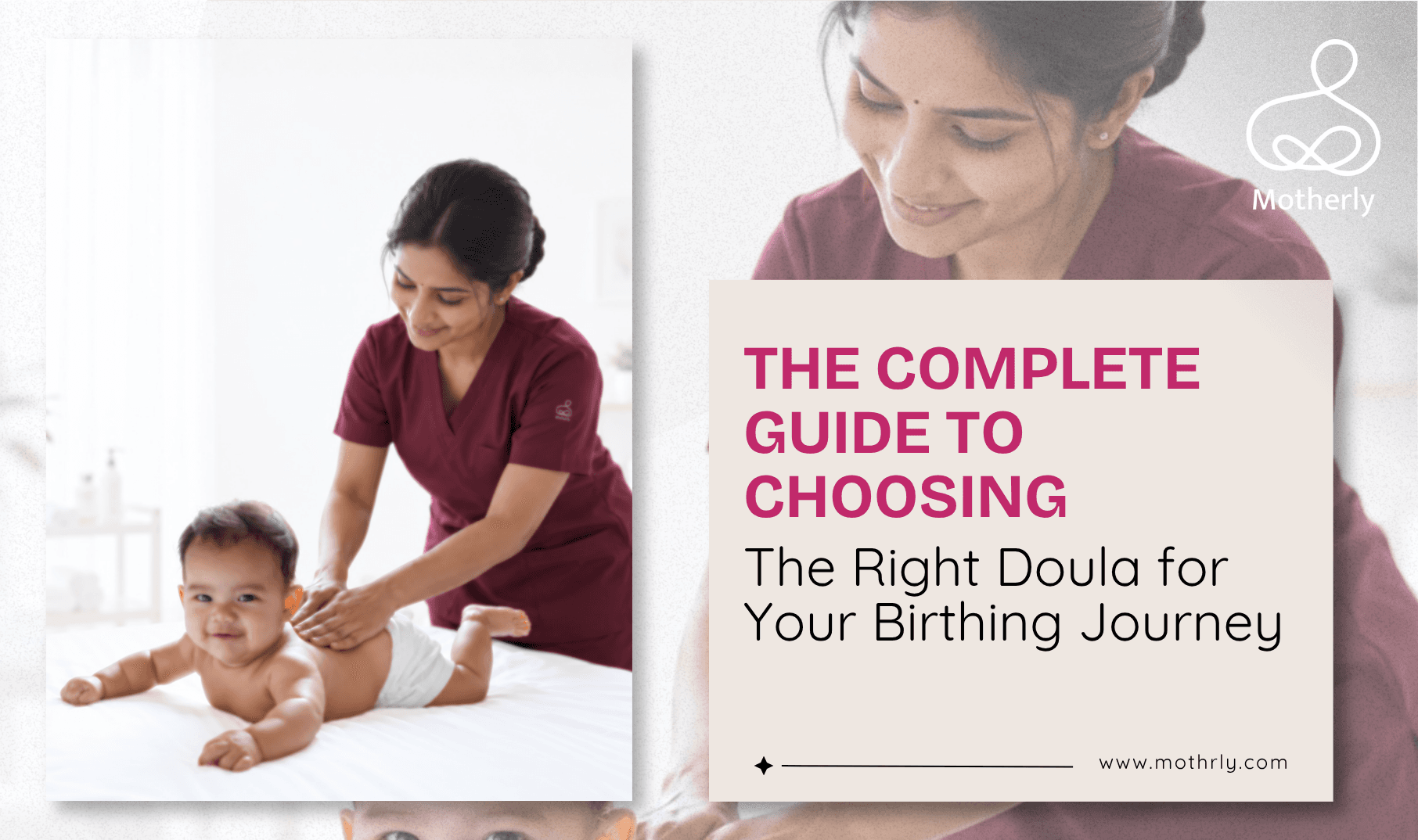
DOULA CARE
The Complete Guide to Choosing the Right Doula for Your Birthing Journey
Choosing a doula? Learn what a doula does, how to interview candidates, check training and costs, and spot red flags be…
September 30, 2026

BREASTFEEDING
Overcoming Early Breastfeeding Challenges: Expert Advice from Lactation Consultants
Struggling with early breastfeeding? Lactation consultants explain how to fix latch problems, sore nipples, low milk wo…
September 30, 2026
Contact
© 2026 Motherly Home Care. All rights reserved. Your health, our heartbeat.
Made with favorite love for mothers everywhere