Trying to Conceive
IVF Is Not a Last Resort. It Is a Medical Option. Here Is the Honest, Jargon-Free Guide Every Indian Woman Deserves Before She Decides.
motherly·May 29, 2026
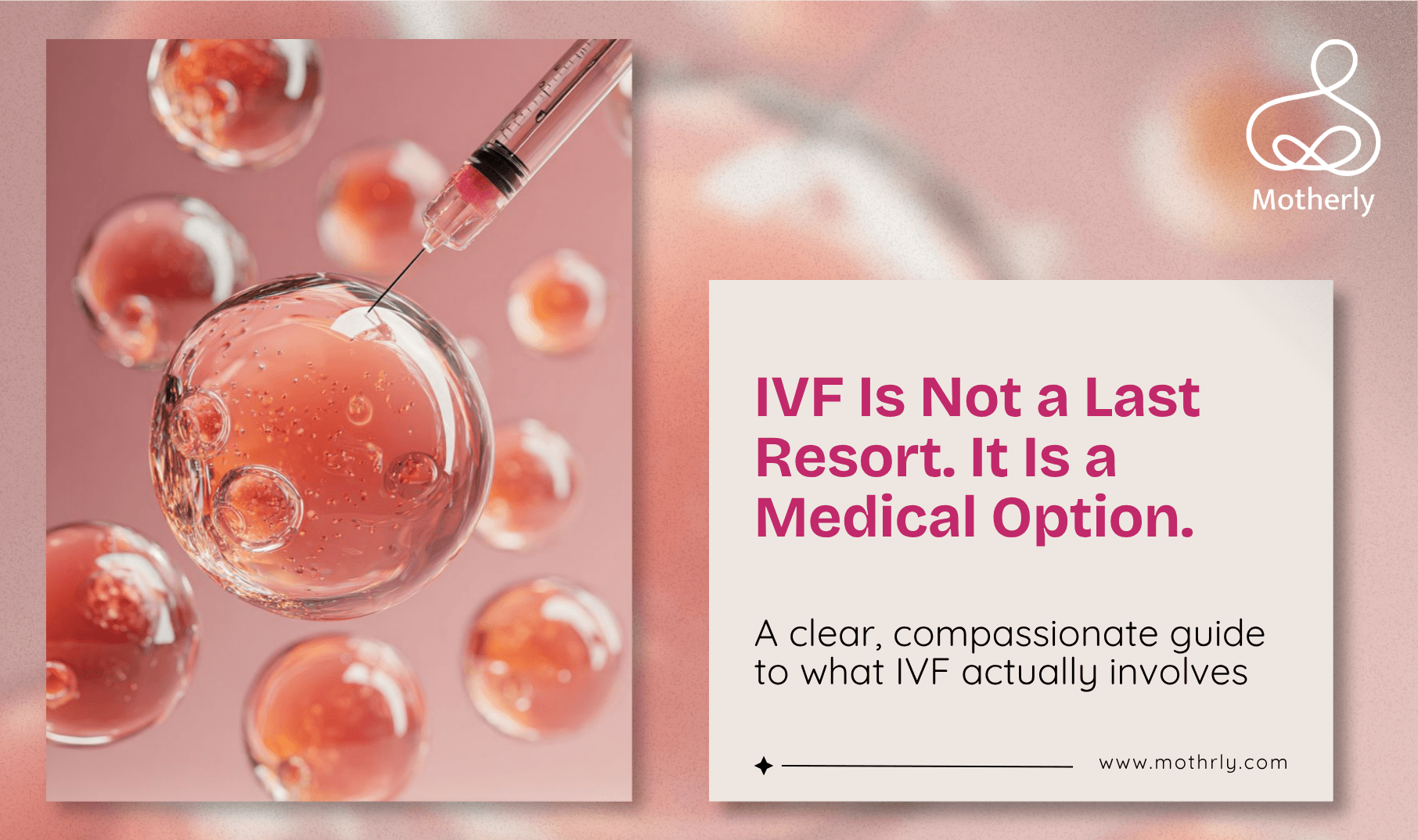
Motherly — IVF is a medical option, not a last resort. Clear information about the process, success rates, costs, and emotional reality helps you decide with confidence.
In vitro fertilisation has been performed since 1978, when Louise Brown became the first IVF baby. In that time, the technology has produced over eight million babies globally and in India has become one of the most commonly pursued fertility treatments, with hundreds of IVF clinics operating across every major city. Yet most women who sit in a fertility clinic for the first time know almost nothing about what the process actually involves, because the information they have received has come from advertisements, from whispered conversations, and from a culture that still treats infertility as something to be managed privately rather than understood clearly. Here is the straightforward account you deserve before you begin.
What IVF actually is, step by step
IVF involves stimulating the ovaries to produce multiple eggs using daily injectable hormonal medications, typically over ten to fourteen days. The progress of the stimulation is monitored through blood tests and transvaginal ultrasound scans every two to three days. When the follicles reach appropriate size, a trigger injection initiates final egg maturation, and egg retrieval is performed 35-36 hours later, a minor surgical procedure under light sedation lasting fifteen to twenty minutes, during which eggs are retrieved from the follicles using a needle guided by ultrasound. The eggs are fertilised with sperm in the laboratory, and the resulting embryos are cultured for three to five days. One or more embryos are then transferred into the uterus through a thin catheter, a painless procedure similar to a smear test, and a pregnancy test follows two weeks later.
"Before you begin IVF, you deserve a straightforward account - not jargon, not whispers, not advertising."
What success rates actually mean — and what they do not
IVF success rates are typically quoted as live birth rate per embryo transfer, and they vary enormously by age. For women under 35, live birth rates per transfer at reputable clinics are typically 40-50%. For women aged 35-37, approximately 35-40%. For women aged 38-40, approximately 25-30%. For women over 40, significantly lower. These numbers mean that even in the best circumstances, more IVF cycles fail than succeed on the first attempt. What clinics sometimes quote instead is the clinical pregnancy rate or positive test rate, both of which are higher than live birth rate and do not reflect what actually matters. When comparing clinics, ask specifically for the live birth rate per embryo transfer for your age group. That is the number that answers your actual question.
Cost in India: what to budget realistically
A single IVF cycle in India typically costs between INR 1.5 lakh and INR 3.5 lakh depending on the city, clinic, and stimulation protocol. This usually includes medications, monitoring, egg retrieval, laboratory fees, and one fresh embryo transfer. It does not always include the cost of additional procedures, embryo freezing, preimplantation genetic testing, or subsequent frozen embryo transfers. A realistic budget for a first attempt, including all incidentals, is INR 2.5-4 lakh. Multiple cycles, which the majority of couples who achieve a live birth require, multiply this figure. There are limited insurance coverage options and no government subsidy for IVF in most Indian states. Financial planning before beginning treatment is not optional. It is essential for making clear-headed decisions about how many cycles to attempt and when to stop.
The emotional reality nobody tells you about
The physical demands of an IVF cycle are significant but manageable. What most women find most difficult is the psychological experience: the daily injections that are a constant reminder of what you are going through, the monitoring appointments that produce anxiety with each scan, the wait after transfer that is described by almost every woman who has experienced it as the most difficult two weeks of her life, and the profound crash of a negative result. Having emotional support, whether from a partner, a close friend, or a counsellor with fertility experience, in place before the cycle begins is not a luxury. It is part of the preparation. The most important thing to know before you begin IVF is that it is a process, not a single attempt, and it requires sustained emotional resources as well as financial ones.
You Do Not Have to Navigate This Alone
Motherly is here at every step of your fertility journey. You do not have to navigate this alone.
Keep Reading

DOULA CARE
The Complete Guide to Choosing the Right Doula for Your Birthing Journey
Choosing a doula? Learn what a doula does, how to interview candidates, check training and costs, and spot red flags be…
September 30, 2026
BREASTFEEDING
Overcoming Early Breastfeeding Challenges: Expert Advice from Lactation Consultants
Struggling with early breastfeeding? Lactation consultants explain how to fix latch problems, sore nipples, low milk wo…
September 30, 2026