Uncategorized
Half of All Fertility Challenges Involve Male Factors. Why Is the Entire Conversation Still About the Woman?
motherly·May 25, 2026
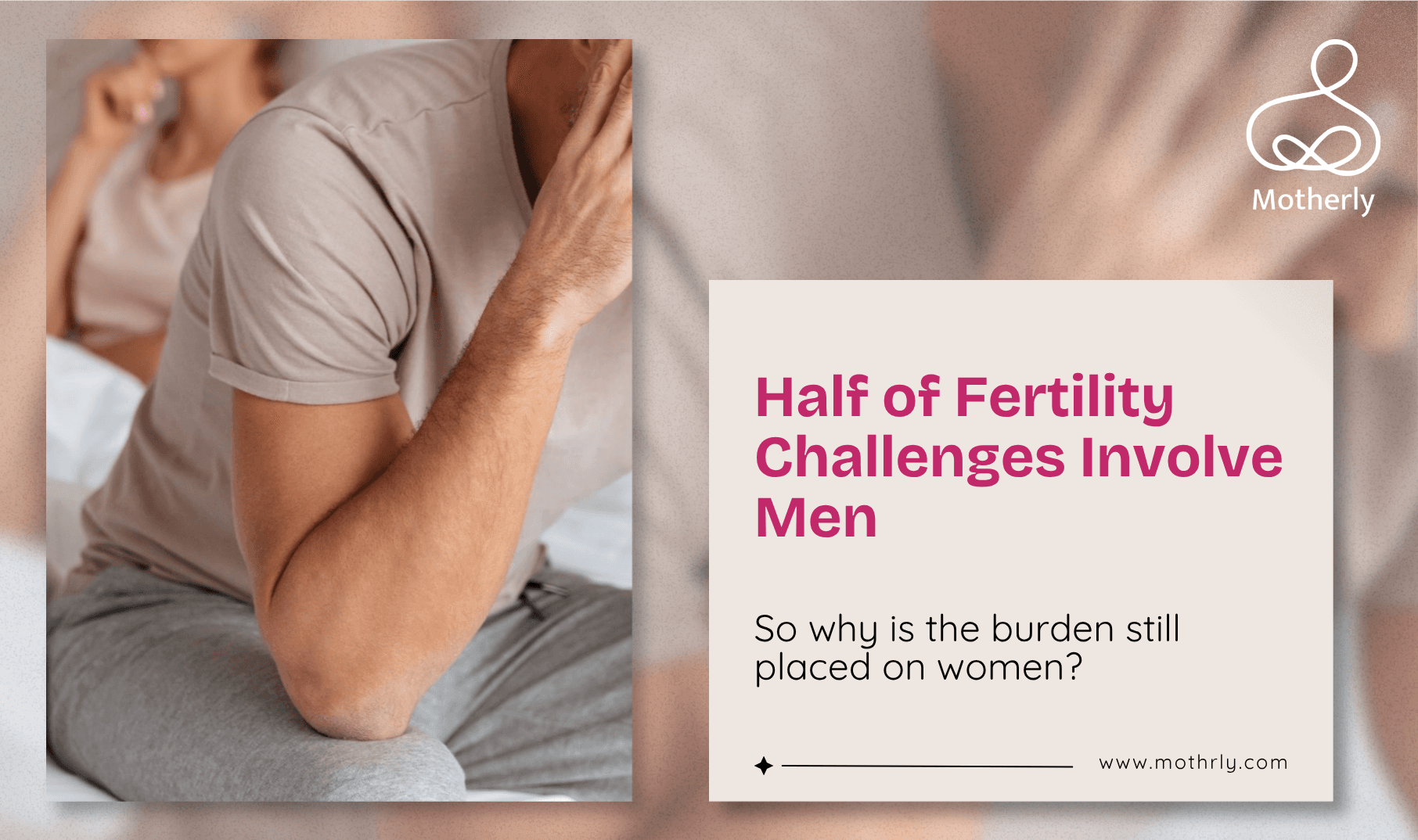
Motherly — Half of all fertility challenges involve male factors. Here is what every couple
needs to know about male fertility, sperm health and what to test.
When a couple experiences difficulty conceiving, the default cultural response—in India and in most of the world—is to focus investigation and concern on the woman. She is the one who sees the gynaecologist. She is the one who has her hormones tested and her ovaries scanned and her tubes checked. She is the one who receives advice about lifestyle, diet, and stress management. And he—unless the couple eventually reaches a fertility specialist who specifically requests a semen analysis—may go entirely uninvestigated for a year or more.
This approach reflects a cultural bias rather than a medical reality. Male factor infertility—problems with sperm count, motility, morphology, or DNA fragmentation—is implicated in approximately 40 to 50% of all cases of couple infertility. In roughly 30% of cases, it is the sole cause. Addressing male fertility as a parallel investigation from the beginning of the fertility journey is not just fair. It is efficient, and it prevents months of investigation directed at the wrong person.
“Addressing male fertility as a parallel investigation from the beginning of the fertility
journey is not just fair. It is efficient, and it prevents months of investigation directed at the wrong
person.”
Heat, lifestyle, and sperm health
Sperm production is sensitive to heat, which is why the testes are located outside the body at a slightly lower temperature than core body temperature. Prolonged sitting, laptop use on the lap, tight underwear, and hot baths can all elevate testicular temperature and affect sperm production.
Antioxidant nutrition and fertility herbs
Oxidative stress—driven by poor diet, smoking, alcohol, and environmental toxin exposure—damages sperm DNA and reduces fertility. Antioxidant nutrition: Vitamin C, Vitamin E, zinc, selenium, and coenzyme Q10 have the strongest evidence for improving sperm parameters and reducing DNA fragmentation. Ashwagandha and Shilajit have robust evidence from clinical trials for improving sperm count, motility, and testosterone levels in men with suboptimal fertility.
Explore Our Couple's Fertility Programs
Motherly supports both partners in the fertility journey. Because a healthy pregnancy begins with two healthy people.
Keep Reading

DOULA CARE
The Complete Guide to Choosing the Right Doula for Your Birthing Journey
Choosing a doula? Learn what a doula does, how to interview candidates, check training and costs, and spot red flags be…
September 30, 2026
BREASTFEEDING
Overcoming Early Breastfeeding Challenges: Expert Advice from Lactation Consultants
Struggling with early breastfeeding? Lactation consultants explain how to fix latch problems, sore nipples, low milk wo…
September 30, 2026