Postpartum Mental Health
Matrescence: The Developmental Transition That Nobody Tells You About. Becoming a Mother Changes Who You Are. This Is Normal. This Has a Name.
motherly·June 2, 2026
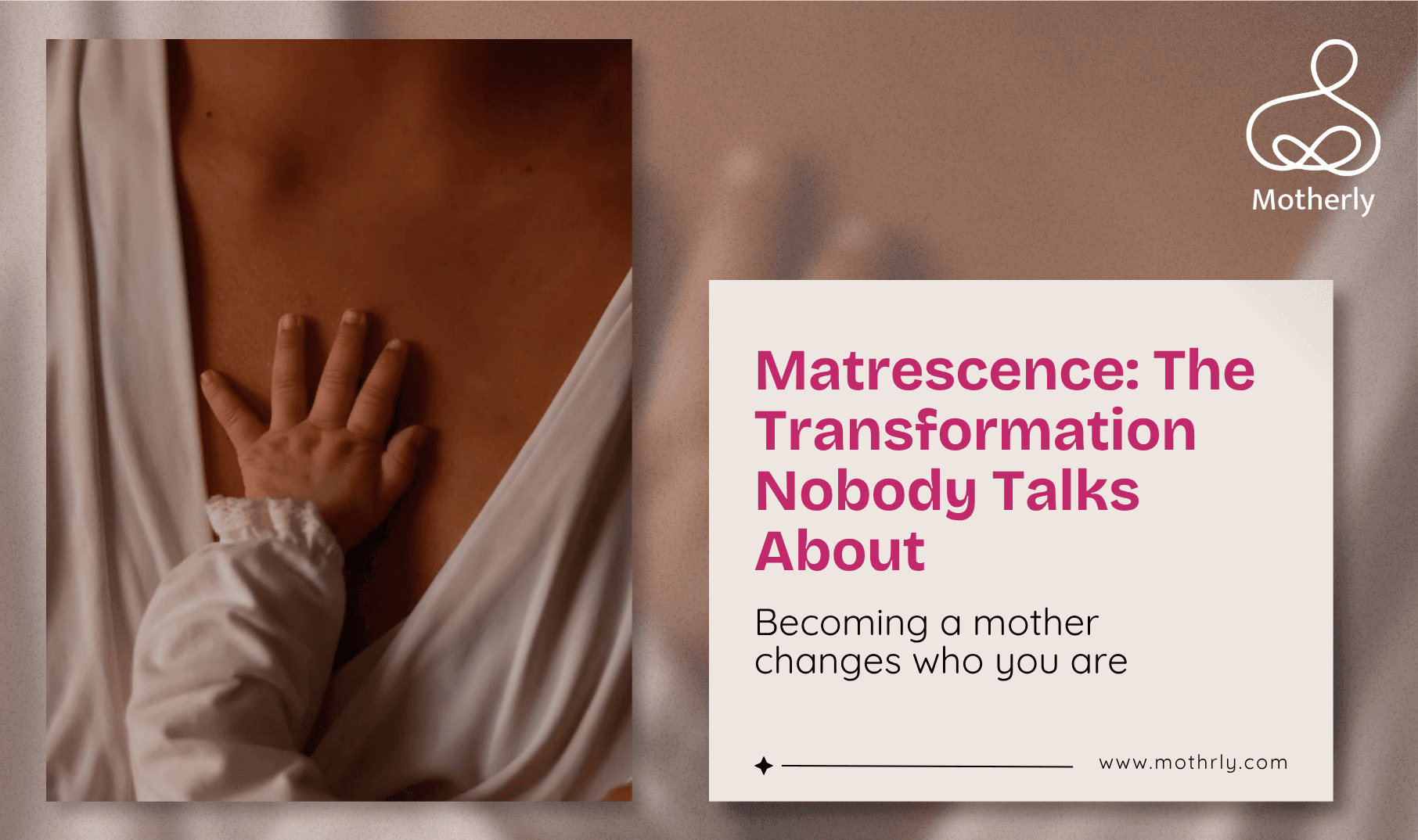
Motherly — Matrescence is the normal identity transformation of becoming a mother: profound, disorienting, and too often unacknowledged.
There is a word for what happens to a person when they become a mother, and it is not a word that most people know. The word is matrescence, coined by anthropologist Dana Raphael in the 1970s and recently brought back into clinical use by reproductive psychiatrist Alexandra Sacks. It refers to the developmental process of becoming a mother: a transition as profound, as disorienting, and as identity-reshaping as adolescence, but one that occurs in adulthood, usually rapidly, usually in the midst of physical exhaustion, and almost entirely without the social acknowledgement that adolescence receives.
What matrescence involves
Matrescence involves a fundamental reorganisation of identity. The woman who was defined by her career, her relationships, her interests, and her sense of herself as an autonomous individual must integrate a new identity, mother, that makes radical claims on her time, her body, her emotional resources, and her sense of self. This integration is rarely smooth. It involves grief for aspects of the pre-mother self that are lost or transformed. It involves confusion about competing desires, to be present for the child, to return to professional identity, to be alone, to be with the baby. It involves a new and sometimes overwhelming awareness of vulnerability, both the child's and one's own. None of this is pathology. All of it is the normal experience of a significant developmental transition.
"Becoming a mother is not just a life event. It is a developmental transition, and transitions are allowed to be disorienting."
Why this transition is invisible in Indian culture
Indian culture, for all its elaboration of the rituals surrounding birth and motherhood, offers almost no explicit acknowledgement of the mother's inner experience of the transition. The cultural narrative is structured around the baby, the new life, the continuation of the family, the blessing. The mother is present in this narrative primarily as the container and deliverer of the child, and subsequently as the nurturer. Her inner experience of the transformation, the grief, the confusion, the ambivalence, the loss of self alongside the expansion of self, is rarely given language or space. The result is that many Indian mothers experience the disorientation of matrescence as a personal failure rather than a universal developmental process.
What helps during matrescence
The single most helpful thing for a woman navigating matrescence is to know that it has a name, that it is universal, and that the conflicting feelings it produces are not signs of inadequate love for her child or inadequate suitability for motherhood. Beyond this naming, what helps is the same thing that helps any developmental transition: community with others who are in or have been through the same process, permission to grieve what is lost alongside celebrating what is gained, practical support that reduces the physical demands enough to create some mental space, and time, time for the new identity to integrate with the old one, which happens gradually and at its own pace rather than on any predictable schedule.
Support for the Whole Woman
Motherly sees the whole woman before, during, and after the transformation of becoming a mother. We are here for all of it.
Keep Reading
DOULA CARE
The Complete Guide to Choosing the Right Doula for Your Birthing Journey
Choosing a doula? Learn what a doula does, how to interview candidates, check training and costs, and spot red flags be…
September 30, 2026
BREASTFEEDING
Overcoming Early Breastfeeding Challenges: Expert Advice from Lactation Consultants
Struggling with early breastfeeding? Lactation consultants explain how to fix latch problems, sore nipples, low milk wo…
September 30, 2026