Postpartum Mental Health
There Is a Word for What You Are Going Through. It Is Called Matrescence. And Understanding It Will Change How You See Yourself.
motherly·June 1, 2026
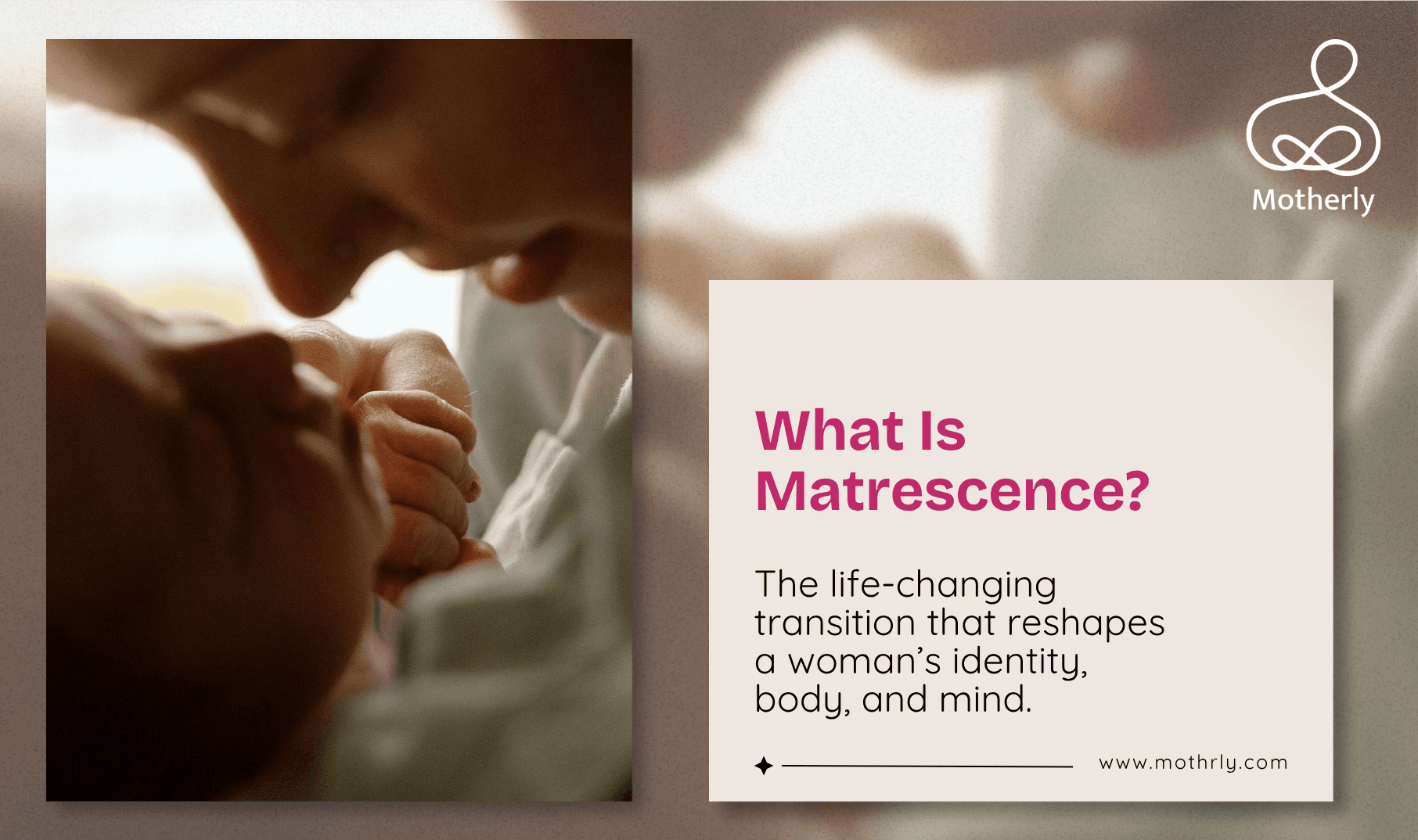
Motherly — Matrescence — the transformation of becoming a mother — is as profound as adolescence, and it changes you permanently.
In 1973, medical anthropologist Dana Raphael introduced the term matrescence to describe the developmental phase of becoming a mother. The word deliberately echoes adolescence — because the transformation of becoming a mother, Raphael argued, is of comparable depth, difficulty, and consequence to the transformation of adolescence. It involves a profound renegotiation of identity, relationships, body, values, and sense of self. It is accompanied by neurological changes that are now scientifically documented — the maternal brain undergoes demonstrable structural changes during pregnancy and early motherhood that persist for years. It is not a brief adjustment period after which you return to who you were. It is a major developmental transition that changes you permanently.
There is no going back. There is only forward — as a different and, in many ways, expanded person.
“Without language, the experience becomes pathology. With it, it becomes transformation.”
What neuroscience has confirmed about the maternal brain
Research by Elseline Hoekzema and colleagues, published in Nature Neuroscience in 2016 and followed up with further studies, found that pregnancy causes significant and lasting changes in the brain's grey matter — specifically in regions associated with social cognition, theory of mind, and self-referential processing. These changes were associated with greater attunement to the baby's needs and persisted for at least two years after birth. The subjective experience of this neurological restructuring is often a sense of the previous self receding or fragmenting — of not quite being able to locate the person you were before. This is not pathological. It is the brain performing its most fundamental reproductive function, restructuring itself to prioritise the infant. The feeling of not knowing who you are is the feeling of someone in the middle of a profound neurological reorganisation.
Why modern culture has no language for matrescence — and why that is a problem
Adolescence is acknowledged as difficult. There are therapists, school counsellors, books, cultural narratives, rituals of passage, and social frameworks that recognise its turmoil as normal and worthy of support. New motherhood is supposed to be joyful. The mother who is struggling with her transformed identity, who misses her pre-baby self, who does not recognise herself in this new role, who feels like she is grieving something even as she loves her baby — she is given no framework for this experience. She is told she is depressed, or ungrateful, or simply struggling with the adjustment. She is not. She is in matrescence. The absence of a word for her experience is not a minor point — language is how we make sense of ourselves. Without language, the experience becomes pathology. With it, it becomes transformation.
What helps during matrescence
Understanding matrescence as a concept changes the way you relate to your own experience. The confusion, the grief alongside the joy, the feeling of standing on shifting ground, the sense of not quite knowing who you are anymore — these are not signs of something wrong with you. They are signs of a major developmental process underway. What helps is the same as what helps in any major developmental transition: community with others who are in the same process; narrative — being given a story in which the difficulty is part of a transformation rather than a symptom of failure; ritual — small practices that mark the transition and honour both who you were and who you are becoming; and time.
The most important thing to know is that matrescence resolves. The new self that emerges from the other side of the transition is not less than what you were before. It is more — more complex, more capacious, more deeply connected to what matters.
Held Through Transformation
Motherly holds you through every dimension of this transformation. Visit mothrly.com.
Keep Reading
DOULA CARE
The Complete Guide to Choosing the Right Doula for Your Birthing Journey
Choosing a doula? Learn what a doula does, how to interview candidates, check training and costs, and spot red flags be…
September 30, 2026
BREASTFEEDING
Overcoming Early Breastfeeding Challenges: Expert Advice from Lactation Consultants
Struggling with early breastfeeding? Lactation consultants explain how to fix latch problems, sore nipples, low milk wo…
September 30, 2026