Trying to Conceive
Most Couples Are Missing Their Fertile Window by 48 Hours. Here Is the Science of Ovulation That Changes Everything.
motherly·May 29, 2026
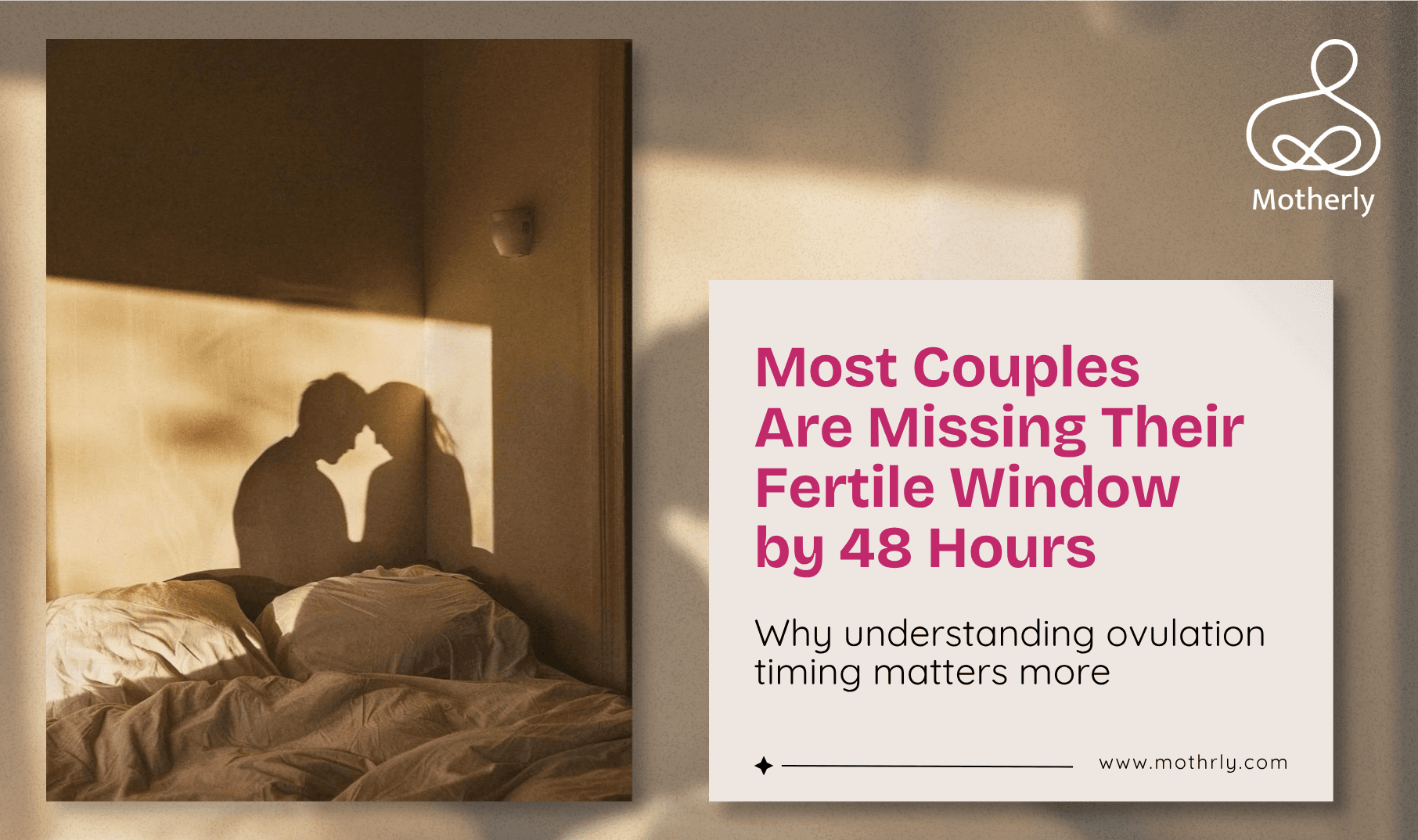
Motherly — A woman is fertile for only about six days each cycle. Understanding ovulation timing can remove one of the most common and correctable barriers to conceiving naturally.
Here is a fact that surprises most couples who have been trying to conceive for any length of time: a woman is fertile for only approximately six days in each menstrual cycle. That window opens five days before ovulation and closes within 24 hours after the egg is released. The egg itself survives for just 12 to 24 hours after release. Sperm, by contrast, can survive in the female reproductive tract for up to five days, which is why intercourse in the days before ovulation is as important as intercourse on the day itself. If you miss this window, even by 48 hours on either side, your chance of conceiving that cycle drops to near zero. Understanding this biology is not a minor point. For many couples, it is the entire story.
Why the cycle length assumption is costing people months
The standard fertility advice assumes a 28-day cycle with ovulation on day 14. This is a statistical average, but only a minority of women actually ovulate on day 14. Research shows that in naturally cycling women, the day of ovulation varies significantly not just between different women but within the same woman across different cycles. A woman who ovulates on day 18 one month and day 12 the next will miss her window entirely if she is timing based on a calendar assumption. This is not an unusual situation. It is the majority situation. The only reliable ways to identify your actual ovulation are to track it directly, through basal body temperature charting, cervical mucus observation, or LH surge testing with ovulation predictor kits.
"For many couples, getting the biology right is not a minor detail - it is the entire story."
The LH surge and what it actually tells you
Ovulation predictor kits (OPKs) detect the surge in luteinising hormone (LH) that triggers ovulation. LH rises sharply approximately 24 to 36 hours before the egg is released. This means a positive OPK tells you that ovulation is imminent, making the day of the positive test and the following day the most fertile days of your cycle. The limitation of LH testing alone is that it identifies the surge but not whether ovulation actually occurred. Some women, particularly those with PCOS, produce multiple LH surges without ovulating. Combining OPK testing with basal body temperature charting, where temperature rises by approximately 0.2 degrees Celsius after ovulation and stays elevated, provides confirmation that ovulation has actually occurred. Together, these two methods provide a reliable map of the fertile window.
Cervical mucus: the underused fertility signal
Cervical mucus is one of the most reliable and most underused fertility indicators available to any woman, at zero cost, without any equipment. In the days approaching ovulation, oestrogen causes the cervix to produce mucus that is clear, slippery, and stretchy, often described as similar to raw egg white in appearance and texture. This fertile-quality mucus creates an environment that helps sperm survive and travel to the egg, acting as a nutritive medium that extends sperm lifespan. In the days after ovulation, progesterone causes mucus to become thick, sticky, and opaque, creating a barrier. Learning to observe and interpret cervical mucus is a skill that takes two to three cycles to develop, but it provides real-time information about where you are in your cycle that no app can replicate without your own data. The practical implication is straightforward: if you are trying to conceive and not tracking ovulation in any form, start tracking. Not because it guarantees success but because it removes one of the most common and entirely correctable sources of missed opportunity.
Support for Your Conception Journey
Motherly supports every step of your conception journey with knowledge, community, and care.
Keep Reading
DOULA CARE
The Complete Guide to Choosing the Right Doula for Your Birthing Journey
Choosing a doula? Learn what a doula does, how to interview candidates, check training and costs, and spot red flags be…
September 30, 2026
BREASTFEEDING
Overcoming Early Breastfeeding Challenges: Expert Advice from Lactation Consultants
Struggling with early breastfeeding? Lactation consultants explain how to fix latch problems, sore nipples, low milk wo…
September 30, 2026