Toddler Nutrition
Play Is Not a Break From Learning. It Is the Primary Way Children Learn Everything That Matters. What the Science of Play Tells Parents.
motherly·June 1, 2026
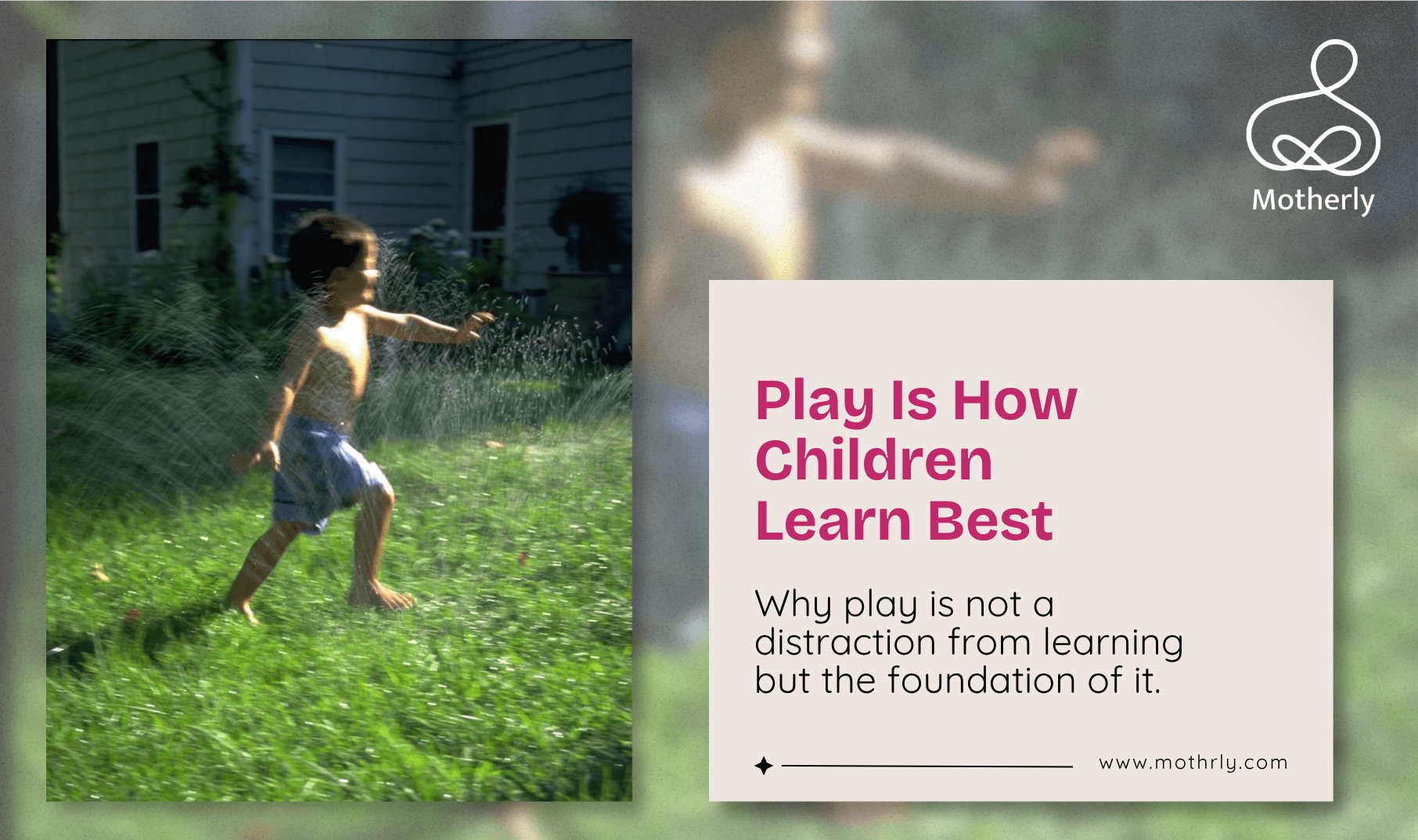
Motherly — Free, child-directed play is not downtime. It is how young children build executive function, language, social skills, and creativity.
The child who is playing is not wasting time. They are doing the most cognitively and developmentally demanding thing a child can do. Play, particularly free, unstructured, child-directed play, is the mechanism through which children develop the executive functions, social competencies, emotional regulation, language skills, and creative capacities that formal education will later draw upon. The scientific literature on play is one of the most consistent bodies of evidence in developmental psychology: play is not preparation for learning. Play is learning, in its most fundamental and effective form.
What different types of play build
Physical play, running, climbing, wrestling, and rough-and-tumble play, builds motor development, spatial reasoning, risk assessment, and physical confidence. Pretend play, which begins around age two and becomes increasingly elaborate through the preschool years, builds theory of mind, the ability to understand that others have different thoughts and perspectives, narrative thinking, emotional vocabulary, and the capacity for symbolic representation that underlies reading and mathematics. Social play with peers builds turn-taking, conflict resolution, negotiation, and the experience of being in a community of equals. Constructive play with blocks, sand, water, and natural materials builds spatial reasoning, cause-and-effect understanding, and the iterative problem-solving approach that underpins engineering and scientific thinking.
"Play is not preparation for learning. Play is learning."
Why structured activities are not a substitute for free play
The proliferation of structured activities for young children, classes, programmes, organised sports, and enrichment experiences, reflects a genuine and understandable parental desire to give children every developmental advantage. But structured activities, however well-designed, do not replicate what free play provides. The specific developmental benefits of free play derive from the fact that the child is in control: they set the agenda, they decide the rules, they determine when the activity ends, they manage the problems that arise. This experience of agency, of being the author of your own activity, is what builds executive function, intrinsic motivation, and creative problem-solving. Structured activities, where adults set the agenda, provide different benefits but cannot replace the experience of child-directed play.
The Indian play environment and what is at risk
Urban Indian childhood has undergone a dramatic transformation in one generation. The outdoor play that was the default mode of childhood for every previous generation, on streets, in compounds, in open spaces, with neighbourhood children of mixed ages, has been largely replaced by indoor, screen-based, or adult-supervised activity. This change has multiple drivers: urbanisation and reduced outdoor space, safety concerns in cities, academic pressure that fills children's schedules, and screen technology that provides an effortless alternative to the effort of boredom. The consequences of this shift for children's development are a matter of increasing scientific concern. Restoring outdoor free play, even imperfect versions of it, is one of the most important things Indian urban families can do for their children's development.
Where Children Truly Thrive
Motherly celebrates the fullness of childhood development and supports parents in creating environments where children truly thrive.
Keep Reading

DOULA CARE
The Complete Guide to Choosing the Right Doula for Your Birthing Journey
Choosing a doula? Learn what a doula does, how to interview candidates, check training and costs, and spot red flags be…
September 30, 2026

BREASTFEEDING
Overcoming Early Breastfeeding Challenges: Expert Advice from Lactation Consultants
Struggling with early breastfeeding? Lactation consultants explain how to fix latch problems, sore nipples, low milk wo…
September 30, 2026