Mother
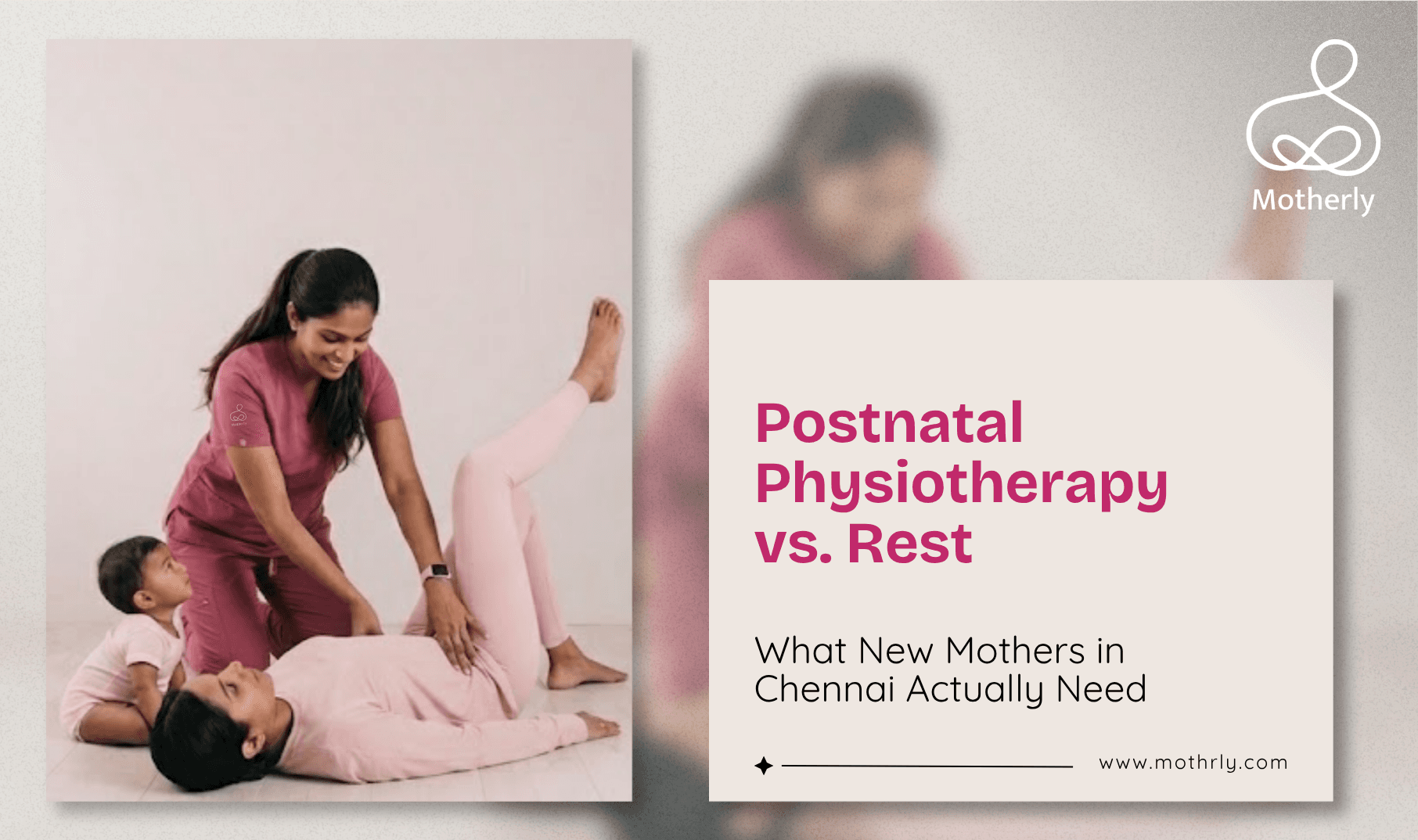
Postnatal Physiotherapy vs. Rest: What New Mothers in Chennai Actually Need
motherly·June 22, 2026
Reviewed by Mothrly’s Clinical Team — Obstetricians, Gynaecologists, Paediatricians & Postnatal Specialists | Evidence-based content for Chennai mothers
"Just rest" is the most well-intentioned, most clinically harmful advice given to new mothers in Chennai. Rest is essential — but rest alone does not heal a pelvic floor, close diastasis recti, or rebuild the structural integrity that pregnancy and delivery compromise over 40 weeks.
The truth that most mothers discover too late: the problems that emerge at 6 months, 12 months, or even years after delivery — back pain, urinary leakage, pelvic organ prolapse — are the direct result of inadequate early rehabilitation. Rest created the gap. Physiotherapy was the missing intervention.
Start Your Postnatal Physiotherapy Recovery
Get expert physiotherapy support at home and recover safely after delivery.
What Pregnancy Actually Does to Your Body
By the end of pregnancy, your body has undergone structural changes that rest alone cannot reverse:
- Pelvic floor muscles have carried the weight of a growing baby for 40 weeks and experienced the additional trauma of vaginal delivery or caesarean surgery.
- Diastasis recti (separation of the abdominal muscles along the midline) affects approximately 60% of women in the third trimester and does not self-correct in most cases.
- Postural changes driven by the shifting centre of gravity in pregnancy create compensatory muscle imbalances throughout the back, hips, and shoulders that persist postnatally.
- Ligament laxity from relaxin hormone remains elevated during breastfeeding — meaning joints are still unstable and vulnerable to injury if loaded incorrectly.
Rest allows tissue healing. It does not provide the targeted neuromuscular rehabilitation these structures require.
What Postnatal Physiotherapy Actually Treats
Pelvic Floor Dysfunction
Pelvic floor physiotherapy is the evidence-based treatment for:
- Urinary leakage when coughing, sneezing, or laughing (stress incontinence)
- Urinary urgency and frequency
- Pelvic organ prolapse (a feeling of heaviness or bulging in the vaginal area)
- Painful intercourse after delivery
- Perineal scar tissue management after tears or episiotomy
In Chennai, many mothers normalise these symptoms as "just part of having a baby." They are not normal. They are treatable — and significantly easier to treat in the first three months than at three years postpartum.
Diastasis Recti Rehabilitation
A palpable gap of more than 2 finger-widths along the midline of the abdomen after delivery indicates diastasis recti. Standard gym exercises — crunches, sit-ups, heavy lifting — worsen this condition. A postnatal physiotherapist confirms the diagnosis, prescribes a graded exercise programme, and monitors closure before clearing the mother for return to general exercise.
Back and Hip Pain
Postpartum back pain is the single most common complaint among new mothers in Chennai. In most cases it is a consequence of weakened core and pelvic floor muscles, breastfeeding postures, and carrying a growing baby on one side. Physiotherapy addresses the cause rather than managing the symptom with pain relief.
C-Section Scar Tissue
Caesarean scar tissue can form internal adhesions that cause long-term pain, bladder discomfort, and secondary fertility complications. Scar mobilisation, begun after the scar has closed (typically from 6–8 weeks), prevents adhesion formation and improves comfort.
When to Start Postnatal Physiotherapy
| Delivery Type | When Physio Begins | Initial Focus |
|---|---|---|
| Vaginal (uncomplicated) | Day 1–3 | Breathing, gentle pelvic floor activation, posture |
| Vaginal with tears/episiotomy | Day 5–7 after wound review | Scar management, pelvic floor |
| Caesarean | Week 6 (after clearance) | Scar mobilisation, deep core, pelvic floor |
| Any — back/hip pain present | Immediately | Postural correction, breastfeeding ergonomics |
Postnatal Physiotherapy at Home in Chennai
Mothrly's postnatal physiotherapy service in Chennai sends qualified physiotherapists to your home. The therapist can assess your breastfeeding posture, sleeping setup, how you get in and out of bed, and how you lift your baby — all in the actual environment where the problem occurs.
Many mothers who used our mother care specialist service begin physiotherapy at the same time. Our guide on mother care specialists in Chennai covers how the two services work together.
The Rest vs. Physiotherapy Decision Framework
Rest is correct for acute tissue healing in the first 48–72 hours, during the restricted window after surgery, and for fatigue management. Physiotherapy is essential for pelvic floor rehabilitation, diastasis recti, scar tissue management, and safe return to exercise. The answer is rest when indicated, physiotherapy when recovery stalls or specific conditions are present — which in most new mothers, they are.
Your Body Needs More Than Rest to Recover Fully
Book online or download the app to schedule physiotherapy at your convenience.
Keep Reading

PREGNANCY
The Benefits of Prenatal Yoga: Strengthening Body and Mind for a Healthy Delivery
Discover how prenatal yoga builds strength, flexibility, and calm during pregnancy, helping expectant mothers feel more…
September 17, 2026

NEWBORN CARE
Establishing a Healthy Newborn Sleep Routine: Insights from Expert Caregivers
Learn how to build a healthy newborn sleep routine with expert-backed tips on sleep cues, bedtime habits, and creating…
September 17, 2026