Postpartum Mental Health
Postpartum Anxiety Is More Common Than Postpartum Depression. And Almost Nobody Is Talking About It.
motherly·June 1, 2026
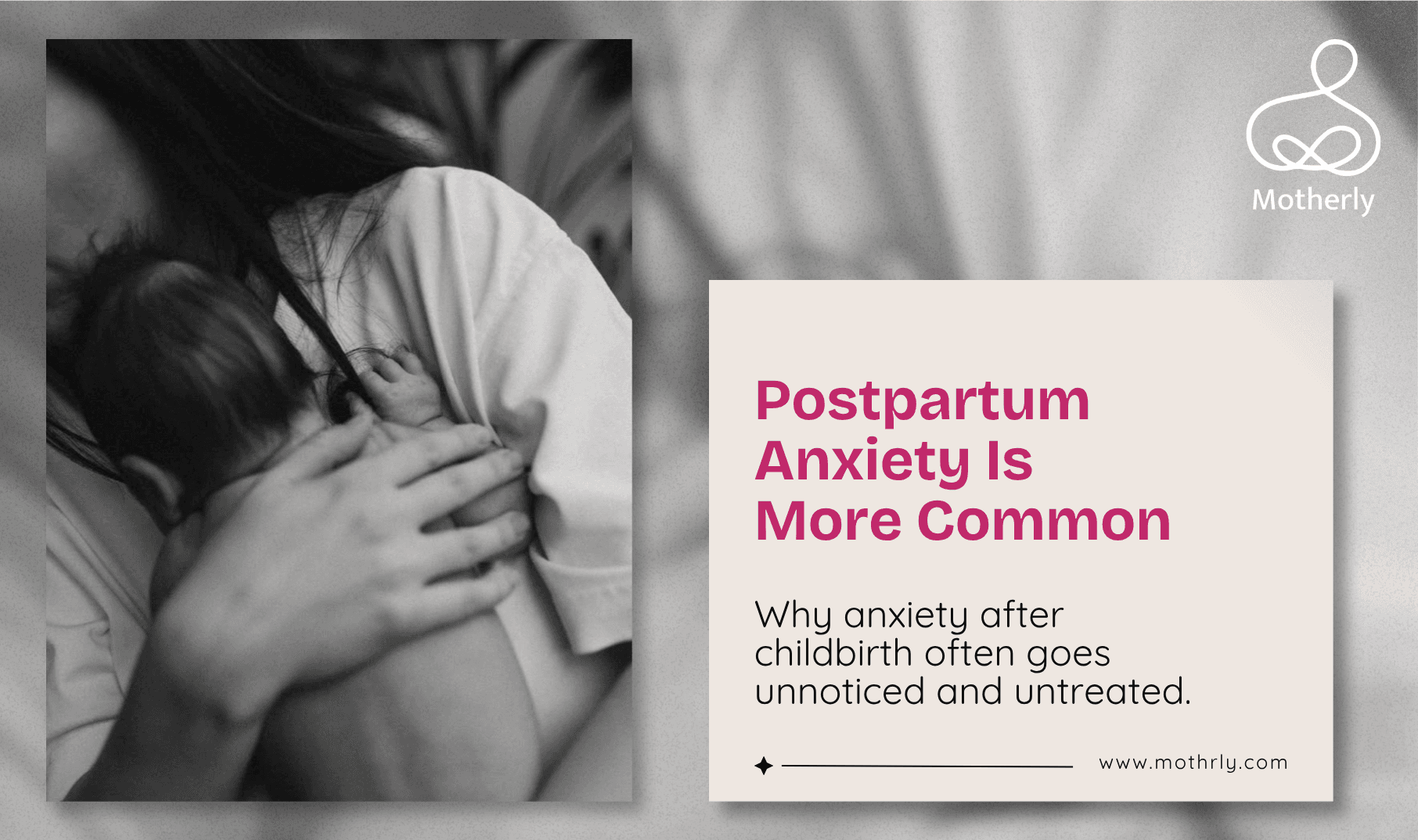
Motherly — Postpartum anxiety affects up to 20% of new mothers, more than postpartum depression, yet it is often missed, dismissed, or mistaken for normal new-mother worry.
When we talk about maternal mental health, postpartum depression dominates the conversation. It is the condition with the most awareness campaigns, the most clinical protocols, the most cultural recognition. But postpartum anxiety, which affects up to 20% of new mothers, more than postpartum depression, is far less discussed, far less screened for, and far less treated. Many women who are suffering from postpartum anxiety are told they are fine because they are not depressed. Their inability to sleep even when the baby sleeps, their hypervigilance about the baby's safety, the racing thoughts that will not stop, these are attributed to normal new-mother adjustment. In many cases they are not normal adjustment. They are a treatable condition. And there is help.
What postpartum anxiety actually looks like
Postpartum anxiety presents differently from general anxiety in several specific ways. It is often focused intensely on the baby's safety and wellbeing: checking the baby's breathing repeatedly through the night, being unable to hand the baby to anyone without a sense of catastrophe, experiencing intrusive mental images of accidents or harm coming to the baby. It can manifest as hypervigilance that prevents rest even when the baby is sleeping, as physical symptoms including heart palpitations, chest tightness, difficulty breathing, and dizziness, and as a persistent, exhausting sense of impending disaster that has no specific focus. The difference between normal new-parent concern and anxiety disorder is functional impairment. When the worry is interfering with your ability to sleep, eat, leave the house, or function in daily life, it has crossed into clinical territory.
"You can be fine on paper and still need help — anxiety after birth is real and treatable."
Why it is so frequently missed — and what to say to get help
Postpartum anxiety is missed because the screening tools most commonly used, including the Edinburgh Postnatal Depression Scale, are primarily designed to detect depression rather than anxiety, and because the symptoms of anxiety, particularly the hypervigilance and constant checking around baby safety, can appear superficially similar to good mothering rather than a mental health condition. Healthcare providers who are not specifically trained in perinatal mental health may not probe further when a mother says she is just really worried about the baby all the time. If you believe you have postpartum anxiety, be specific with your healthcare provider. Say: I cannot stop worrying about the baby's safety even when I know rationally that they are fine. I cannot sleep even when they sleep because I am checking on them repeatedly. I think I need a mental health referral.
What helps: the evidence
Cognitive behavioural therapy with a perinatal-trained therapist is the most evidence-based psychological treatment for postpartum anxiety and can produce significant improvement in eight to twelve sessions. For moderate to severe postpartum anxiety, sertraline is the most commonly prescribed medication in the perinatal period, is compatible with breastfeeding, and has good evidence for efficacy. Mindfulness-based stress reduction adapted for the perinatal period has reasonable evidence. In the short term, slow diaphragmatic breathing (4 seconds in, 6 seconds out) activates the parasympathetic nervous system and provides rapid but temporary anxiety relief. The most important first step is naming what you are experiencing to a healthcare provider and asking specifically for a perinatal mental health referral.
Space for the Hard Parts Too
Motherly holds space for every part of new motherhood, including the hard parts.
Keep Reading
DOULA CARE
The Complete Guide to Choosing the Right Doula for Your Birthing Journey
Choosing a doula? Learn what a doula does, how to interview candidates, check training and costs, and spot red flags be…
September 30, 2026
BREASTFEEDING
Overcoming Early Breastfeeding Challenges: Expert Advice from Lactation Consultants
Struggling with early breastfeeding? Lactation consultants explain how to fix latch problems, sore nipples, low milk wo…
September 30, 2026