Postpartum Mental Health
She Kept Thinking She Might Drop the Baby. She Was Not Dangerous. She Had Postpartum OCD. Here Is What That Actually Is.
motherly·June 1, 2026
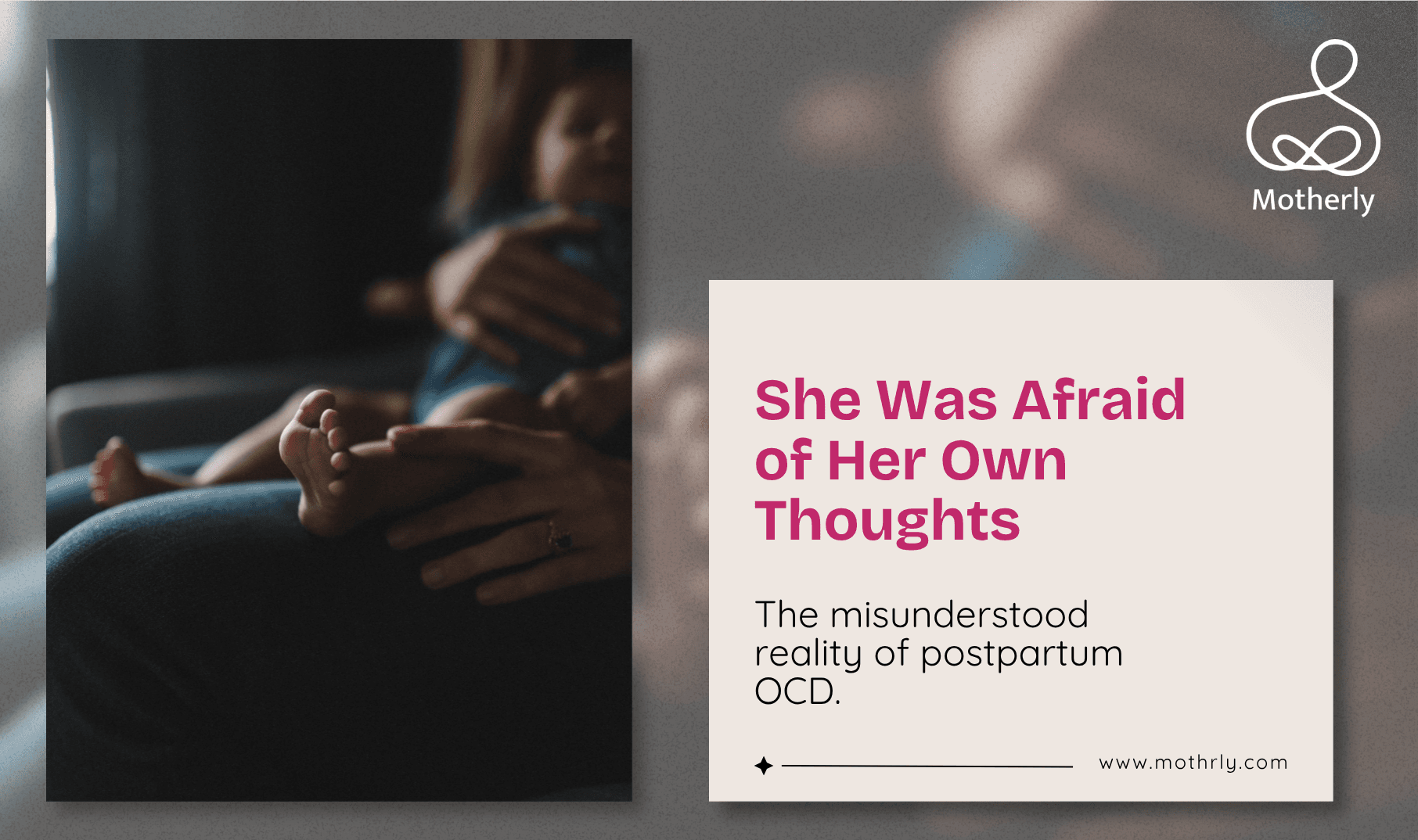
Motherly — Postpartum OCD affects up to 9% of new mothers. Intrusive thoughts about harm do not mean you are dangerous — they mean your brain is in overdrive.
One of the most frightening experiences a new mother can have — and one of the least discussed — is the arrival of intrusive thoughts about harm coming to the baby. Thoughts of dropping the baby. Images of the baby being hurt. Unbidden mental scenarios of accidents or worse. These thoughts are deeply distressing, deeply shameful, and almost never disclosed to healthcare providers, because the mother is terrified of what will happen if she does. She will be judged as dangerous. She will have her baby taken away. She is, she fears, a monster.
None of this is true. These thoughts are a recognised, documented, treatable feature of postpartum OCD — and they are far more common than almost any new mother knows.
“A mother who is frightened by a thought of harming her baby is not dangerous. She is, if anything, a hypervigilant protector who is horrified by the contents of her own mind.”
The critical distinction: intrusive thoughts versus intent
The feature that characterises intrusive thoughts in postpartum OCD — and distinguishes them from genuine risk — is called ego-dystonia. The thoughts are deeply contrary to what the mother wants and values. They are not desires. They are intrusions that arrive without invitation and are rejected with horror. They cause distress precisely because they conflict completely with the mother's overwhelming love for and desire to protect her baby. A mother who is frightened by a thought of harming her baby is not dangerous. She is, if anything, a hypervigilant protector who is horrified by the contents of her own mind. Research on postpartum OCD consistently confirms this: mothers with intrusive harm thoughts are not at greater risk of harming their babies. The risk indicator is the absence of distress about the thoughts, not their presence.
Why so many mothers suffer in silence for so long
The silence around postpartum OCD is sustained by fear — specifically, fear of the child welfare system. Mothers who disclose intrusive thoughts to healthcare providers worry that they will be reported, that their baby will be removed, that their disclosure will be used as evidence of dangerousness. This fear prevents help-seeking and prolongs suffering that is both unnecessary and treatable.
In reality, a perinatal mental health professional who hears 'I am having intrusive thoughts that terrify me and I cannot make them stop' is hearing a description of anxiety and OCD, not a safeguarding concern. The response is a referral for treatment, not a referral to child protection services.
Treatment: what works and how to access it
Exposure and response prevention (ERP), a specific form of CBT that is the gold-standard treatment for OCD of all types, is highly effective for postpartum OCD. It involves gradual, supported exposure to the feared thoughts without performing the compulsive checking, avoiding, or reassurance-seeking that maintains the OCD cycle. SSRIs, particularly sertraline, are also effective and are compatible with breastfeeding.
The most important first step is disclosing to a healthcare provider using specific language: 'I am having intrusive thoughts about harm to my baby that distress me greatly, and I believe I need a referral to a perinatal mental health specialist.' The difference between these words and 'I keep thinking bad things' is the difference between getting appropriate help and being sent home without it.
You Are Not Alone
Motherly is a safe, honest space for everything new motherhood brings. You are not alone. Visit mothrly.com.
Keep Reading

DOULA CARE
The Complete Guide to Choosing the Right Doula for Your Birthing Journey
Choosing a doula? Learn what a doula does, how to interview candidates, check training and costs, and spot red flags be…
September 30, 2026
BREASTFEEDING
Overcoming Early Breastfeeding Challenges: Expert Advice from Lactation Consultants
Struggling with early breastfeeding? Lactation consultants explain how to fix latch problems, sore nipples, low milk wo…
September 30, 2026