Mother's Health
The Prenatal Supplement Shelf Is Overwhelming. Here Is Exactly What You Actually Need — and What Is Marketing.
motherly·May 30, 2026
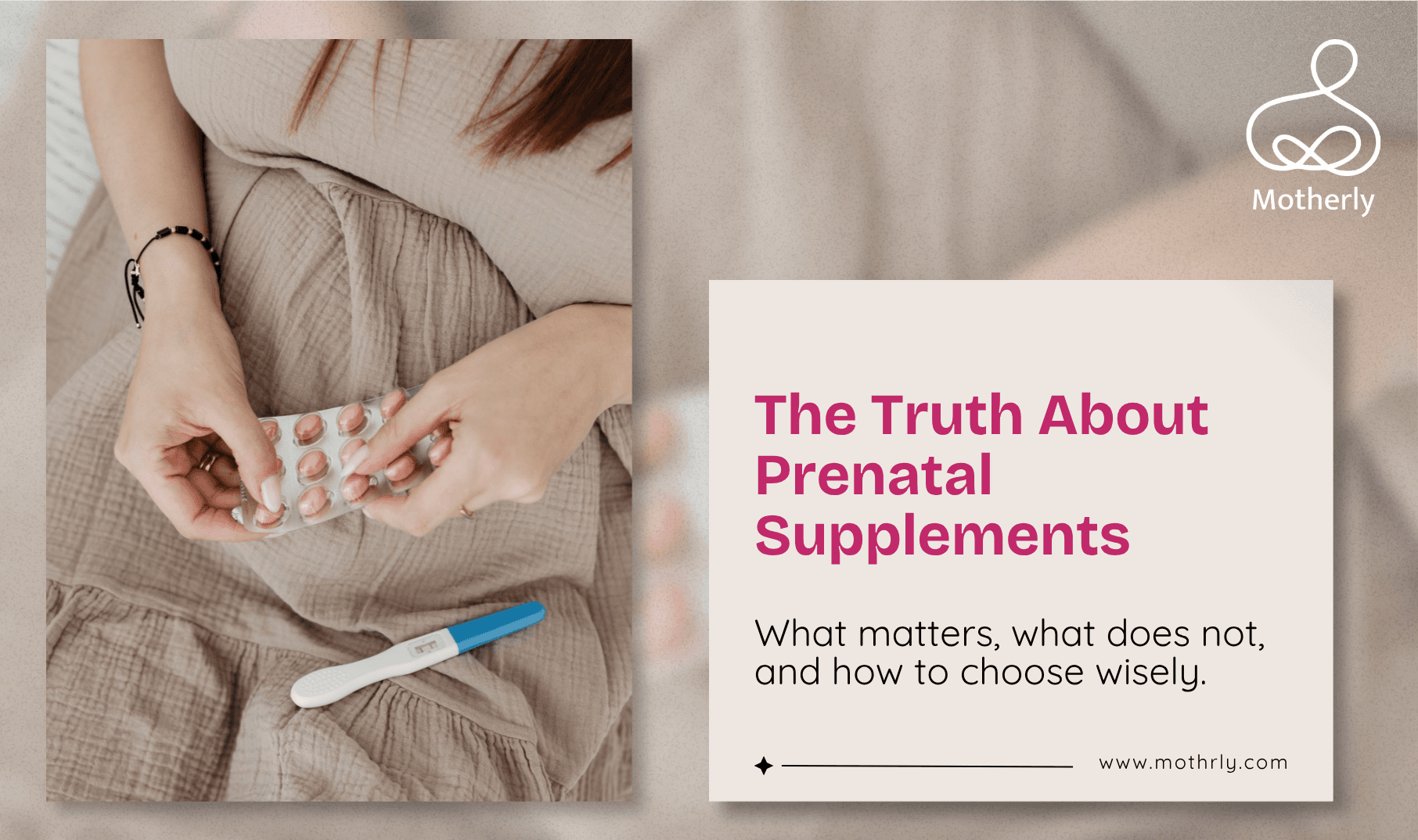
Motherly — Folic acid, DHA, iron, vitamin D, iodine — here is the evidence-based guide to what prenatal supplements matter, what doses, and which expensive products you can skip.
Walk into any pharmacy in India and you will find shelves of prenatal supplements ranging from INR 200 to INR 2,500 per month, many claiming to be complete prenatal formulas. The marketing is targeted squarely at pregnant women's anxiety — the fear of not giving their baby everything possible. Some of what is in these products is genuinely essential. Some is unnecessary at the doses provided. Some is marketing dressed in medical language. This article is about distinguishing between these categories, so that you spend your money on what matters and your mental energy on something other than supplement labels.
“The marketing is targeted squarely at pregnant women's anxiety — the fear of not giving their baby everything possible. Spend your money on what matters and your mental energy on something other than supplement labels.”
The non-negotiables: what genuinely matters
Folate or folic acid at 400-800mcg daily, started before conception if possible and maintained through the first trimester, is essential for neural tube defect prevention — one of the most evidence-supported interventions in all of prenatal care. Women with MTHFR gene variants may benefit from the pre-converted form, methylfolate. Iron: the specific dose depends on your blood count — blanket supplementation at high doses is appropriate for those who are deficient or anaemic, but should be guided by testing. Vitamin D: most urban Indian women are deficient due to indoor lifestyles; 1,000-2,000 IU daily is appropriate unless blood levels have been tested and higher doses are indicated. Iodine at 150mcg daily: important for foetal thyroid function and brain development, often absent from Indian prenatal formulations. DHA at 200-300mg daily: important for foetal brain and eye development, particularly if oily fish is not regularly consumed.
What is less necessary or unnecessary at promoted levels
Excessive B-vitamin doses beyond what a standard B-complex provides have no additional benefit in women who are not deficient. Herbal additions in prenatal formulas — ashwagandha, various antioxidant blends — have variable and often absent evidence, and some herbs have limited safety data in pregnancy. Calcium at high doses in a single supplement inhibits iron absorption — if both calcium and iron are needed, they should be taken at different times of day, not combined in one tablet. Collagen supplements have no evidence for pregnancy benefit. Expensive branded prenatal formulas are not necessarily more effective than a simpler, well-chosen combination. A good quality iron-folic acid tablet combined with a separate vitamin D supplement and a DHA supplement covers the evidence-based essentials for most women at a fraction of the cost of premium products.
Unsafe supplements: the ones to actively avoid
Vitamin A supplementation beyond what is provided in a standard prenatal vitamin (approximately 770mcg RAE) carries teratogenic risk at high doses. Herbal supplements with stimulant or uterotonic properties — including dong quai, pennyroyal, blue cohosh, and various herbal teas marketed for pregnancy — should be avoided. High-dose vitamin A (as retinol, not beta-carotene) above 10,000 IU is specifically contraindicated. The general principle is conservative: during pregnancy, add only what you know you need, avoid anything not clearly indicated, and consult your doctor before starting anything new.
Cut Through the Supplement Noise
Motherly cuts through the noise so you can focus on what actually matters for your health and baby's growth.
Keep Reading

DOULA CARE
The Complete Guide to Choosing the Right Doula for Your Birthing Journey
Choosing a doula? Learn what a doula does, how to interview candidates, check training and costs, and spot red flags be…
September 30, 2026

BREASTFEEDING
Overcoming Early Breastfeeding Challenges: Expert Advice from Lactation Consultants
Struggling with early breastfeeding? Lactation consultants explain how to fix latch problems, sore nipples, low milk wo…
September 30, 2026