Mother
The Research Says That Relationship Satisfaction Drops After Having a Baby. Here Is Why, What It Does Not Mean, and What Actually Helps.
motherly·June 2, 2026
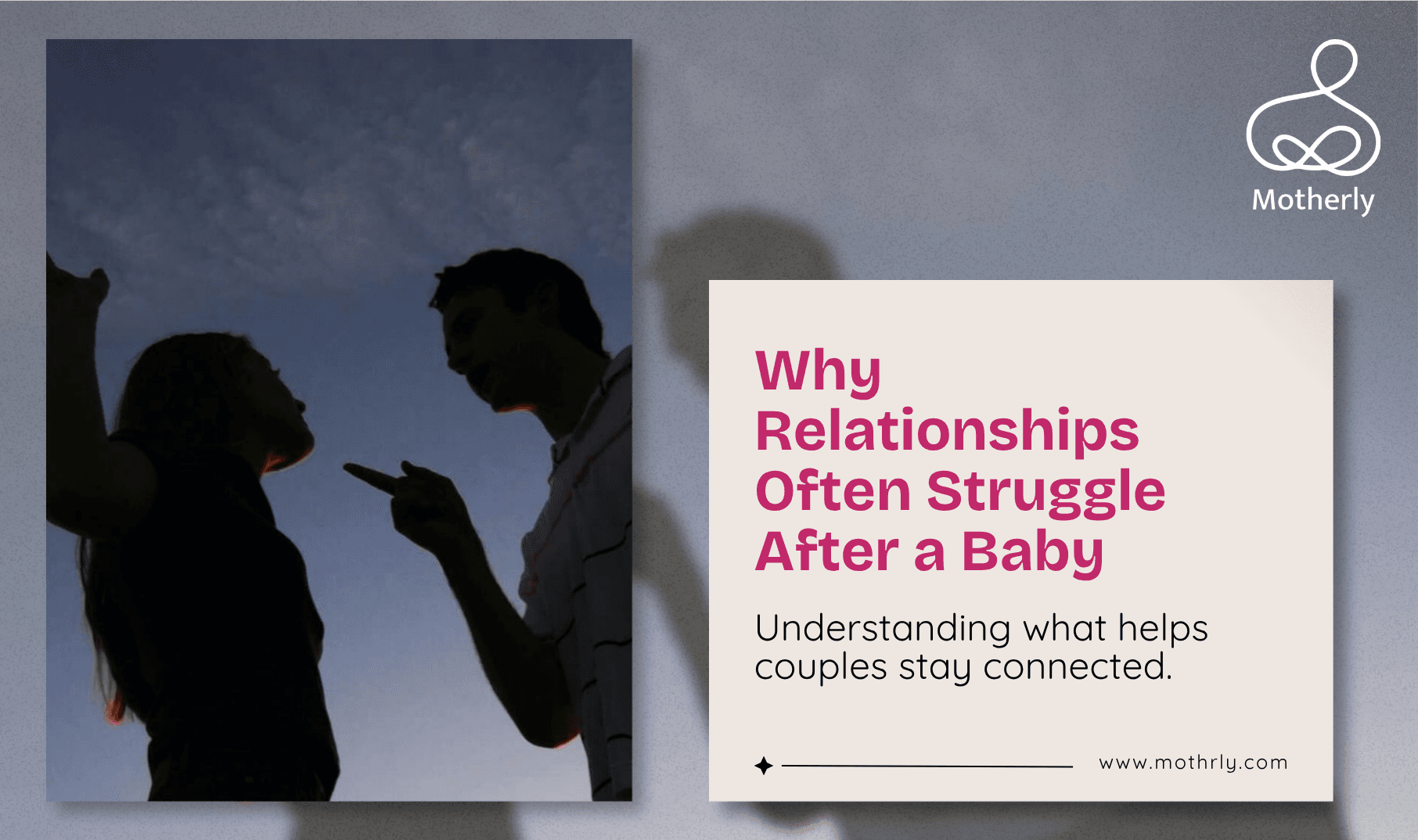
Motherly — Research consistently shows relationship satisfaction drops after having a baby. Here is why it happens, what it does not mean, and the strategies that genuinely help.
The finding that relationship satisfaction declines following the birth of a first child is one of the most replicated findings in family psychology. It holds across cultures, income levels, and relationship structures. It is not a sign that a couple is ill-suited or that their relationship has failed.
Why relationship satisfaction declines
It is a near-universal response to a set of structural changes in the relationship that the arrival of a child inevitably introduces: severe sleep deprivation, asymmetric distribution of labour, loss of couple time, changes in sexual intimacy, new and sometimes conflicting definitions of parenting roles, and the intrusion of extended family opinions and expectations into what was previously a more boundaried partnership.
"It is not a sign that a couple is ill-suited or that their relationship has failed. It is a near-universal response to structural changes."
Why the Indian context has specific pressures
In the Indian context, the postpartum period introduces specific relational dynamics that amplify the universal stressors. Extended family involvement — while providing practical support that is genuinely valuable — can also create tension around parenting decisions, feeding choices, household management, and the boundaries between the couple and the wider family. The mother's primary relationship often shifts toward her own mother during the confinement period, creating a degree of distance with the partner that can become entrenched. The expectation in many families that the woman will manage the emotional and practical labour of new parenthood largely alone, while the father resumes his professional role relatively unchanged, sets up an inequity that erodes goodwill over time.
What the research says actually helps
The interventions that research supports for protecting the couple relationship through the transition to parenthood share several features. First, explicit acknowledgement that the transition is hard — that the relationship will go through a difficult period and that this is normal and temporary rather than a sign of incompatibility. Second, deliberate distribution of the physical and emotional labour of parenting, negotiated explicitly rather than assumed along gender lines. Third, protection of time for the couple — even brief, even imperfect — that is not focused on the baby. Fourth, the development of a shared parenting philosophy that reduces conflict about the many decisions that arise in the early months. And fifth, the willingness to seek support — from trusted friends, family, or professional counselling — when the difficulties feel intractable.
You Are Not Alone
Motherly supports the whole family, including the partnership at its centre. Because a strong couple raises a nourished child.
Keep Reading
DOULA CARE
The Complete Guide to Choosing the Right Doula for Your Birthing Journey
Choosing a doula? Learn what a doula does, how to interview candidates, check training and costs, and spot red flags be…
September 30, 2026
BREASTFEEDING
Overcoming Early Breastfeeding Challenges: Expert Advice from Lactation Consultants
Struggling with early breastfeeding? Lactation consultants explain how to fix latch problems, sore nipples, low milk wo…
September 30, 2026