Trying to Conceive
She Already Has One Child. Why Can She Not Have Another? The Invisible Grief of Secondary Infertility.
motherly·May 29, 2026
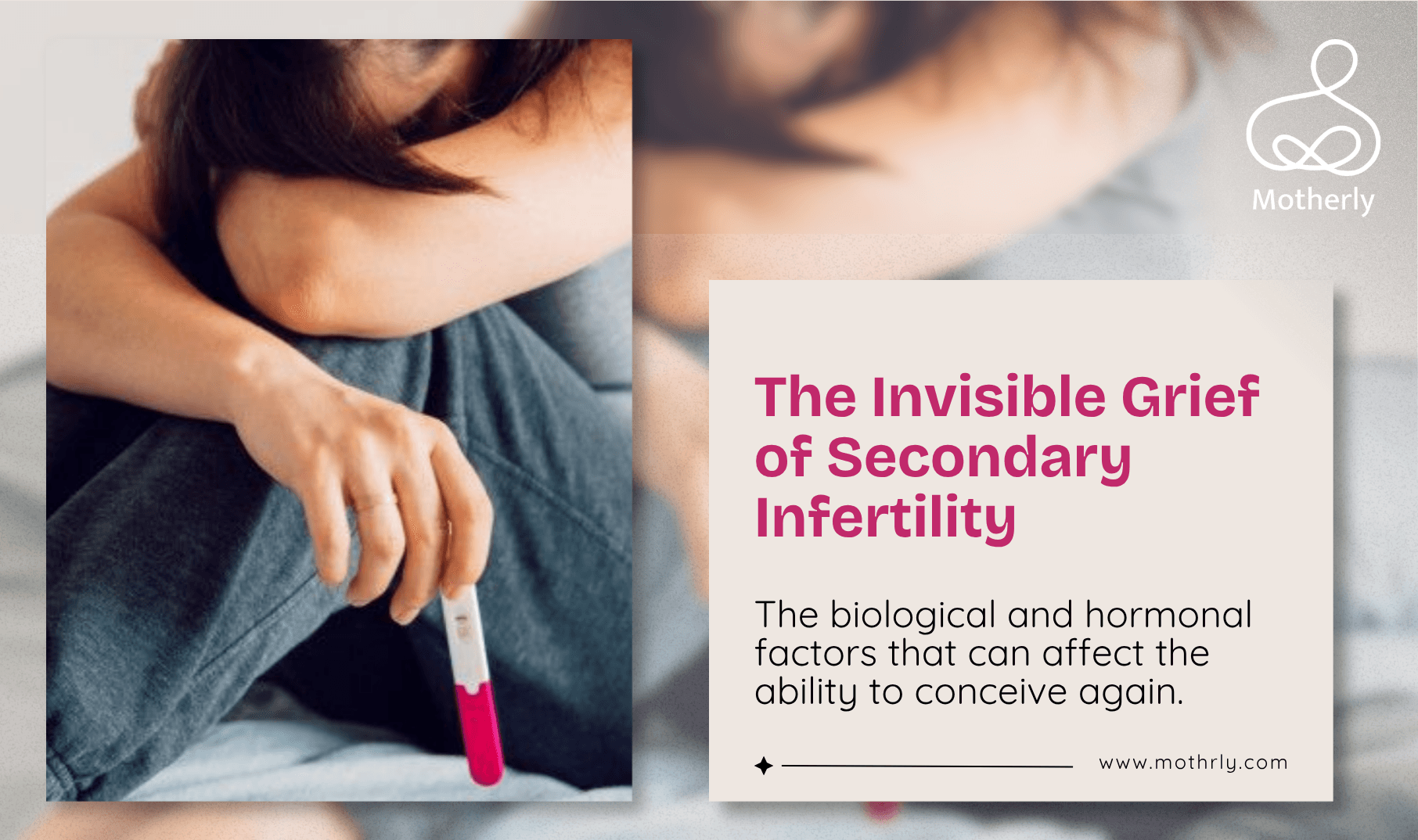
Motherly — Secondary infertility is the most common form of infertility globally, yet it is often dismissed. It is a genuine medical problem and a genuine emotional pain.
Secondary infertility, defined as the inability to conceive or carry a pregnancy to term after a previous successful birth, is actually the most common form of infertility globally, accounting for more than half of all infertility cases worldwide. Yet it receives far less attention, far less sympathy, and far less medical urgency than primary infertility. The implicit cultural message is that having one child means you should be grateful, that your suffering is less legitimate, that you are somehow greedy to want more. This cultural response adds a specific cruelty to an already painful experience, and it is wrong. Secondary infertility is a genuine medical problem and a genuine emotional pain, and it deserves to be treated as both.
Why it is particularly isolating
Women with secondary infertility often feel they cannot access the communities of support that exist for primary infertility, because those communities are centred around the experience of having no children, and they do have a child. At the same time, they cannot share their grief with most of their parenting peers, who may not understand why having one child is not enough, or who may offer the particularly unhelpful observation that they are lucky to have one. The grief is real. The longing for a sibling for their child, for the family they imagined, for another pregnancy, these are not trivial desires and they deserve to be treated with the same seriousness and the same medical attention as any other form of infertility.
"Having one child does not make the longing for another any less real."
What causes secondary infertility — the specific factors to investigate
Age is a significant factor. A woman who had her first child at 30 and is trying at 35 has experienced meaningful age-related changes in ovarian reserve and egg quality that were not present at the first conception. A previous caesarean section can cause uterine scarring, intrauterine adhesions (Asherman's syndrome), or a caesarean scar defect (an isthmocele) that affects implantation. Endometriosis can develop or progress between pregnancies. Male factor infertility can develop or worsen. Exposure to heat, illness, medication, varicocele development, and lifestyle changes since the first conception can all affect sperm quality. A new investigation starting from the beginning, not assuming that because pregnancy occurred once it will occur again the same way, is the appropriate approach.
Seeking help: when and how
The guideline of trying for twelve months before seeking medical advice applies to women under 35. For women over 35 who have been trying for six months, investigation is appropriate. For women who have experienced a change in their cycle regularity, significant pain, or a new diagnosis since their last pregnancy, earlier investigation is warranted. The investigation for secondary infertility covers the same ground as for primary infertility: semen analysis, hormonal panel, ultrasound, and tubal assessment, with the addition of uterine cavity assessment to look for scarring or a scar defect after caesarean being particularly important in this context.
Space for Every Journey
Motherly holds space for every version of the fertility journey, including the ones nobody talks about.
Keep Reading
DOULA CARE
The Complete Guide to Choosing the Right Doula for Your Birthing Journey
Choosing a doula? Learn what a doula does, how to interview candidates, check training and costs, and spot red flags be…
September 30, 2026
BREASTFEEDING
Overcoming Early Breastfeeding Challenges: Expert Advice from Lactation Consultants
Struggling with early breastfeeding? Lactation consultants explain how to fix latch problems, sore nipples, low milk wo…
September 30, 2026