Mother's Health
She Was Told to Relax and She Would Get Pregnant. This Is Both True and Not True. The Real Science of Stress and Fertility.
motherly·May 25, 2026
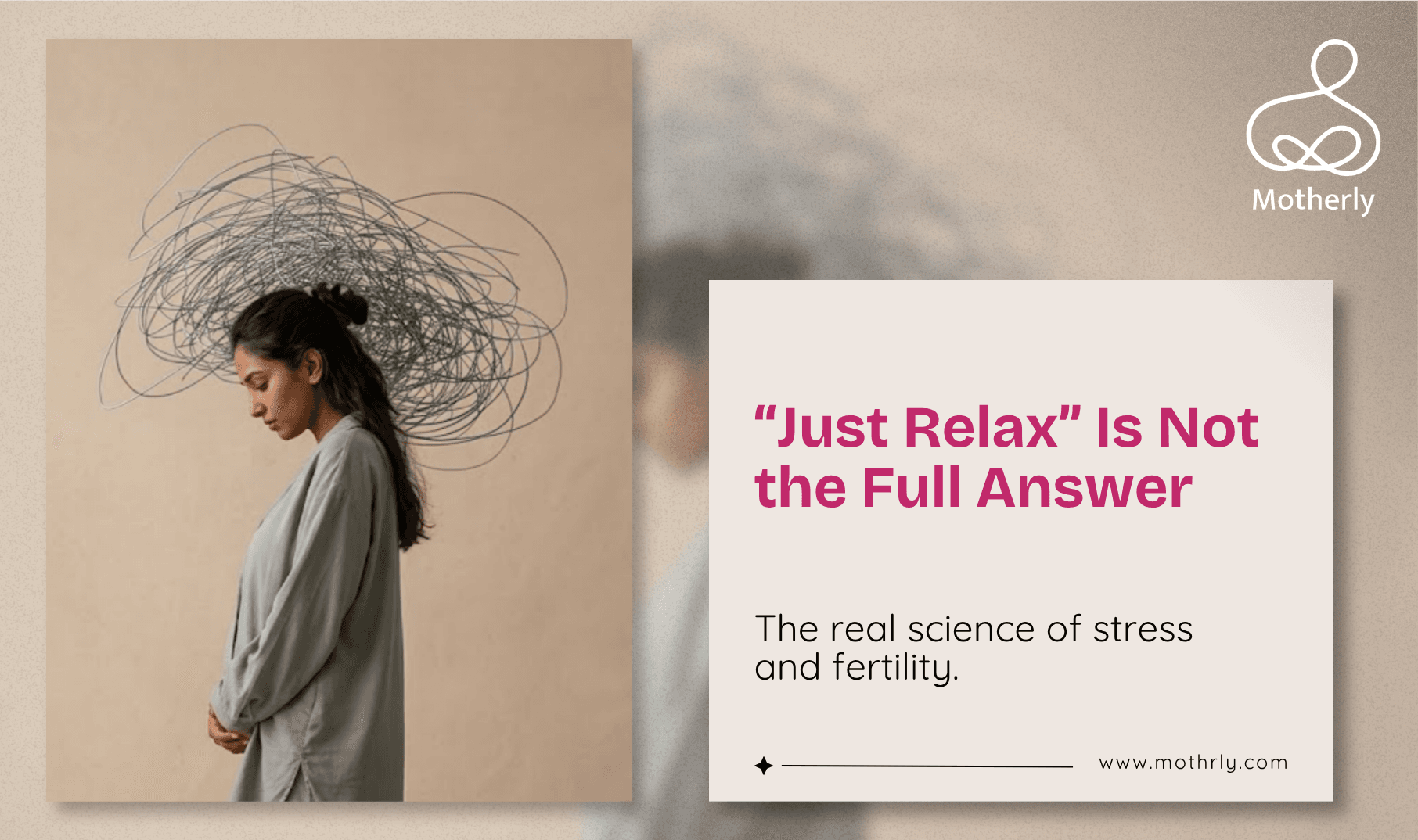
Motherly — The advice to relax and conceive is both true and untrue. Here is the actual
science of stress, cortisol and fertility — and what helps.
The advice to ‘just relax and it will happen’ is the most commonly offered and most frequently resented piece of fertility guidance in existence. Women who receive it feel dismissed, as though their medical challenge is being attributed to insufficient emotional management. And in many cases, the advice is offered as a substitute for proper investigation rather than as a complement to it. This is where it fails.
But the underlying observation—that chronic psychological stress can affect fertility—is not wrong. It is simply incomplete and often communicated in a way that adds to the stress it is meant to reduce. Here is what the evidence actually shows about the relationship between stress and reproductive health.
“The isolation of infertility and pregnancy loss significantly amplifies psychological
distress. Breaking that isolation through community is both the most ancient and the most evidence-supported
intervention available.”
How chronic stress affects the hormonal systems involved in reproduction
Chronic psychological stress activates the HPA axis—the hypothalamic-pituitary-adrenal system—resulting in sustained elevation of cortisol, the primary stress hormone. Elevated cortisol has several effects on the reproductive hormonal system: it suppresses the production of GnRH (gonadotropin-releasing hormone), which is the upstream signal that drives the entire ovarian cycle. It can disrupt the LH surge that triggers ovulation. It affects progesterone levels in the luteal phase. And it has been associated with uterine lining development and implantation. None of these effects are absolute or universal—most women under significant stress still ovulate and conceive. But at the margins, particularly for women already navigating fertility challenges, chronic stress is a meaningful factor.
The practices that actually reduce fertility-relevant stress
The evidence for specific stress-reduction practices in the context of fertility is strongest for mindfulness-based approaches, which have been shown to reduce cortisol and improve emotional wellbeing in women undergoing fertility treatment. Regular gentle movement—yoga, walking, swimming—reduces cortisol and improves sleep quality, which is itself an important hormonal regulatory factor. Social support—specifically, connection with other women who are navigating similar experiences—is among the most powerful stress-reduction interventions available. The isolation of infertility and pregnancy loss significantly amplifies psychological distress. Breaking that isolation through community is both the most ancient and the most evidence-supported intervention available.
Keep Reading
DOULA CARE
The Complete Guide to Choosing the Right Doula for Your Birthing Journey
Choosing a doula? Learn what a doula does, how to interview candidates, check training and costs, and spot red flags be…
September 30, 2026
BREASTFEEDING
Overcoming Early Breastfeeding Challenges: Expert Advice from Lactation Consultants
Struggling with early breastfeeding? Lactation consultants explain how to fix latch problems, sore nipples, low milk wo…
September 30, 2026