Trying to Conceive
"Unexplained Infertility" Is Not a Diagnosis. It Is a Failure of Investigation. Here Is What the Tests Are Missing.
motherly·May 29, 2026
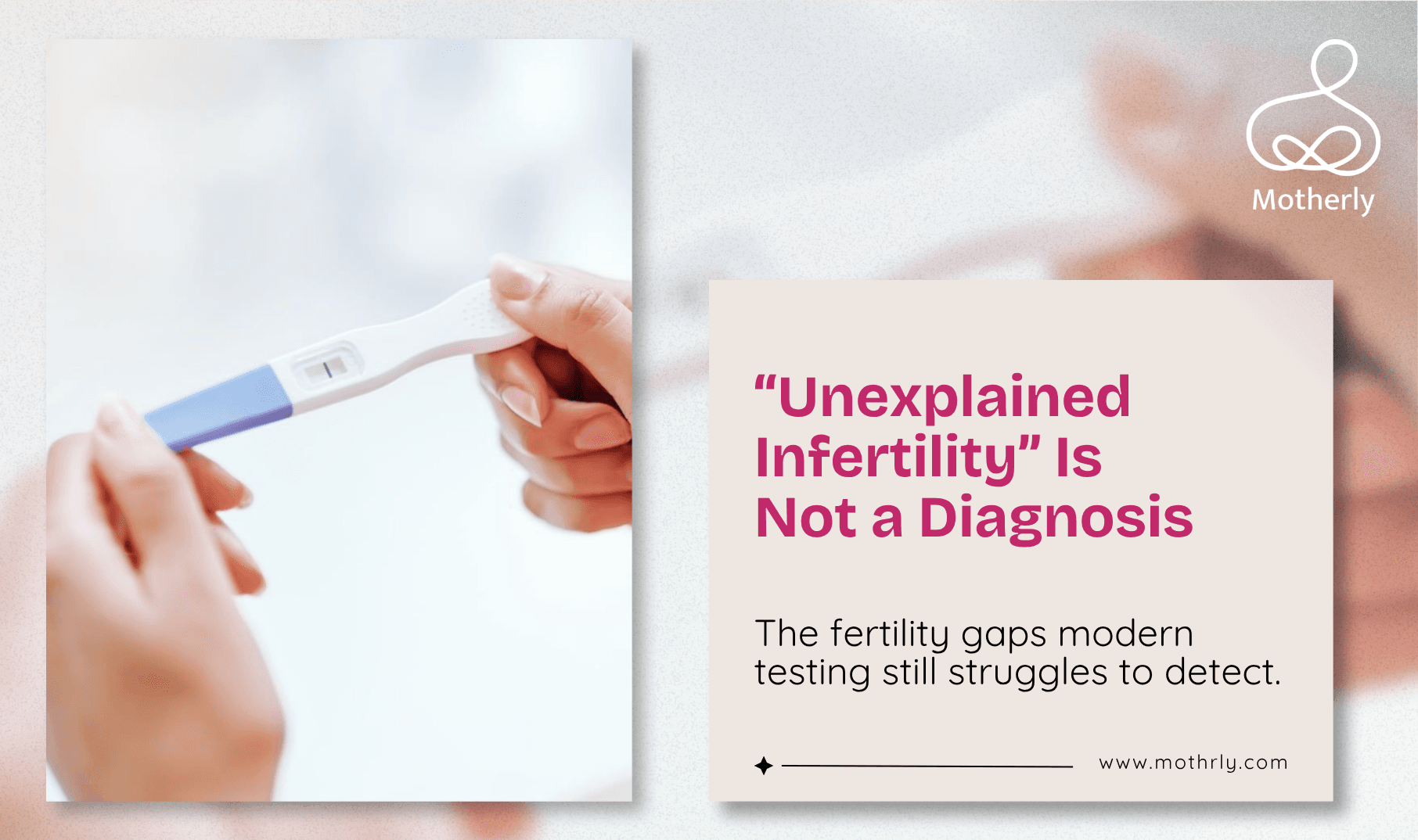
Motherly — One in four couples seeking fertility help are labelled unexplained. There is usually a reason; standard panels often stop before the real diagnostic work begins.
One in four couples who seek medical help for infertility will be given the diagnosis of unexplained infertility. They will be told that their tests are all normal. Semen analysis: normal. Hormone panel: normal. Ultrasound: normal. Fallopian tubes: open. And yet they are not pregnant. For many couples, this label is among the most frustrating things they will hear, because it sounds like an answer but is actually an admission that the investigation has reached its limits. The more accurate way to describe unexplained infertility is this: there is a reason you are not conceiving. The standard investigation has not found it. Here is where most standard investigations stop, and where the real diagnostic work should begin.
What standard tests miss: the uterine environment
Standard fertility investigations confirm that the basic anatomy is present and functioning. They do not assess the quality of the uterine environment for implantation. Chronic endometritis, low-grade inflammation of the uterine lining, often with no symptoms, is found in a significant proportion of women with unexplained infertility and recurrent implantation failure when specifically tested. A biopsy that tests for plasma cells in the endometrium can identify this condition. It is treatable with a course of antibiotics. Without the specific test, it goes undetected. It is not part of the standard fertility panel. Ask for it by name: an endometrial biopsy for chronic endometritis, sometimes called a CD138 immunohistochemistry stain.
"Unexplained infertility sounds like an answer, but it is often where investigation stopped too soon."
Sperm DNA fragmentation: the test most clinics don't order
Standard semen analysis measures sperm count, motility, and morphology. It does not measure sperm DNA fragmentation, the degree to which the genetic material inside the sperm cells is damaged. High DNA fragmentation can prevent fertilisation or cause early embryo arrest even when all other semen parameters are normal. Studies show that elevated sperm DNA fragmentation is found in a significant proportion of men in couples with unexplained infertility. It is also treatable, through antioxidant supplementation, lifestyle modification (reducing heat exposure, excessive alcohol, smoking), and in some cases surgical sperm retrieval which bypasses the epididymis where much of the fragmentation damage occurs. It is not part of the standard panel. Ask for it specifically. The test is called the Sperm DNA Fragmentation Index or DFI.
The ERA test and endometrial receptivity
The endometrial receptivity array (ERA) is a test that analyses the gene expression pattern of the uterine lining to determine whether it is in a receptive state at the time of embryo transfer. Studies show that a proportion of women have a displaced implantation window, meaning the uterine lining is most receptive at a different time point than the standard protocol assumes. For couples with recurrent implantation failure in IVF, an ERA-guided personalised transfer timing has shown improved outcomes. This test is not necessary for all couples with unexplained infertility. It is most relevant for those who have had multiple failed IVF transfers with good-quality embryos.
Immunological factors
In some cases, the female immune system mounts a response against sperm, embryos, or the implantation process itself. Antiphospholipid antibodies, natural killer cell activity, and HLA compatibility between partners are areas of active research. The evidence is more contested here and the field is moving rapidly. But for couples who have had multiple failed IVF cycles with good-quality embryos, immunological investigation at a specialist centre is a reasonable next step. The message is not that every couple with unexplained infertility has a hidden pathology. It is that before accepting the label as a final answer, it is reasonable to ensure that the investigation has been thorough. Ask specifically what tests have not been done, and why.
You Deserve Answers
Motherly believes every woman deserves answers, not silence. We are with you in the search.
Keep Reading

DOULA CARE
The Complete Guide to Choosing the Right Doula for Your Birthing Journey
Choosing a doula? Learn what a doula does, how to interview candidates, check training and costs, and spot red flags be…
September 30, 2026

BREASTFEEDING
Overcoming Early Breastfeeding Challenges: Expert Advice from Lactation Consultants
Struggling with early breastfeeding? Lactation consultants explain how to fix latch problems, sore nipples, low milk wo…
September 30, 2026