Lactation
What a Breastfeeding Mother Eats Shapes Her Baby’s Health, Palate, and Relationship With Food for Life. Here Is What to Eat and Why.
motherly·May 28, 2026
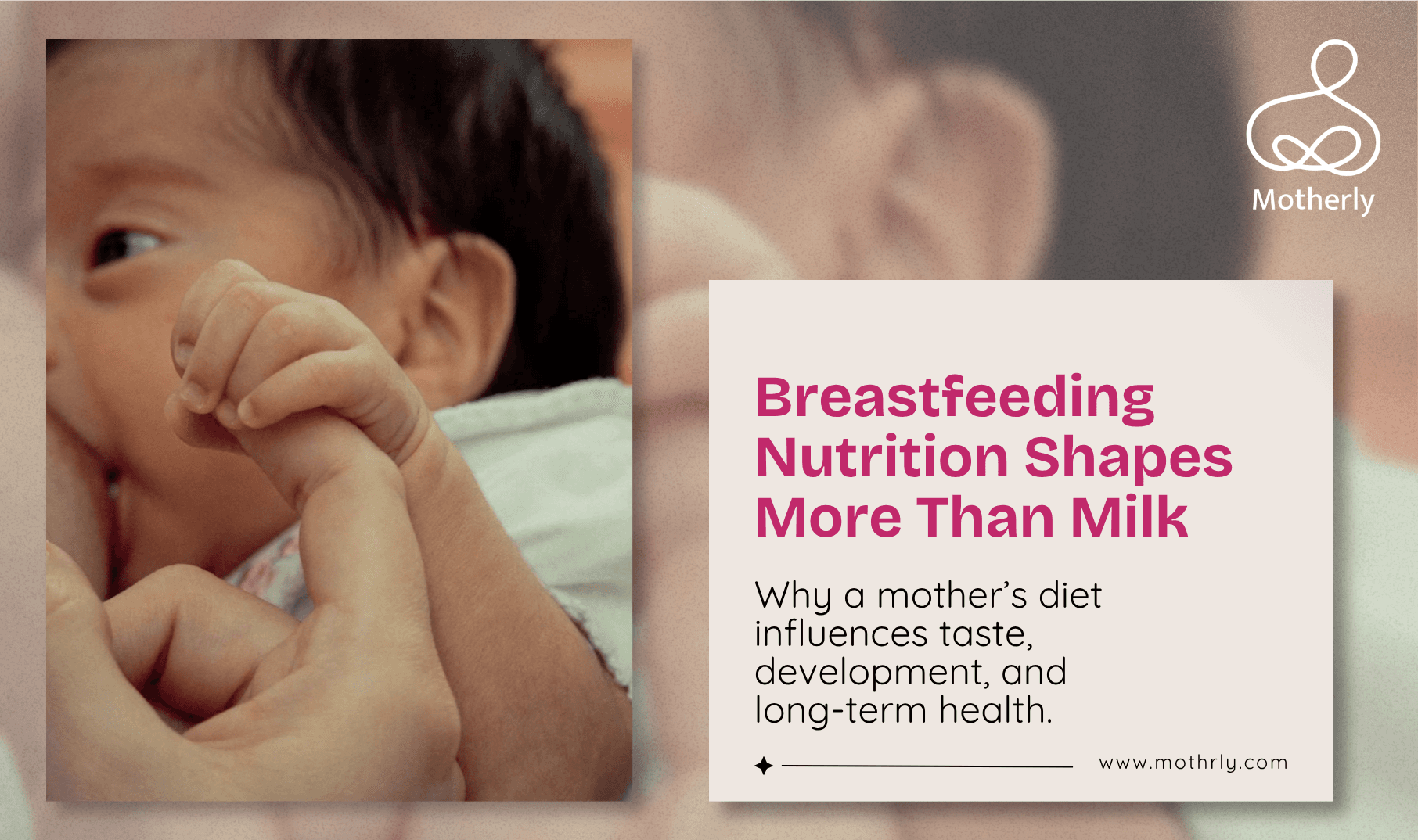
Motherly — A breastfeeding mother's nutrition supports her own recovery and directly influences key components of milk that shape her baby's growth, development, and long-term relationship with food.
Breast milk composition is remarkably stable in terms of most macronutrients and many micronutrients. The mother's body prioritises the infant's needs even when maternal intake is insufficient, drawing from the mother's stores at the cost of her own nutritional status. But this protective mechanism has limits, and there are specific nutrients whose concentration in breast milk is directly influenced by the mother's dietary intake. Understanding which nutrients fall into which category allows a breastfeeding mother to prioritise her nutritional efforts most effectively.
The nutrients where maternal intake directly affects breast milk concentration
Vitamin D: Breast milk from Vitamin D-deficient mothers contains very little Vitamin D, and exclusively breastfed infants of deficient mothers are at significant risk of Vitamin D deficiency and rickets. Either maternal supplementation with high-dose Vitamin D (4,000 to 6,000 IU daily, well above conventional recommendations) or direct infant supplementation is necessary for exclusively breastfed Indian infants.
Vitamin B12: Deficiency in vegetarian and vegan mothers directly produces deficiency in the breastfed infant, with potentially serious neurological consequences. B12 supplementation during breastfeeding is essential for mothers who do not eat animal products.
Iodine: Iodine concentrations in breast milk reflect maternal intake. Iodine deficiency in the breastfed infant affects thyroid function and neurological development.
Omega-3 fatty acids (particularly DHA): Breast milk DHA content reflects maternal dietary intake and supplementation. DHA is critical for brain and visual development in infancy and is deficient in the breast milk of women who do not consume oily fish or algae-based DHA supplements.
"What a breastfeeding mother eats nourishes two people: her baby and herself."
The traditional Indian breastfeeding diet - what it gets right
The traditional Indian postpartum and breastfeeding diet, with its emphasis on warm, nourishing, easily digestible, ghee-rich preparations, provides the caloric density, healthy fat content, and restorative nutrients that support both milk production and maternal recovery. The specific inclusion of sesame (which provides calcium and iron), fenugreek (which provides iron and galactagogues), turmeric (which provides anti-inflammatory support), and coconut (which provides lauric acid, a medium-chain fatty acid that appears in breast milk and has antimicrobial properties) reflects an accumulated wisdom about postpartum nutrition that modern nutritional science substantially validates.
Eat to Support Breastfeeding
Motherly's breastfeeding nutrition programme helps Indian mothers eat specifically to support milk production, their own recovery, and their baby's development.
Keep Reading

DOULA CARE
The Complete Guide to Choosing the Right Doula for Your Birthing Journey
Choosing a doula? Learn what a doula does, how to interview candidates, check training and costs, and spot red flags be…
September 30, 2026
BREASTFEEDING
Overcoming Early Breastfeeding Challenges: Expert Advice from Lactation Consultants
Struggling with early breastfeeding? Lactation consultants explain how to fix latch problems, sore nipples, low milk wo…
September 30, 2026