Family
What Is Legacy, Really? Why the Family You Build Is the Most Enduring Thing You Will Ever Create
motherly·May 22, 2026
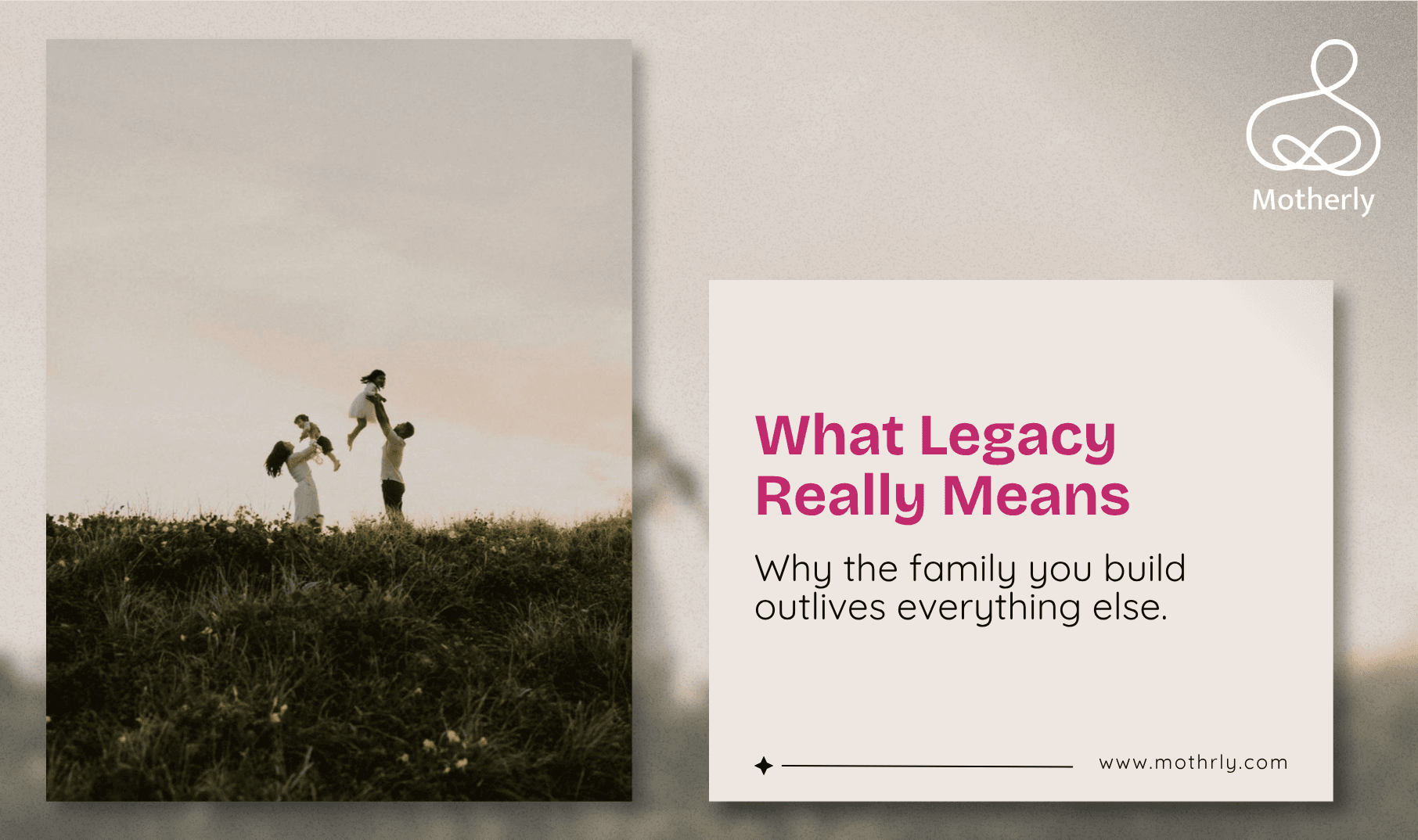
Motherly — Legacy is what you leave behind for the people who carry your blood, your stories, your name, and your love into a future you will not live to see.
We live in a culture that celebrates individual achievement. The career built, the business founded, the award received, the following accumulated. These are the metrics by which modern life tends to measure a person’s significance. But there is a different and older measure of significance — one that most human beings, when they are honest and reflective, find more compelling than any professional achievement: the family they built, the children they raised, the values they passed on, the love they created and sustained across generations.
Legacy, in its deepest sense, is not what you leave behind for strangers. It is what you leave behind for the specific people who carry your blood, your stories, your name, and your love forward into a future you will not live to see. It is the conversation you had with your daughter that she remembers twenty years later when she is raising her own child. It is the way your son holds his first child — with the same combination of wonder and terror and love that you felt when you held him. It is the recipe your mother taught you that your children will one day teach their own children. These are not small things. They are the substance of human meaning.
“These are not small things. They are the substance of human meaning.”
Why the Indian concept of family is a philosophical masterpiece
The Indian joint family system, for all its complexity and occasional friction, encodes one of the most sophisticated understandings of human interdependence ever developed. It places the individual within a web of relationships and obligations that extend backwards through ancestors and forward through descendants. It insists that no person is self-sufficient, that the self is always constituted in relation to others, and that the obligations of relationship — to parents, to children, to siblings, to the extended family — are not burdens but constitutive of what it means to be a person at all.
Contemporary urban India is renegotiating this inheritance. The nuclear family is increasingly the norm. Geographic mobility separates generations. The pressures of professional life reduce the time available for family relationships. These are real constraints. But the wisdom encoded in the Indian family tradition — that the individual is embedded in an intergenerational community, that each generation has obligations to the one before and the one after, that love is not a feeling but a practice sustained over a lifetime — is wisdom that becomes more valuable as the world becomes more fragmented, not less.
The grandmother’s knowledge and why we are losing it
For most of human history, new mothers were surrounded by a community of experienced women — mothers, grandmothers, aunts, neighbours — who had navigated the same experience and carried the accumulated knowledge of generations. This knowledge was practical: how to encourage milk supply, how to soothe a colicky baby, how to recognise the difference between a serious illness and a passing one. But it was also philosophical: how to hold the terror of loving something so fragile, how to find patience when you have nothing left, how to see the person you were before children as part of the same continuous self that is now also a mother.
The modern nuclear family, with mothers isolated in apartments and distant from their own mothers, has severed this transmission in ways that are producing genuine suffering. The postpartum mental health crisis, the anxiety of first-time mothers without community support, the sense of inadequacy that comes from comparing the reality of new motherhood to the curated versions on social media — these are in part the consequences of the loss of the grandmother’s knowledge. Recovering it, in whatever form is possible in modern life, is not a sentimental project. It is a public health imperative.
The Family You Build Is Your Legacy
Motherly was built to restore the community, the knowledge, and the support that every mother deserves. Start your journey at mothrly.com.
Keep Reading

DOULA CARE
The Complete Guide to Choosing the Right Doula for Your Birthing Journey
Choosing a doula? Learn what a doula does, how to interview candidates, check training and costs, and spot red flags be…
September 30, 2026
BREASTFEEDING
Overcoming Early Breastfeeding Challenges: Expert Advice from Lactation Consultants
Struggling with early breastfeeding? Lactation consultants explain how to fix latch problems, sore nipples, low milk wo…
September 30, 2026