Family
What Love in a Family Actually Is Not the Romantic Version, But the Real, Sustaining, Imperfect, Permanent Kind
motherly·May 22, 2026
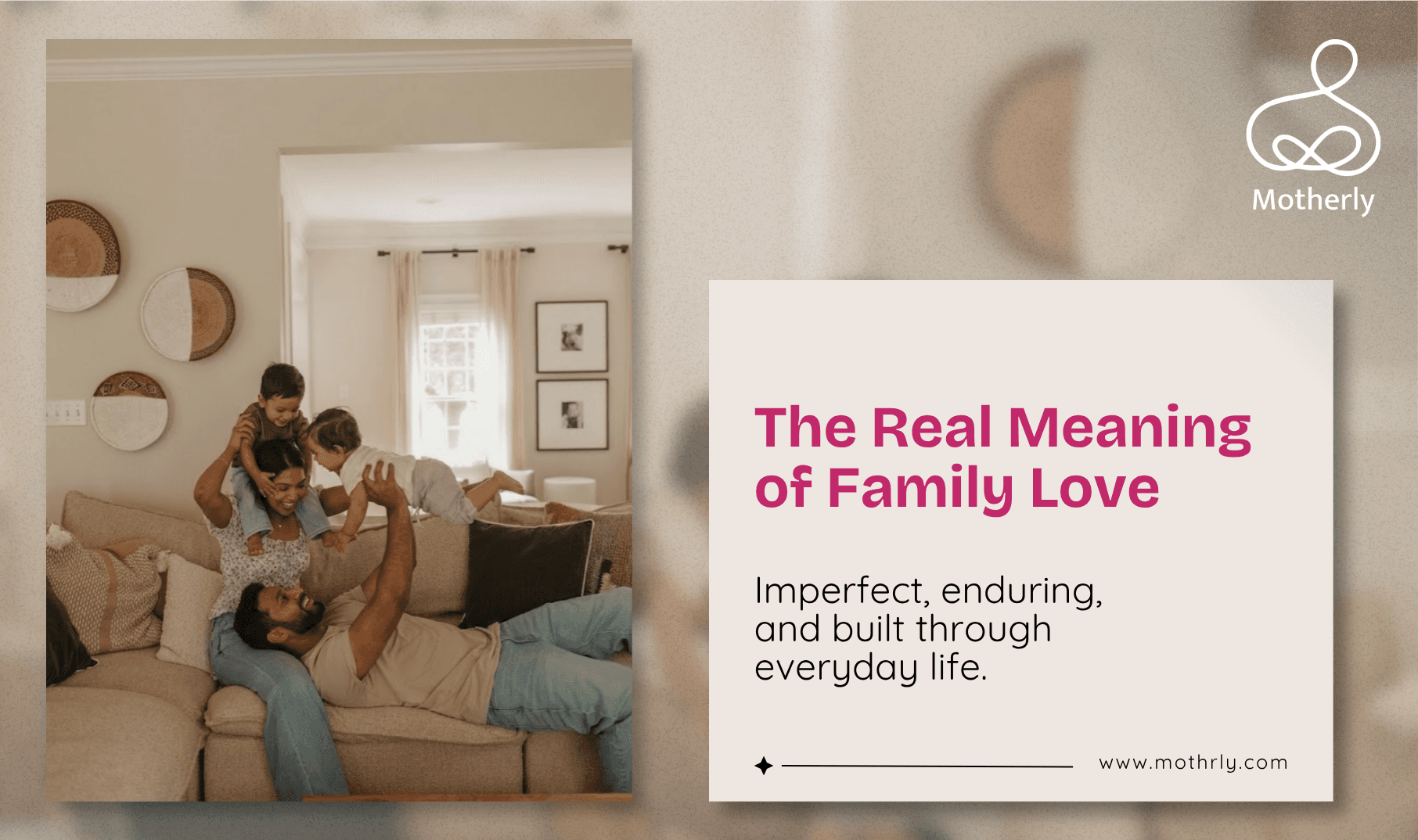
Motherly — This love is not primarily a feeling. It is primarily a practice. And it is the practice, sustained over decades, that constitutes the real substance of a life.
The word love is one of the most overused and least examined words in any language. We apply it to food, to cities, to television programmes, to people we met last week. In its most casual usage, it means ‘this gives me pleasure’ or ‘this aligns with my preferences.’ But there is a kind of love that is so different from this casual usage that it almost requires a different word. It is the love within a family — the love of a mother for a child, the love of siblings for each other, the love of a parent for a parent as that parent grows old and fragile. This love is not primarily a feeling. It is primarily a practice. And it is the practice, sustained over decades through difficulty and change, that constitutes the real substance of a life.
“This love is not primarily a feeling. It is primarily a practice.”
Love as practice versus love as feeling
The distinction between love as a feeling and love as a practice is one of the most important distinctions in human experience. Love as a feeling is involuntary, changeable, dependent on circumstances, and sometimes overwhelming. Love as a practice is chosen, sustained, expressed in action rather than declared in words, and deepened rather than diminished by difficulty. The mother who gets up at 3am for the fourth consecutive night is not feeling love in any conventional sense. She is practicing it — choosing, again, to prioritise another’s need above her own comfort. The accumulation of these choices is what love is, in the most enduring sense.
Why Indian families practise love differently
Indian family culture tends to express love through action rather than words. The mother who cooks a child’s favourite meal. The father who travels six hours to attend a ceremony. The grandmother who insists on sending food because food is how she says everything she cannot otherwise articulate. The sibling who shows up, without being asked, at a moment of crisis. These are not failures of expressiveness. They are a different — and in many ways deeper — vocabulary of love. The child who grows up in a home where love is shown rather than declared develops a different understanding of love than the child who grows up hearing the words without the actions. Both forms of communication matter. But when they are in conflict, the actions tell the truth.
Love Expressed Through Care
Motherly understands that the deepest forms of love are expressed through care. That is why we exist. Visit mothrly.com.
Keep Reading

DOULA CARE
The Complete Guide to Choosing the Right Doula for Your Birthing Journey
Choosing a doula? Learn what a doula does, how to interview candidates, check training and costs, and spot red flags be…
September 30, 2026

BREASTFEEDING
Overcoming Early Breastfeeding Challenges: Expert Advice from Lactation Consultants
Struggling with early breastfeeding? Lactation consultants explain how to fix latch problems, sore nipples, low milk wo…
September 30, 2026