Pregnancy Tips
Pregnancy in 2026 Is Objectively Harder Than It Was for Our Mothers. Here Are the Specific Reasons And What to Do About Each One
motherly·May 26, 2026
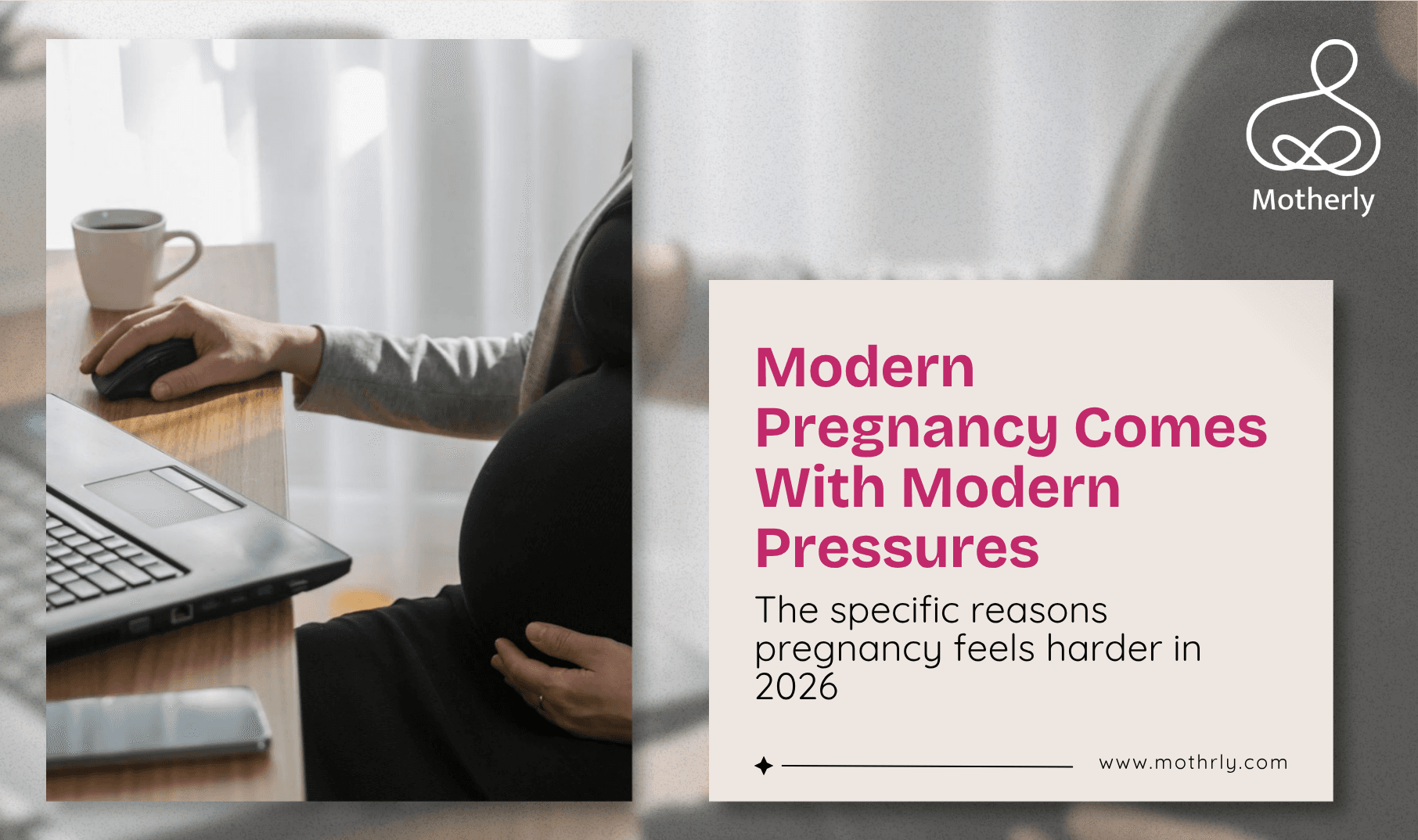
Motherly — Pregnancy today is objectively harder than it was a generation ago. Here are the specific reasons — lifestyle, environment, stress — and what to do about each.
This is not nostalgia or pessimism. The physiological evidence is clear: contemporary Indian women face a pregnancy environment that is more metabolically challenging, more nutritionally depleted, more chronically stressed, and more physically inactive than the environment in which their mothers and grandmothers were pregnant. The rates of gestational diabetes, thyroid disorders, anaemia, hypertension in pregnancy, and caesarean section have all increased over the past two decades in India. These are not random fluctuations. They are the predictable consequences of specific changes in how Indian women live.
“Contemporary Indian women face a pregnancy environment that is more metabolically challenging, more nutritionally depleted, more chronically stressed, and more physically inactive than a generation ago.”
The food environment has degraded
The Indian diet of fifty years ago was imperfect in many ways, but it was largely whole-food based, locally produced, seasonal, and nutritionally coherent. The contemporary urban Indian diet is increasingly dominated by refined grains, vegetable oils high in omega-6 fatty acids, added sugars, and ultra-processed foods with low nutrient density. This dietary pattern creates the metabolic and inflammatory conditions that increase the risk of every major pregnancy complication—gestational diabetes, preeclampsia, preterm birth, and low birth weight. The single most impactful thing a pregnant Indian woman can do for her pregnancy is to return, as much as possible, to a whole-food diet that resembles what her grandmother ate.
Physical activity has declined dramatically
The shift from physically active occupations and domestic labour to desk-based work and domestic appliances has reduced the average physical activity level of urban Indian women dramatically over the past two generations. A woman who spends eight hours sitting at a desk, commutes by car or auto, and has appliances for most domestic tasks may be accumulating fewer than 3,000 to 4,000 steps per day—a fraction of the activity level that is physiologically normal for human beings. Inactivity during pregnancy is independently associated with gestational diabetes, excessive weight gain, and poorer birth outcomes. This is a reversible risk factor.
Chronic stress has become the norm
The chronic background stress of contemporary urban life—financial pressure, career demands, commuting, nuclear family isolation, social media comparison, news environment—creates a sustained physiological stress response that has consequences for pregnancy as described previously. This chronic stress was not absent in previous generations, but it operated in a context of stronger social support networks, more regular rhythm, and more communal living that provided natural buffering. The nuclear family model, without extended family support, without community networks, and with the full weight of domestic and professional demands falling on two people rather than a household, produces a stress environment that is genuinely harder.
Whole Support for the Whole Mother
Motherly was built for the complexities of modern Indian pregnancy. Whole support for the whole mother.
Keep Reading

DOULA CARE
The Complete Guide to Choosing the Right Doula for Your Birthing Journey
Choosing a doula? Learn what a doula does, how to interview candidates, check training and costs, and spot red flags be…
September 30, 2026

BREASTFEEDING
Overcoming Early Breastfeeding Challenges: Expert Advice from Lactation Consultants
Struggling with early breastfeeding? Lactation consultants explain how to fix latch problems, sore nipples, low milk wo…
September 30, 2026