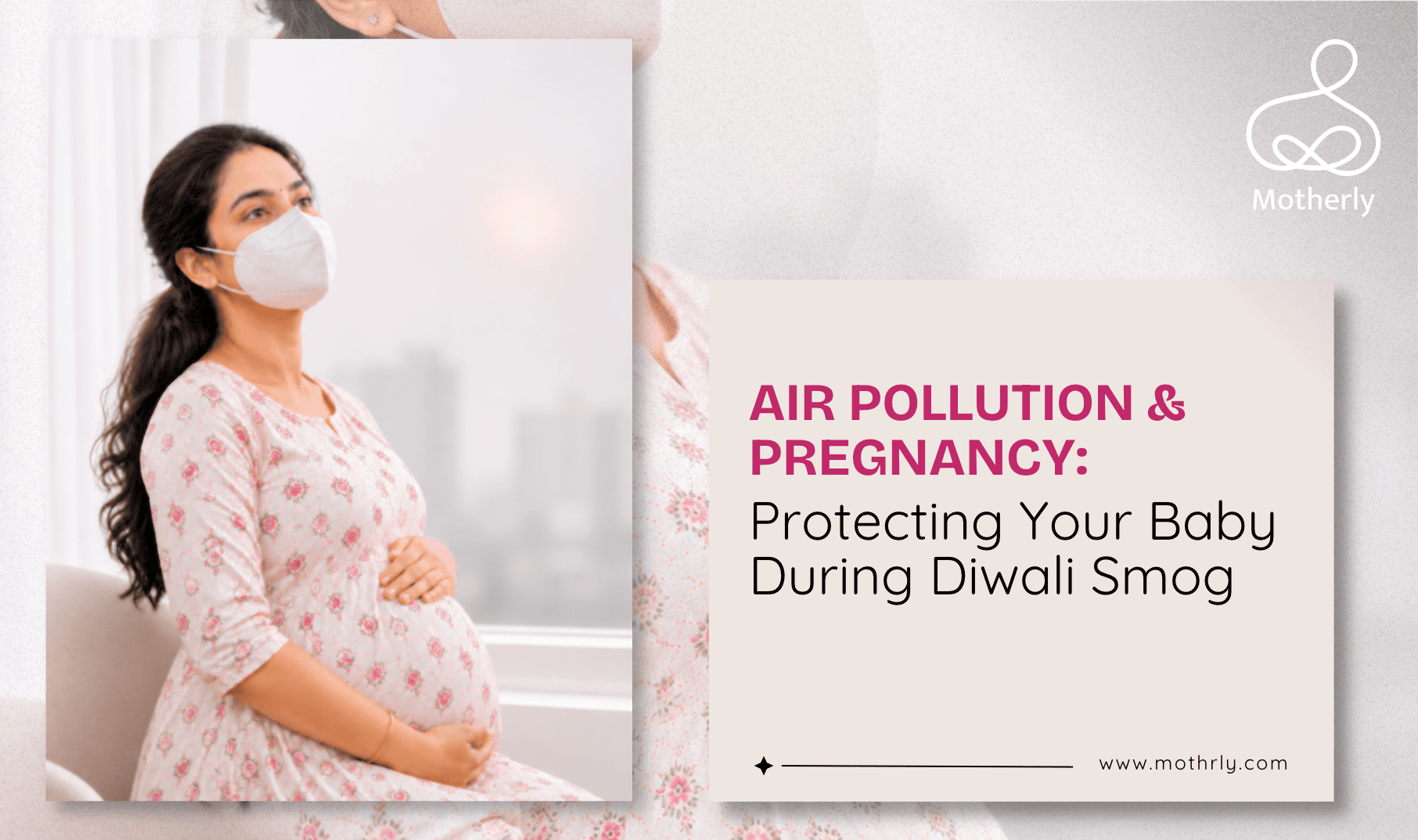
Air Pollution and Pregnancy in India: How to Protect Your Baby During Diwali Smog and Winter AQI Spikes
November 4, 2026 · Motherly Team
Air Pollution and Pregnancy in India: How to Protect Your Baby During Diwali Smog and Winter AQI Spikes
Yes, breathing polluted air for weeks or months in pregnancy is linked to a higher risk of preterm birth and low birth weight, and you can cut your exposure meaningfully with the AQI-based plan below instead of waiting for the smog to clear.
- An analysis of NFHS-5 data found each 10 µg/m³ rise in PM2.5 went with about 5% higher low-birth-weight prevalence and 12% higher preterm birth.
- Delhi's AQI reached 451 on 3 November 2026, five days before Diwali (8 November).
- You cannot clean the city's air, but you can control your outdoor hours, your bedroom air and your mask.
- Call your doctor for breathlessness at rest, chest pain, wheeze or reduced baby movements.
What does Indian data say about air pollution in pregnancy?
Three Indian studies point the same way, though none proves harm in any one pregnancy:
| Finding | Source |
|---|---|
| About 13% of Indian children are born preterm and 17% low birth weight; each +10 µg/m³ PM2.5 went with roughly +5% low birth weight and +12% preterm birth | NFHS-5 analysis, PLOS Global Public Health 2025 |
| In a Tamil Nadu mother-child cohort, +10 µg/m³ PM2.5 went with about 4 g lower birth weight and 2% higher odds of low birth weight | PubMed: Tamil Nadu cohort |
| Among 1,155 Delhi deliveries, first-trimester PM2.5 exposure was linked to preterm birth and low birth weight | Journal of Obstetrics & Gynaecology of India, 2023 |
The per-unit effect is small, but exposure is widespread and lasts months, which is why reducing avoidable exposure is worth the effort. This is about sensible habits, not panic.
Why is Diwali week a risk window?
Delhi's overall AQI touched 451 at 8 am on 3 November, the "severe" band, and the Supreme Court has allowed certified green crackers on 7 and 8 November under strict conditions. Fireworks add fine particles and metal-laden smoke that can hang around for days. Southern cities are not exempt: Chennai's air typically dips on Diwali night and on Bhogi mornings in January, so this plan applies from Chennai to Chandigarh.
What should I do at each AQI level during pregnancy?
Use the CPCB category on any AQI app as your trigger. This table is Motherly's practical framework, not a medical threshold:
| AQI (CPCB category) | Outdoors | Indoors | Mask |
|---|---|---|---|
| 0 to 100 (Good/Satisfactory) | Normal walks | Ventilate freely | Not needed |
| 101 to 200 (Moderate) | Shorter walks, away from traffic | Open windows when AQI dips | Optional |
| 201 to 300 (Poor) | Move walks indoors; limit errands | Windows shut at peak hours; purifier if you have one | N95/FFP2 for essential trips |
| 301 to 400 (Very poor) | Skip outdoor exercise | Purifier on; no incense or coils | N95/FFP2, with breaks |
| 401+ (Severe) | Stay in; postpone non-urgent trips | Purifier on; seal door gaps | N95/FFP2; call doctor if symptomatic |
Worried about smog and your pregnancy?
Same-day virtual consults are available for non-emergency concerns, so you don't have to travel through bad air.
Do I need an N95 mask in pregnancy?
A well-fitted N95 or FFP2 filters most fine particles; cloth and surgical masks do not reliably block PM2.5. Masks add breathing effort, so take breaks, remove one if you feel dizzy or breathless, and ask your doctor first if you have asthma or a heart or lung condition. Evidence on masks specifically in pregnancy is limited.
Does an air purifier help?
A true HEPA purifier sized for your room, run with doors and windows closed, lowers indoor PM2.5. Avoid ozone-producing "ionisers", and do not rely on houseplants, which do not clean room air meaningfully.
How do I handle Diwali at home?
- Stay indoors with windows shut during peak cracker hours, usually 7 to 11 pm.
- Skip camphor, dhoop, agarbatti and mosquito coils in closed rooms; use LED or electric diyas.
- Run the exhaust fan while cooking, since indoor cooking smoke also counts.
- Keep moving: prenatal yoga and indoor walking replace the outdoor stroll.
- Planning sweets? If you have blood-sugar concerns, read our gestational diabetes guide first.
Which symptoms mean I should call my doctor?
Call promptly for breathlessness at rest, chest pain, persistent wheeze or cough, fewer baby movements than usual, bleeding, severe headache or swelling of face and hands. In an emergency call 112. For regular prenatal checkups, consider booking a gynaecologist consultation.
A 10-minute "clean air room" routine
- Pick one room, usually the bedroom, and keep its door and windows shut.
- Run the purifier on high for 30 minutes before sleep.
- Wet-mop floors and wipe surfaces rather than dry-sweeping.
- Leave shoes outside and change clothes after outdoor trips.
- Ask your doctor about saline nasal spray if your nose feels dry or irritated.
Pregnancy checks shouldn't wait for the smog to clear
Keep your antenatal schedule with a verified gynaecologist, at home or online.
Frequently Asked Questions
1. Is it safe to go outside in AQI 400 during pregnancy?
Avoid non-essential outdoor time. For essential trips, wear a fitted N95 or FFP2 mask and keep the trip short, and ask your doctor if you have asthma or another lung or heart condition.
2. Can air pollution cause miscarriage?
Research is less consistent for miscarriage than for preterm birth and low birth weight. If you have bleeding or cramping at any AQI, contact your doctor.
3. Should I skip my antenatal appointments or walks?
No. Shift walks indoors or to cleaner hours, and use a virtual consult for non-emergency questions.
4. Should I move out of the city?
Most families do not need to. Reducing exposure at home and outdoors is the practical step; discuss individual circumstances with your doctor.
5. Are LED diyas safer than oil diyas?
Yes for indoor air, because they remove a smoke source. Open-flame diyas and incense add particles in closed rooms.
Related Reads
- Newborn Winter Care in India: Heaters, Angeethi and Baby Oil Safety.
- Baby Fever and Cough in the Monsoon-to-Winter Shift.
- Pregnancy Diet Plan: Complete Nutrition Guide.
- Prenatal and Postnatal Yoga in Chennai: Benefits and When to Start.
Medical Disclaimer: This article is for general information and education only and is not a substitute for professional medical advice, diagnosis or treatment. Always consult your doctor or obstetrician about your own pregnancy and never delay or disregard medical advice because of something you read here. In an emergency call 112 or go to the nearest hospital. Statistics are quoted from the linked sources and may be updated. Motherly's services complement, and do not replace, care from your treating doctor.
Related

Baby Fever and Cough in the Monsoon-to-Winter Shift: Dengue, Viral Fever and When to Call the Doctor
November 4, 2026

Newborn Winter Care in India: Safe Room Warmth, Heater and Angeethi Risks, and Baby Oil Massage
November 4, 2026
Gestational Diabetes in India: What the ICMR Data Says, When to Get Tested and a Practical Plan
November 4, 2026