Pregnancy Diet Plan
Gestational Diabetes in India: What the ICMR Data Says, When to Get Tested and a Practical Plan
Motherly Team·November 4, 2026
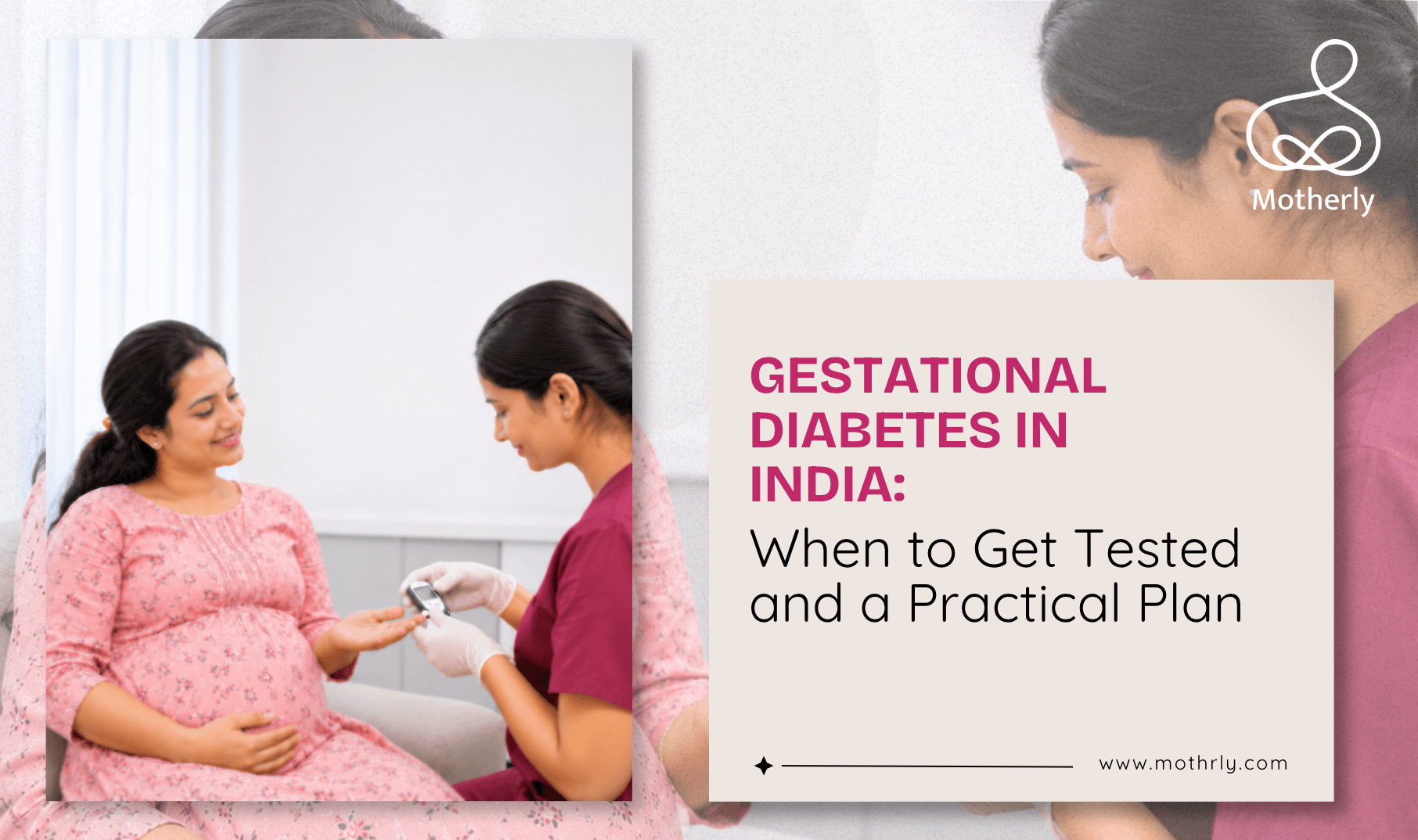
Quick Answer & Key Highlights:
About 1 in 5 pregnant women in India (22.4% in the ICMR-INDIAB survey) develop gestational diabetes, so every pregnant woman should be tested, ideally at her first antenatal visit and again at 24 to 28 weeks if the first result is normal.
- Prevalence was 24.2% in South India, with no clear urban-rural gap; a 2024 review pooled a lower 13%, because test criteria differ.
- Early gestational diabetes (before 20 weeks) was 19.2%, so a normal weight does not exempt you.
- Control rests on an Indian-plate diet, 10 to 15 minute walks after meals and glucose monitoring; medicines are added only if needed.
- Get tested again 6 to 12 weeks after delivery, because the risk of type 2 diabetes stays higher.
How common is gestational diabetes in India?
The ICMR-INDIAB survey of 1,032 pregnant women across all states and union territories found 22.4% had gestational diabetes, with early GDM at 19.2% and late GDM at 23.4%. Regional rates were highest in Central India (32.9%) and North India (31.4%), then South India (24.2%), East (17.9%), the North-East (16.6%) and West India (16.0%). Earlier estimates are lower: a 2024 systematic review pooled 13% and stressed that screening and diagnostic criteria vary across states. Whatever the exact number, it is high enough that universal testing is the standard of care.
When should I be tested, and which test is used?
National guidance is to test at the first antenatal visit and repeat at 24 to 28 weeks if the first test is normal. Two approaches are common in India; your doctor chooses one:
| Test | How it works | Widely used threshold for diagnosis |
|---|---|---|
| DIPSI (single step) | 75 g glucose drink, no need to fast | 2-hour plasma glucose 140 mg/dL or higher |
| IADPSG-style 75 g OGTT | Fasting test with readings at fasting, 1 hour and 2 hours | Any one value at or above 92 (fasting), 180 (1 hour) or 153 (2 hours) mg/dL |
Thresholds can differ slightly between hospitals, so follow your own doctor's result.
Who is at higher risk?
South Asian ancestry, a family history of diabetes, previous gestational diabetes or a large baby, PCOS (see our PCOS and pregnancy guide), age above 30 and overweight all raise risk. But the Indian STRiDE study data found early GDM was surprisingly common in women from lower-income groups despite lower BMI, which is why testing is advised for everyone.
What should an Indian gestational diabetes plate look like?
This is Motherly's practical swap framework. Your doctor or dietitian will personalise portions:
| Meal | Instead of | Try |
|---|---|---|
| Breakfast | Idli, dosa or white bread alone, sweet tea | Ragi or moong dosa, besan cheela, egg bhurji with vegetables, unsweetened curd |
| Lunch / Dinner | A large rice portion | Half plate vegetables, a quarter dal, paneer, fish or chicken, a quarter rice or millet (jowar roti, brown rice) |
| Snacks | Biscuits, namkeen, packaged juice | Roasted chana, unsalted nuts, buttermilk without sugar, a small fruit with protein |
| Fruit | Mango, banana, chikoo or grapes in large portions | Guava, apple, pear or berries; keep sweet fruit small and paired with protein |
| Sweets | Mithai on an empty stomach | A small piece straight after a meal, then a short walk |
Do not skip meals or fast to "control" sugar. Missing meals can cause ketones and low sugar, and vrat fasting in pregnancy needs your doctor's advice. Our first trimester pregnancy diet plan and complete nutrition guide cover the fundamentals.
High sugar in pregnancy needs closer follow-up
Motherly's gynaecologists offer more frequent monitoring and specialist referrals for gestational diabetes, at home or online.
Do walks after meals really work?
For many women, a gentle 10 to 15 minute walk after meals blunts the post-meal sugar spike. Start after your biggest meal. Stop if you feel dizzy, have contractions or bleeding, and check with your doctor first if you have been advised to limit activity. In smog season, walk indoors: see our Diwali smog guide, or try prenatal yoga at home (learn more about prenatal yoga benefits).
How will I monitor my sugar, and what are the targets?
You will usually check fasting and after-meal readings with a glucometer and keep a log. Commonly used targets worldwide are fasting under 95 mg/dL, 1 hour after meals under 140 and 2 hours under 120, but your doctor sets yours. If diet and activity are not enough, your doctor may add insulin or metformin. That is not a failure, and treating high sugar protects you and your baby.
What does it mean for my baby and delivery?
Untreated high sugar can lead to a larger baby, low blood sugar after birth, preterm birth and a higher chance of caesarean delivery. Tell the hospital you had gestational diabetes so they can check your baby's sugar, and plan early skin-to-skin and frequent feeds (consult our lactation consultants). For birth-mode questions, read our epidural, normal birth or C-section guide.
After delivery, get a glucose test 6 to 12 weeks postpartum and screen regularly afterwards, because gestational diabetes raises later type 2 diabetes risk.
Want a plan you can actually follow?
Talk to a verified gynaecologist about testing, monitoring and a delivery plan.
You Deserve Proper Care Too — Not Just Your Baby
Book online or download the app to find your verified support specialist in Chennai.
Free to download · Android & iOS · Book in under 2 minutes · mothrly.comFrequently Asked Questions
1. Will gestational diabetes go away after delivery?
Blood sugar usually returns to normal, but you still need a follow-up test at 6 to 12 weeks and regular screening.
2. Can I eat rice with gestational diabetes?
Yes, in controlled portions combined with dal and vegetables. Millets and brown rice digest more slowly.
3. Is the glucose drink safe in pregnancy?
The 75 g glucose test is a standard diagnostic test. Tell your doctor if you feel unwell after it.
4. Can I enjoy Diwali sweets?
Sometimes, in small portions straight after a meal, followed by a walk, and check your readings. Ask your doctor what suits you.
5. Does gestational diabetes mean I will get diabetes later?
It raises the risk, but weight management, regular activity, breastfeeding and yearly testing all help.
Related Reads
- PCOS in India and Trying to Conceive.
- Epidural, Normal Birth or C-Section in India.
- Pregnancy Diet Plan: Complete Nutrition Guide.
- Prenatal and Postnatal Yoga in Chennai.
Medical Disclaimer: This article is for general information and education only and is not a substitute for professional medical advice, diagnosis or treatment. Diagnostic thresholds, glucose targets and diet examples are illustrative; your obstetrician and dietitian will personalise them. Never change or stop medicine, including insulin, without medical advice. In an emergency call 112 or go to the nearest hospital. Motherly's services complement, and do not replace, care from your treating doctor.
Useful Resources & Guides
Keep Reading

PREGNANCY TIPS
Air Pollution and Pregnancy in India: How to Protect Your Baby During Diwali Smog and Winter AQI Spikes
Is Delhi-level smog dangerous in pregnancy? See what Indian data says on PM2.5, birth weight and preterm birth, plus an…
November 4, 2026

PEDIATRICS
Baby Fever and Cough in the Monsoon-to-Winter Shift: Dengue, Viral Fever and When to Call the Doctor
Baby has fever in dengue season? Learn red-flag signs, a 3-day fever log, what not to give and when to see a paediatric…
November 4, 2026