NICU Baby Care at Home in Chennai: What Happens After Discharge
August 17, 2026 · Motherly Clinical Team
NICU Baby Care at Home in Chennai: What Happens After Discharge
Reviewed by Mothrly’s Clinical Team — Obstetricians, Gynaecologists, Paediatricians & Postnatal Specialists | Evidence-based content for Chennai mothers
Most NICU information focuses on the hospital stay itself. This guide focuses on what happens next — what NICU-trained home care actually covers, and the warning signs that mean a return trip to the hospital.
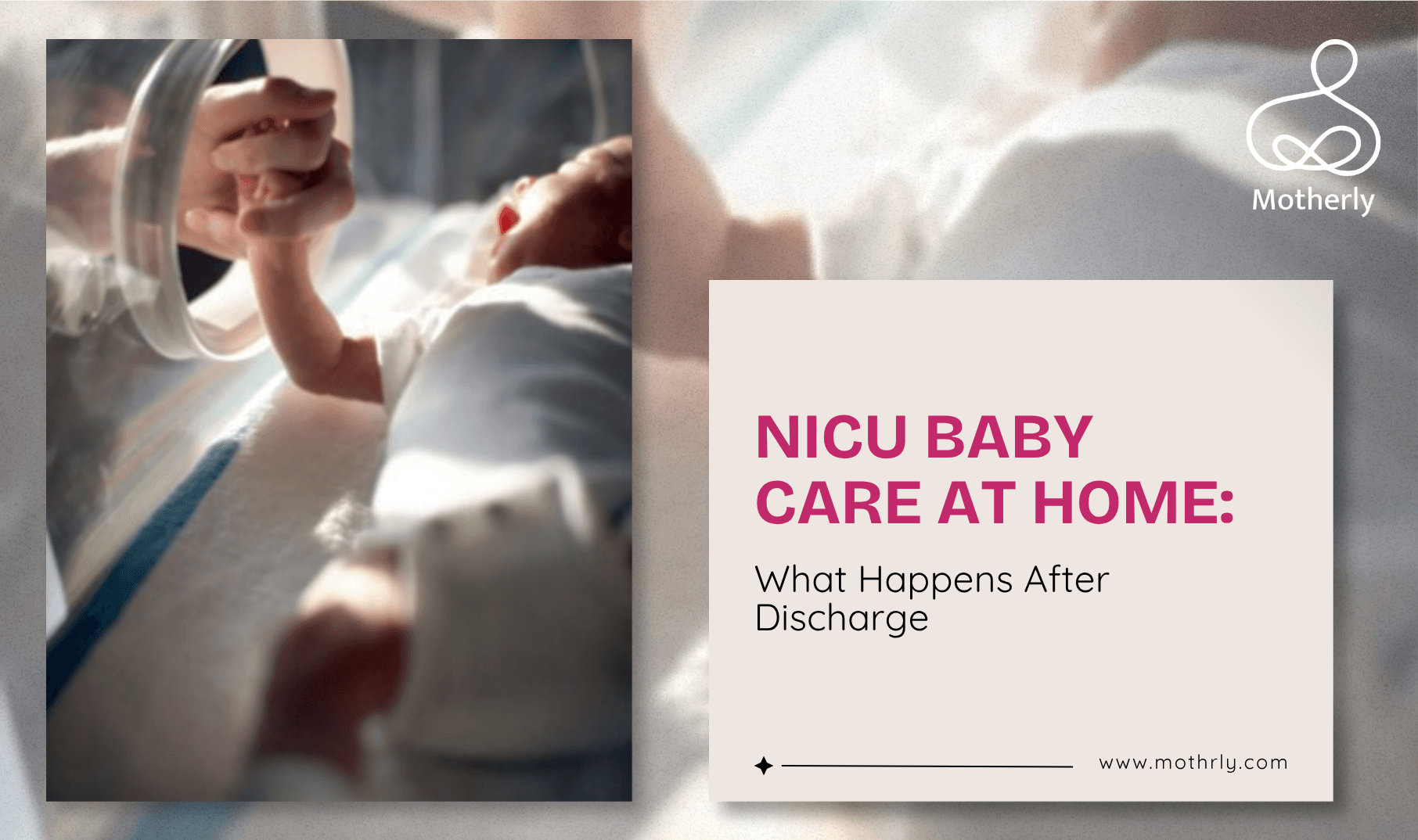
NICU baby care at home is specialised newborn support delivered by a caregiver trained specifically in the needs of babies who spent time in the neonatal intensive care unit — tracking feeding tolerance, monitoring weight gain, and watching for warning signs a NICU graduate is more prone to, such as breathing pauses or feeding difficulty. In Chennai, where a NICU stay can end with a fairly abrupt transition home, Motherly places caregivers with NICU-specific experience who understand the extra vigilance these babies need in the first weeks.
NICU graduates often need close feeding support too — our home-based lactation consultants work alongside NICU-experienced caregivers when feeding is still a challenge. See Motherly's full range of services on the homepage.
What Makes NICU Baby Care Different From Standard Newborn Care?
NICU graduates often come home at a lower birth weight, with systems that are still maturing, and sometimes with equipment like supplemental oxygen or apnea monitors still in use. That means more frequent paediatrician follow-ups than a typical full-term baby, closer feeding tracking, and a caregiver who recognises subtler warning signs before they become emergencies — not just standard newborn milestones. This overlaps closely with premature baby care at home, since many NICU graduates are also preterm.
What Does a NICU-Experienced Caregiver Actually Do at Home?
- Tracks feeds precisely — volume, duration, and tolerance — the way NICU nursing staff did
- Monitors for signs of apnea, unusual colour changes, or breathing pauses
- Supports any home equipment handover from the NICU strictly under medical guidance, never independently
- Coordinates closely with the paediatrician on weight-gain targets specific to that baby
- Supports parents who are often just as anxious as the baby needs care, not only the newborn
The transition home shouldn't mean losing the vigilance the NICU had.
What Warning Signs Should a NICU Graduate's Caregiver Watch For?
- Pauses in breathing longer than 15–20 seconds
- A bluish tint around the lips, face, or fingertips
- Feeding that takes far longer than expected, or frequent choking or coughing during feeds
- Poor weight gain despite frequent feeding
- Unusual lethargy or difficulty waking for feeds
Any of these should be escalated to the paediatrician or NICU follow-up team immediately — a trained caregiver's role is to notice fast and escalate, not to wait and see. If slow or difficult feeds are the main concern rather than a medical emergency, see our guide on when to call a lactation consultant.
How Is NICU Home Care Different From General Baby Care Support?
| General Baby Care Specialist | NICU-Trained Caregiver | |
|---|---|---|
| Focus | Standard newborn routines and warning signs | Precise feed tracking, higher medical vigilance |
| Equipment familiarity | Not typically required | Familiar with common NICU take-home equipment |
| Paediatrician coordination | Routine updates | Close, frequent coordination on specific targets |
Get a caregiver who already understands NICU-graduate needs.
Frequently Asked Questions
How soon after NICU discharge should home care start?
Ideally arranged before discharge, so a trained caregiver is in place from day one rather than during the adjustment period at home.
Can a NICU-trained caregiver manage medical equipment on their own?
Only under direct medical guidance and within the scope confirmed by your paediatrician — always clarify exactly what a caregiver is trained and permitted to handle before discharge.
Is NICU home care only for very premature babies?
No. It applies to any baby who spent time in the NICU, regardless of the reason — including full-term babies admitted for jaundice, infection, or breathing support.
Many NICU graduates are also premature or part of a twin set — see our guides to premature baby care at home in Chennai and twin baby care at home in Chennai, plus more on the Motherly blog.
Related Reading on the Motherly Blog
- Premature Baby Care at Home in Chennai: A Parent's Guide After NICU Discharge
- Baby's First Month: What to Expect at the Paediatrician Visit
- Lactation Support at Home in Chennai: What Ongoing Help Looks Like
- Twin Baby Care at Home in Chennai: What Changes With Two
⚠ Medical Disclaimer
This article is written by Mothrly's clinical team for educational purposes only. It does not constitute medical advice and must not replace consultation with a qualified healthcare professional. Individual circumstances vary — always seek personalised guidance from your doctor, gynaecologist, paediatrician, or specialist.
You Deserve Proper Care Too — Not Just Your Baby
Book online or download the app to find your verified support specialist in Chennai.