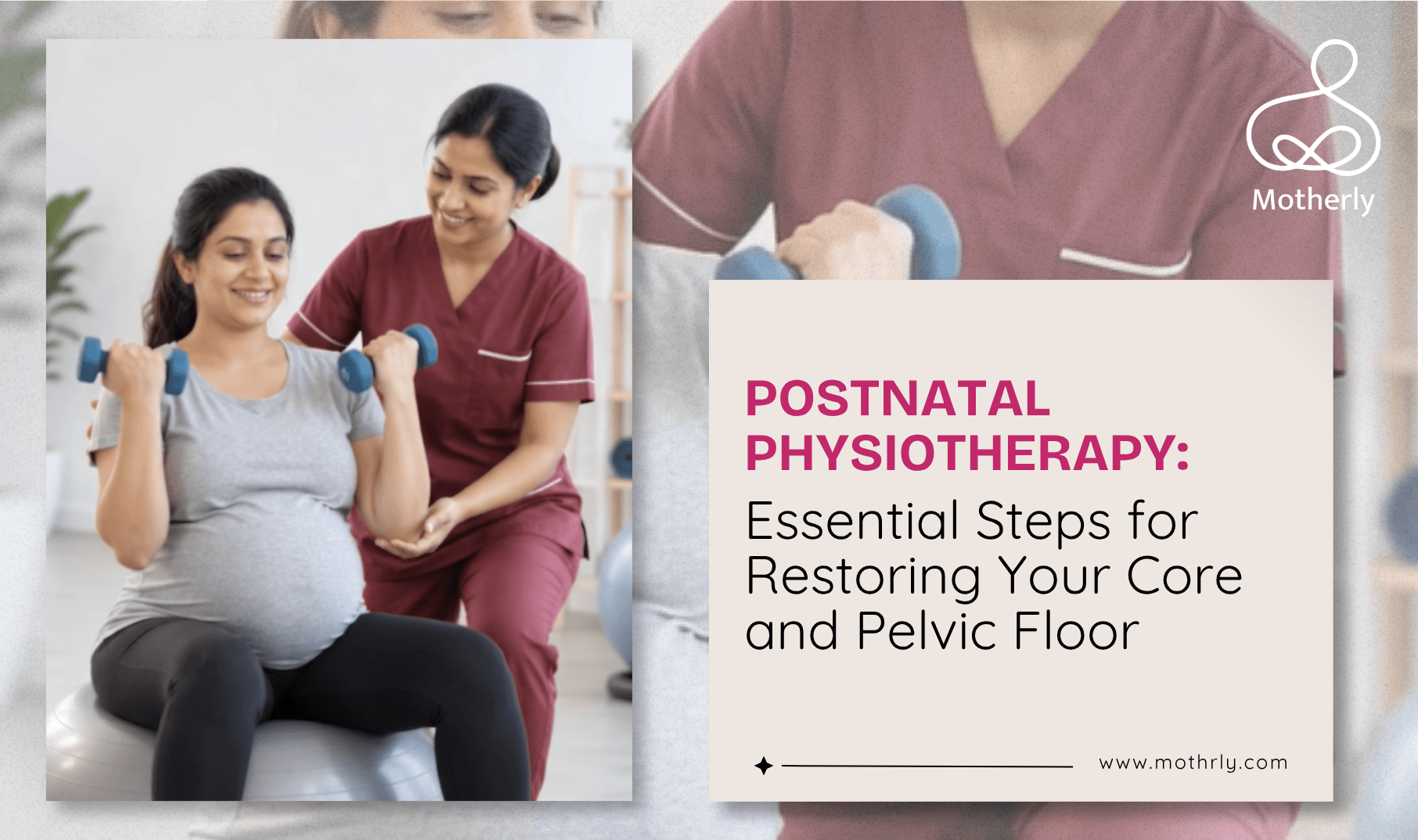
Postnatal Physiotherapy: Essential Steps for Restoring Your Core and Pelvic Floor
September 30, 2026 · Motherly Team
Postnatal Physiotherapy: Essential Steps for Restoring Your Core and Pelvic Floor
Pregnancy and childbirth bring significant physical changes to your body. Over nine months, your abdominal muscles stretch, your posture shifts, and your pelvic floor carries increasing weight. Birth, whether vaginal or by caesarean, adds further demands. Yet many new parents are sent home with a baby and little guidance on recovering their own bodies.
Postnatal physiotherapy fills that gap. It is not about "bouncing back". It is about rebuilding strength, function, and confidence so you can move, lift, exercise, and live comfortably. Here is what you need to know.
- Recovery is about rebuilding function, not "bouncing back."
- Start with diaphragmatic breathing and gentle pelvic floor activation activities
- Leaking, heaviness, or pain are signs to seek help, not to accept.
- Progress gradually and let symptoms, not the calendar, guide your return to exercise.
- Book a pelvic health physiotherapy check-up around six weeks postpartum.
Ready to rebuild your core and pelvic floor?
Book a check-up with a pelvic health physiotherapist.
Why Postnatal Physiotherapy Matters
Common postpartum issues are widespread, but they are not something you simply have to accept. These include:
- Leaking urine when you cough, sneeze, laugh, or exercise
- A feeling of heaviness or bulging in the vagina
- Lower back or pelvic pain
- Separation of the abdominal muscles (diastasis recti)
- Pain during intercourse
- Constipation or difficulty emptying the bowel
A pelvic health physiotherapist is trained to identify and treat these problems. Early support can prevent minor issues from becoming long-term ones.
Understanding Your Core and Pelvic Floor
Your "core" is not just your abs. It works as a pressure system made up of four parts:
- The diaphragm at the top
- The transverse abdominis, a deep abdominal muscle that wraps around your trunk
- The multifidus, deep muscles along the spine
- The pelvic floor, a hammock of muscles at the base of your pelvis
These muscles work together to support your organs, stabilise your spine, and control bladder and bowel function. After pregnancy, this team needs to be retrained to work in coordination again.
Step 1: Start Gently in the First Days
In the first few weeks, rest is a priority. Gentle activity can begin as soon as you feel ready, and often within the first days after an uncomplicated birth.
Diaphragmatic breathing is the foundation. Lie or sit comfortably, place your hands on your lower ribs, and breathe in slowly so your ribs expand sideways and your belly softens. As you exhale, feel your ribs gently draw in. This calms the nervous system and reconnects your deep core and pelvic floor.
Other early steps include short walks, good feeding and lifting posture, and rolling onto your side to get out of bed rather than sitting straight up.
Step 2: Reconnect With Your Pelvic Floor
Many people have been told to "just do Kegels," but it is not that simple. A pelvic floor can be weak, but it can also be too tight or poorly coordinated. To find these muscles, imagine stopping the flow of urine or holding in gas. You should feel a gentle lift and squeeze inside, without clenching your buttocks or thighs and without holding your breath.
Equally important is the release. After each contraction, fully relax the muscles. A pelvic floor that cannot relax can cause pain and leakage just as a weak one can. A physiotherapist can check your pelvic floor and tell you whether you need strengthening, relaxation, or both. This is one of the strongest reasons to book an appointment rather than guess.
Step 3: Address Abdominal Separation
Diastasis recti is a widening of the gap between the two halves of the rectus abdominis muscle, and it is very common in late pregnancy. In many people, it narrows on its own within the first eight weeks, though some need targeted exercises.
Signs include a bulge or ridge running down the middle of your belly when you sit up or strain. What matters most is not just the width of the gap but how well your abdomen can generate tension and support you.
Physiotherapists usually recommend avoiding heavy crunches and sit-ups at first and instead progressing through deep core activation, gentle strengthening, and functional movement. If a gap and weak tension persist, they can build a tailored plan.
Step 4: Build Strength Gradually
Once your foundation is perfect, you can progress in stages. A typical pattern looks like this:
- Early phase: breathing, pelvic floor activation, gentle walking, and posture awareness
- Building phase: bridges, side-lying leg lifts, heel slides, and supported squats
- Strengthening phase: planks from the knees, dead bugs, resistance band work, and lunges
- Return-to-activity phase: jogging, lifting, and higher-impact exercise
Progress should follow how your body responds, not the calendar. Signs you are doing too much include leaking, heaviness, doming along your abdomen, or pain.
Step 5: Consider Your Birth Experience
Your recovery path depends on how you gave birth.
- Vaginal birth: You may have perineal tearing or an episiotomy. Physiotherapy can help with scar tissue, pain, and pelvic floor function.
- Caesarean birth: This is major abdominal surgery. Scar mobilisation, gentle core work, and posture support all matter, and heavy lifting should wait until you are cleared.
- Instrumental or complicated birth: Higher risk of pelvic floor injury means an early assessment is especially worthwhile.
Step 6: Return to Exercise Safely
Many guidelines suggest waiting until around six weeks postpartum before returning to more vigorous exercise, but that is a general benchmark, not a rule for everyone. Running and high-impact activity are often better delayed until about 12 weeks, ideally after a pelvic floor assessment.
Before returning to higher-impact exercise, check that you can:
- Walk for 30 minutes without symptoms
- Do single-leg balance and squats without leaking or heaviness
- Jump gently on the spot without symptoms
If any of these bring on symptoms, that is a cue to build strength first, not a sign of failure.
Everyday Habits That Help
Recovery isn't only about exercises. Small daily habits count:
- Exhale as you lift your baby or a car seat
- Avoid straining on the toilet, and use a footstool to support a better position
- Eat fibre and drink enough water to keep stools soft
- Change your feeding positions to reduce neck and back strain
- Rest when you can, since fatigue slows healing
When to See a Pelvic Health Physiotherapist
Ideally, book a check-up around six weeks postpartum, even if you feel fine. Seek help sooner if you have:
- Ongoing leakage or urgency
- A dragging or bulging sensation
- Pain with intercourse or tampon use
- Persistent back or pelvic pain
- Severe abdominal doming
Seek urgent medical care for heavy bleeding, fever, or severe pain.
Need a medical opinion on your recovery?
Speak to a specialist.
Frequently Asked Questions
1. When can I start postnatal exercises?
Gentle breathing and pelvic floor activation can often begin within days of an uncomplicated birth. More structured exercise usually starts around six weeks, but check with your doctor or physiotherapist, especially after a caesarean or complicated birth.
2. Is leaking urine after birth normal?
It is common, but it is not something you have to live with. Pelvic floor physiotherapy is very effective for stress incontinence, and many people see improvement within weeks to months.
3. Can I fix diastasis recti without surgery?
In most cases, yes. Targeted core rehabilitation, good movement habits, and time help many people restore function. Surgery is rarely needed and is typically considered only when symptoms persist despite proper rehab.
4. Do I need physiotherapy after a C-section?
It is strongly recommended. Physiotherapy can support scar healing, restore core strength, and guide a safe return to lifting and exercise.
5. How long does postnatal recovery take?
There is no single timeline. Many people feel much better in three to six months, while full rebuilding of strength can take a year or longer. Breastfeeding, sleep, and birth experience all play a role.
Related Reads
- Physiotherapy. Pelvic health and core rehabilitation with a trained physiotherapist.
- Postnatal Recovery Care. Support for healing and rest in the weeks after birth.
- Pelvic Floor and Postpartum Recovery. Why the pelvic floor needs attention after birth.
- Postnatal Physiotherapy vs Rest. Finding the balance between activity and recovery.
- Caesarean Recovery: An Honest Guide. What healing after a C-section really involves.