Premature Baby Care at Home in Chennai: A Parent's Guide After NICU Discharge
August 17, 2026 · Motherly Clinical Team
Premature Baby Care at Home in Chennai: A Parent's Guide After NICU Discharge
Reviewed by Mothrly’s Clinical Team — Obstetricians, Gynaecologists, Paediatricians & Postnatal Specialists | Evidence-based content for Chennai mothers
Most preemie content focuses on the NICU stay itself. This guide focuses on what comes after — what changes once a premature baby comes home, and what home care support should realistically cover in those first weeks.
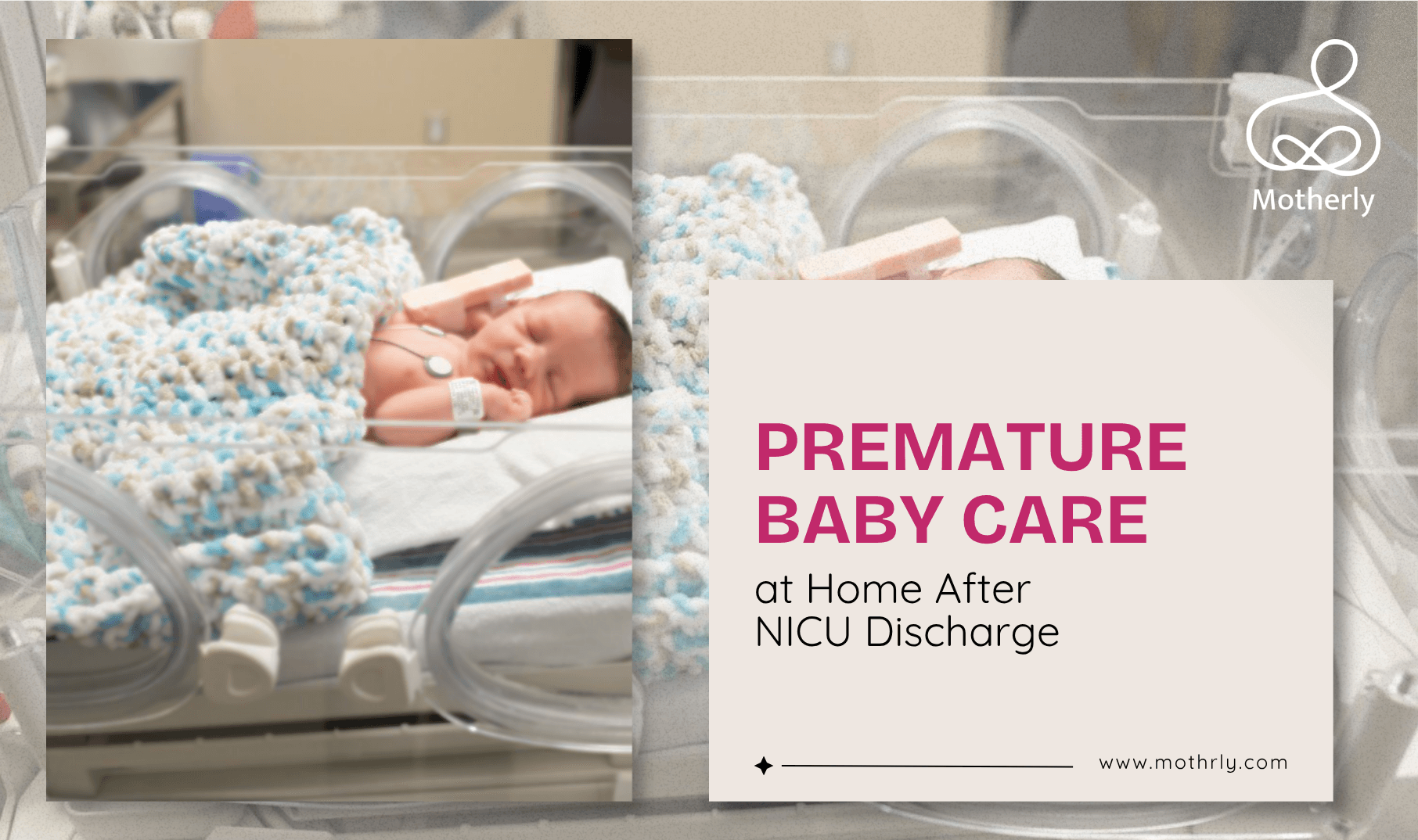
Premature baby care at home focuses on three things standard newborn care doesn't emphasise as heavily: precise temperature regulation, since preemies lose heat faster; closer feeding monitoring, since many preemies tire quickly or feed in smaller, more frequent amounts; and heightened vigilance for breathing or colour changes, especially in the weeks right after NICU discharge. In Chennai, Motherly places caregivers with specific preterm-newborn experience, not general newborn-care staff learning on the job.
Preemies often need extra help establishing a feed too — see our guide to breastfeeding problems and fixes, or book Motherly's home-based lactation support. More home-care services are listed on the Motherly homepage.
What's Different About Caring for a Premature Baby at Home?
- Corrected age — based on the original due date, not the birth date — is used to track milestones, not the calendar birth date
- More frequent, shorter feeds are common, since preemies tire faster than full-term babies
- Higher risk of jaundice and lower initial birth weight, needing closer tracking
- Typically more paediatrician follow-ups in the first months than a full-term baby
Most preemies also spend time in the NICU before coming home — our guide to NICU baby care at home covers that transition in more detail.
How Should Feeding Work for a Premature Baby?
- Feeds are often more frequent — roughly every two to three hours — and shorter in duration
- Watch for tiring mid-feed; brief pauses to rest are normal, but persistent poor intake needs review
- Breastfeeding a preemie can take longer to establish than a full-term baby — specialised lactation support helps close that gap
- Weight-gain targets are typically set individually by the paediatrician, not read off a generic newborn chart
Feeding a preemie takes different judgment calls than feeding a full-term baby.
How Do You Keep a Premature Baby Warm Enough at Home?
Premature babies have less body fat than full-term babies, so they lose heat faster and need closer temperature management — a stable, moderately warm room, appropriate layering, and avoiding cold drafts near the crib all matter more than they would for a full-term newborn.
| Kangaroo (Skin-to-Skin) Care | Why It Helps |
|---|---|
| Regulates body temperature | The parent's body naturally helps stabilise the baby's temperature |
| Supports feeding readiness | Skin-to-skin time before feeds encourages natural rooting and calm |
| Supports bonding and stress reduction | Especially valuable after a NICU stay that limited early contact |
Kangaroo care works the same way for premature twins, though logistics change — see our guide to twin baby care at home for how families manage skin-to-skin with two babies.
What Warning Signs Mean You Should Call the Paediatrician Immediately?
- Breathing pauses or an unusual breathing pattern
- A bluish tint to the lips, face, or fingertips
- Refusing multiple consecutive feeds or very weak sucking
- Fewer wet diapers than expected for their age
- Body feels unusually cool despite a normal room temperature
Get support that knows the difference between normal preemie behaviour and a real warning sign.
Frequently Asked Questions
What is 'corrected age' and why does it matter?
Corrected age adjusts a premature baby's age based on their original due date rather than their actual birth date — it's the more accurate way to track developmental milestones for the first couple of years, and most paediatricians use it rather than the calendar birth date.
Do all premature babies need NICU-trained home care?
Not always — it depends on how early the baby was born and whether there are ongoing medical needs. Our guide to NICU baby care at home in Chennai covers when that specific level of support makes sense.
When can a premature baby start regular paediatrician-recommended activities like tummy time?
Usually based on corrected age rather than actual birth date — always confirm the right timing with your paediatrician rather than following a generic newborn timeline.
Premature babies are also more likely to be part of a twin pregnancy — see our guide to twin baby care at home in Chennai, and our piece on common breastfeeding problems and fixes if feeding is still a challenge. More guidance is available on the Motherly blog.
Related Reading on the Motherly Blog
- NICU Baby Care at Home in Chennai: What Happens After Discharge
- Twin Baby Care at Home in Chennai: What Changes With Two
- Lactation Support at Home in Chennai: What Ongoing Help Looks Like
- Baby Not Latching? A Chennai Guide to Breastfeeding Problems and Fixes
⚠ Medical Disclaimer
This article is written by Mothrly's clinical team for educational purposes only. It does not constitute medical advice and must not replace consultation with a qualified healthcare professional. Individual circumstances vary — always seek personalised guidance from your doctor, gynaecologist, paediatrician, or specialist.
You Deserve Proper Care Too — Not Just Your Baby
Book online or download the app to find your verified support specialist in Chennai.