Lactation
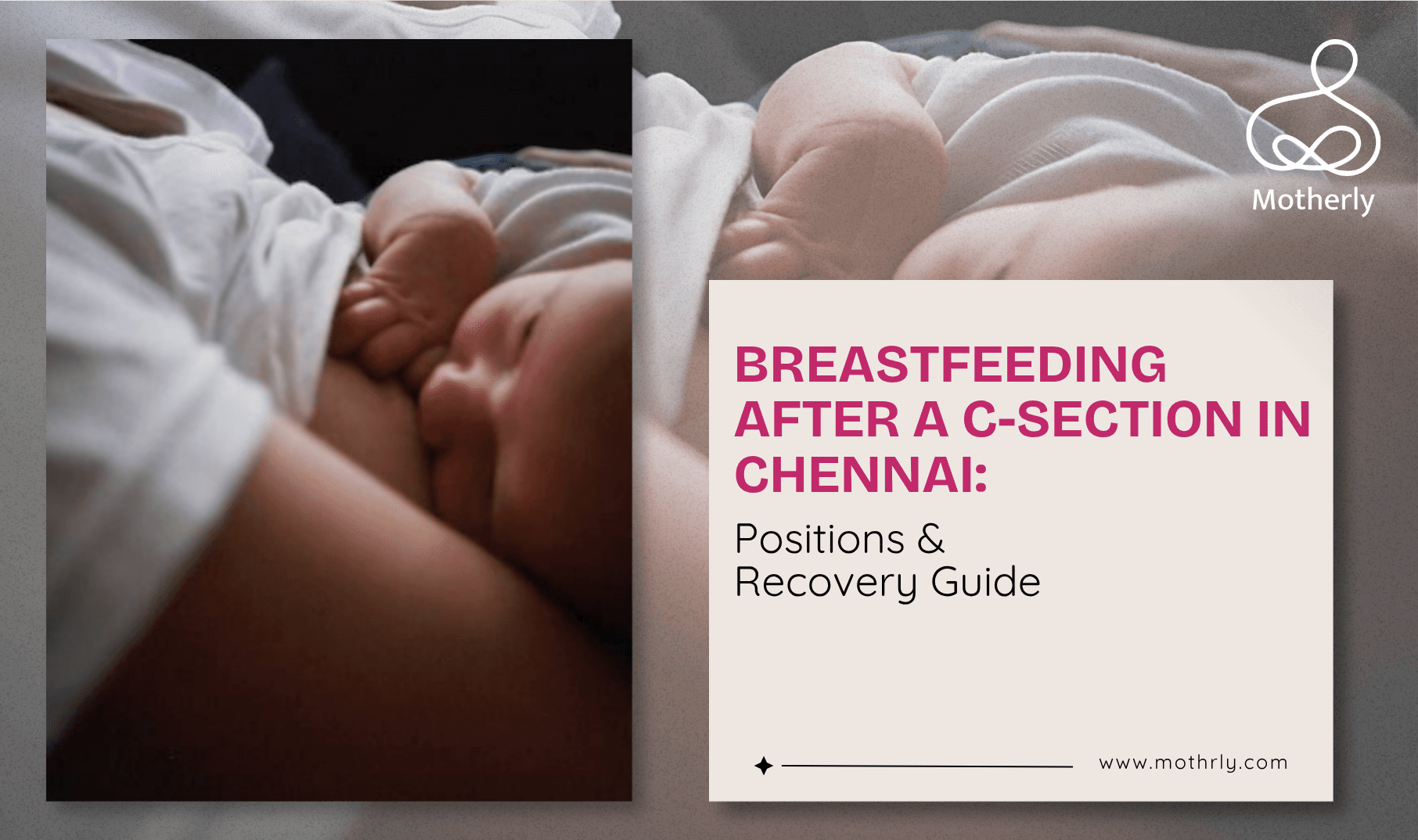
Breastfeeding After a C-Section in Chennai: Positions & Recovery Guide
Motherly Clinical Team·August 29, 2026
Reviewed by Mothrly’s Clinical Team — Obstetricians, Gynaecologists, Paediatricians & Postnatal Specialists | Evidence-based content for Chennai mothers
Most breastfeeding guides assume a vaginal delivery. This guide covers what's actually different after a C-section — the positions that protect your incision, the first 72 hours, and how to tell a latch problem from ordinary surgical pain.
India's national C-section rate rose to 27.2% in the latest National Family Health Survey, and in Tamil Nadu it runs even higher, at 46.9% — which means recovery-friendly positioning matters to a very large share of Chennai mothers. You can breastfeed just as successfully after a C-section as after a vaginal delivery — the difference is entirely in positioning around the incision, not your ability to produce milk. If you'd like hands-on help in the first days home, Motherly's home-based lactation support brings a specialist to you, so recovery and feeding don't have to compete.
Why Does a C-Section Change How You Breastfeed?
- Incision pain makes any position with weight pressing on the abdomen uncomfortable
- Delayed skin-to-skin time, if the baby needed monitoring, can push the first feed later
- IV lines, catheters, and limited mobility in the first 24 hours make sitting up repeatedly exhausting
- Milk 'coming in' can take slightly longer for some C-section mothers, particularly after an emergency procedure
None of this changes the underlying biology of supply. It changes what position and routine will actually be sustainable in week one — which is also true of the wider postnatal recovery a C-section requires; our guide to the fourth trimester covers that broader picture.
Which Breastfeeding Positions Actually Work After a C-Section?
What is the football hold, and why is it recommended first?
The football (or clutch) hold tucks the baby under your arm at your side, facing you, with their feet pointing toward your back — entirely off your abdomen. It's usually the most comfortable first position for C-section mothers.
Is side-lying breastfeeding safe after surgery?
Yes, once you're able to turn onto your side comfortably, usually within the first day or two. It lets you feed without sitting upright repeatedly, useful for night feeds when getting up is the most painful part of the routine.
| Position | Best For / Why It Works |
|---|---|
| Football hold | First 1–2 weeks — baby's weight stays off the incision entirely |
| Side-lying | Night feeds — avoids repeated sitting up |
| Laid-back (reclined) | Once mobility improves — gravity helps latch, minimal core engagement |
| Cradle hold | After 2–3 weeks, once incision discomfort has eased |
A pillow placed firmly across your lap or under the baby in any of these positions keeps pressure off the healing incision during a feed that can run 20–40 minutes.
If positioning alone isn't fixing a painful latch.
What's Different About the First 72 Hours After a C-Section?
- Skin-to-skin as early as possible, even in the recovery room, if your medical team allows it
- Pain medication and breastfeeding are generally compatible — confirm the specific drug with your obstetrician
- Frequent, short feeds (every 2–3 hours) matter more than any single 'perfect' long feed in these early days
- Ask for help getting positioned for every feed initially — a nurse or a home lactation specialist repositioning you correctly ten times in week one prevents a painful habit forming
When Is a Latch Problem Actually a Latch Problem — And Not Just Position?
Pain during feeding after a C-section is often assumed to be about the incision, when the real issue is the latch itself. Signs it's worth a proper assessment:
- Pain continues through the whole feed, not just at first latch-on
- Nipples look creased, cracked, or misshapen after feeds
- Baby seems to feed for a long time but isn't satisfied afterward
- Clicking or smacking sounds during feeding
Our detailed guide to Baby Not Latching? A Guide to Breastfeeding Problems and Fixes covers latch troubleshooting in depth if this describes what you're experiencing, and our piece on Lactation Consultant in Chennai: When to Call One and What Happens in a Visit explains when to formally bring in a specialist.
What Can Slow Milk Coming In After a C-Section?
- An emergency (unplanned) C-section, associated with a slightly later onset of full milk production than a planned one
- Significant blood loss during surgery
- A longer gap before the first breastfeed or pumping session
- Separation from the baby for monitoring in the first hours
None of these mean supply won't establish — they mean the early days may need closer support, which is where Lactation Support at Home in Chennai: What Ongoing Help Looks Like tends to make the biggest difference for C-section mothers specifically.
Recovering from surgery and learning to breastfeed at the same time is a lot for one person to manage.
Frequently Asked Questions
Does a C-section delay my milk supply permanently?
No. It can delay when milk 'comes in' by a day or so, particularly after an emergency procedure, but with frequent feeding or pumping, supply typically catches up within the first week.
Is it safe to breastfeed while on post-C-section pain medication?
Most standard pain relief prescribed after a caesarean in Indian hospitals is considered compatible with breastfeeding — confirm the specific drug and dose with your obstetrician or paediatrician.
Which position is best if I'm also recovering from a long labour before the C-section?
The football hold is usually gentlest in the first days regardless of how the delivery unfolded, since it avoids the incision entirely and doesn't require sitting fully upright.
When should I get help instead of just adjusting position at home?
If pain persists through entire feeds after two or three days of trying different positions, or if your baby isn't gaining weight as expected, that's the point to bring in a lactation specialist.
For more on the weeks that follow, see our guides to Lactation Support at Home in Chennai: What Ongoing Help Looks Like, The Fourth Trimester: A Complete Guide to Postnatal Recovery Care in Chennai, and Doula Services in Chennai: What a Doula Does for New Mothers, or browse the full Motherly blog.
Related Reading on the Motherly Blog
- Baby Not Latching? A Guide to Breastfeeding Problems and Fixes
- Lactation Support at Home in Chennai: What Ongoing Help Looks Like
- The Fourth Trimester: A Complete Guide to Postnatal Recovery Care in Chennai
- Doula Services in Chennai: What a Doula Does for New Mothers
- Breastfeeding After Returning to Work in Chennai: Pumping & Storage Guide
- Postpartum Depression and Breastfeeding Difficulties in Chennai
⚠ Medical Disclaimer
This article is written by Mothrly's clinical team for educational purposes only. It does not constitute medical advice and must not replace consultation with a qualified healthcare professional. Individual circumstances vary — always seek personalised guidance from your doctor, gynaecologist, paediatrician, or specialist.
You Deserve Proper Care Too — Not Just Your Baby
Book online or download the app to find your verified support specialist in Chennai.
Useful Resources & Guides
Keep Reading
DOULA CARE
The Complete Guide to Choosing the Right Doula for Your Birthing Journey
Choosing a doula? Learn what a doula does, how to interview candidates, check training and costs, and spot red flags be…
September 30, 2026

BREASTFEEDING
Overcoming Early Breastfeeding Challenges: Expert Advice from Lactation Consultants
Struggling with early breastfeeding? Lactation consultants explain how to fix latch problems, sore nipples, low milk wo…
September 30, 2026