Postpartum Mental Health
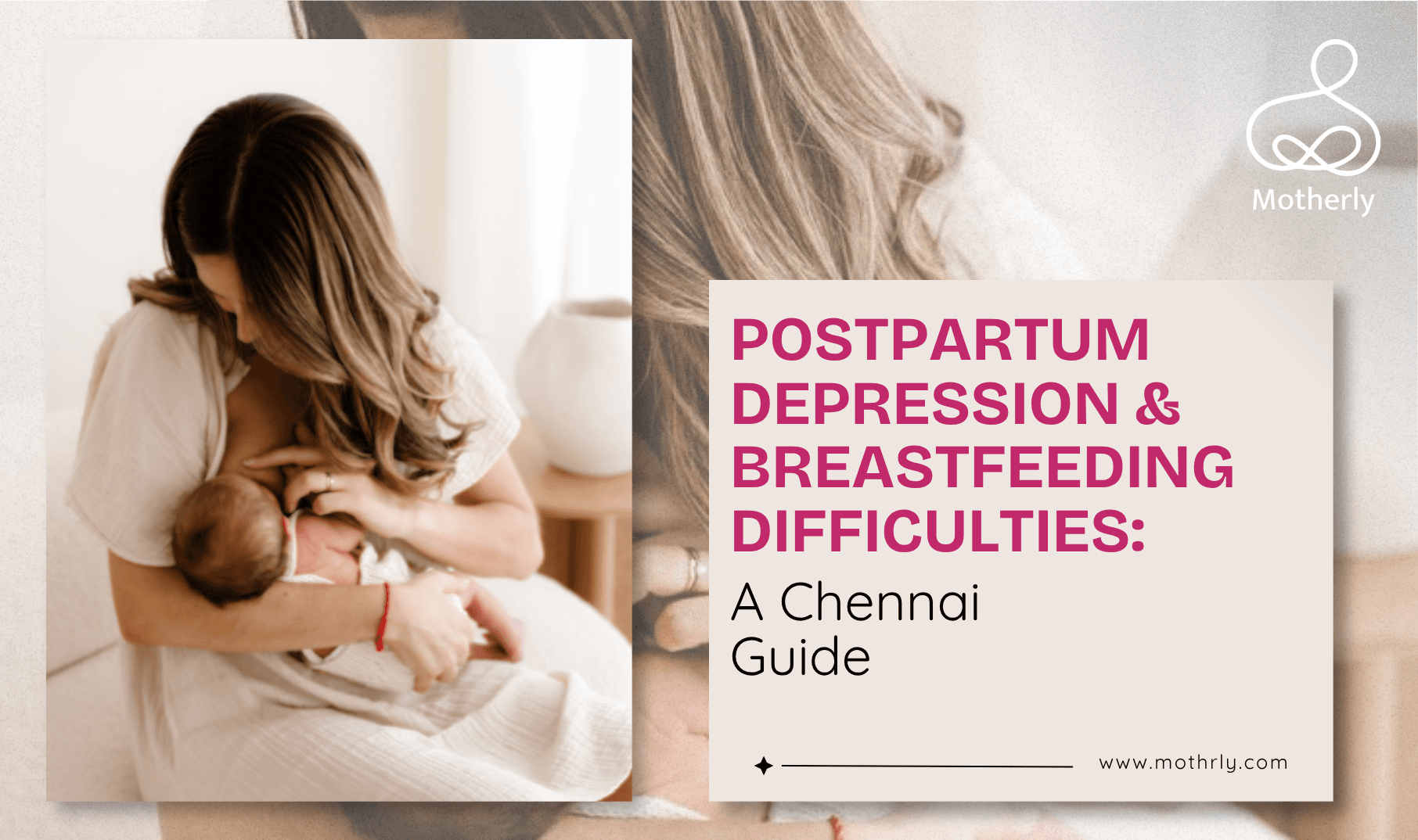
Postpartum Depression and Breastfeeding Difficulties: A Chennai Guide
Motherly Clinical Team·August 29, 2026
Reviewed by Mothrly’s Clinical Team — Obstetricians, Gynaecologists, Paediatricians & Postnatal Specialists | Evidence-based content for Chennai mothers
Struggling to breastfeed can worsen low mood, and low mood can make feeding harder. This guide looks at both sides of that cycle together, rather than treating them as unrelated problems.
A pooled analysis of Indian studies published by the WHO puts postpartum depression at around 22% of mothers nationally — meaning roughly one in five Chennai mothers navigating feeding struggles is likely also carrying some degree of postpartum depression. Breastfeeding difficulty and postpartum depression frequently reinforce each other, which means the two often need to be addressed together, not as separate problems. In Chennai, Motherly's home-based lactation support is built around that reality — a specialist who watches the feeding and asks how you're actually coping.
How Are Mood and Feeding Actually Connected?
- Breastfeeding difficulty can trigger or worsen low mood — persistent pain or repeated failed latch attempts wear down confidence fast
- Low mood and anxiety can physically affect let-down and supply — stress hormones interfere with the oxytocin response milk release depends on
- Sleep deprivation compounds both — it's a known risk factor for postpartum depression and makes feeding problems feel more overwhelming
- Guilt about not breastfeeding 'properly' is one of the most common themes when the two show up together
What Does Postpartum Depression Look Like Around Feeding, Specifically?
How is this different from ordinary new-mother exhaustion?
Some tiredness, tearfulness, and worry are expected in the first couple of weeks ('baby blues') and usually ease on their own. Signs that suggest something more, particularly around feeding, include:
- Dreading feeding sessions rather than just finding them tiring
- Persistent feelings of failure or worthlessness tied specifically to feeding struggles
- Loss of interest or pleasure in caring for the baby, not just fatigue
- Feeding difficulty accompanied by significant appetite or sleep changes beyond normal newborn disruption
- Thoughts of harm to yourself or, rarely, the baby — this always warrants immediate professional help
| Baby Blues | Possible Postpartum Depression |
|---|---|
| Passes within 1–2 weeks | Persists beyond 2 weeks |
| Mood dips but daily functioning holds | Difficulty functioning day to day |
| Comes and goes | More constant, or worsening |
| Doesn't include thoughts of self-harm | May include thoughts of self-harm — seek help immediately |
Why Does This Combination Get Missed So Often in Indian Households?
- Feeding struggles are treated as purely physical, so a lactation consultation happens while low mood goes unmentioned
- 'Adjust for the baby's sake' family messaging can make a mother reluctant to voice how low she actually feels
- Postnatal follow-up in India is often baby-focused, with the mother's own six-week check sometimes rushed or skipped
- Southern India specifically shows higher pooled postpartum depression rates in research than the northern average, yet mental health screening isn't consistently built into routine postnatal visits
If feeding feels like it's breaking you, not just tiring you out, that's worth naming out loud.
What Actually Helps on the Feeding Side?
- A proper latch and positioning assessment, since ongoing physical pain is one of the fastest ways feeding struggles erode mental wellbeing — see our guide to Baby Not Latching? A Guide to Breastfeeding Problems and Fixes
- A realistic feeding plan, including combination feeding if exclusive breastfeeding is unsustainable — a specialist can help build this without treating it as a failure
- Ongoing support rather than a single visit, so a specialist can track both feeding progress and how you're coping over several weeks — see our piece on Lactation Support at Home in Chennai: What Ongoing Help Looks Like
What Actually Helps on the Mental Health Side?
- Naming it to your obstetrician or paediatrician directly, using the words 'I think I might be depressed'
- A formal screening tool (such as the Edinburgh Postnatal Depression Scale) used by your doctor, rather than self-assessment alone
- Involving a partner or family member in daytime childcare so uninterrupted sleep is possible — see our guide to what a doula or baby care specialist can take off your plate
- Professional mental health support, which may include counselling or medication compatible with breastfeeding — a conversation for your doctor, not something to decide alone
Feeding support and emotional support work better together than either does alone.
Frequently Asked Questions
Can breastfeeding difficulty actually cause postpartum depression, or does it just make it worse?
Both patterns happen. For some mothers, feeding struggles are a significant trigger; for others, depression that begins independently makes existing feeding challenges much harder to manage.
Is it safe to take antidepressant medication while breastfeeding?
Several commonly prescribed antidepressants are considered compatible with breastfeeding, but this needs to be decided with your doctor based on the specific medication, dose, and your baby's health.
Should I stop breastfeeding if it's affecting my mental health?
Not automatically. Many mothers find that fixing the underlying feeding problem resolves much of the distress. For others, moving to combination or formula feeding is the right choice, and that is a legitimate, valid decision.
How do I bring this up if my family expects me to just 'manage'?
Speaking to your doctor or a lactation specialist privately, without needing family agreement first, is a reasonable starting point — professional support can also help you navigate the family conversation afterward.
If what you're managing feels bigger than day-to-day exhaustion, please speak with your doctor, obstetrician, or a mental health professional directly — this article is educational and isn't a substitute for that conversation.
For related reading, see our guides to Lactation Support at Home in Chennai: What Ongoing Help Looks Like, The Fourth Trimester: A Complete Guide to Postnatal Recovery Care in Chennai, and Prenatal and Postnatal Yoga in Chennai: Benefits and When to Start, or browse the full Motherly blog.
Related Reading on the Motherly Blog
- Lactation Support at Home in Chennai: What Ongoing Help Looks Like
- Baby Not Latching? A Guide to Breastfeeding Problems and Fixes
- The Fourth Trimester: A Complete Guide to Postnatal Recovery Care in Chennai
- Breastfeeding After a C-Section in Chennai: Positions & Recovery Guide
- Breastfeeding After Returning to Work in Chennai: Pumping & Storage Guide
- Prenatal and Postnatal Yoga in Chennai: Benefits and When to Start
⚠ Medical Disclaimer
This article is written by Mothrly's clinical team for educational purposes only. It does not constitute medical advice and must not replace consultation with a qualified healthcare professional. Individual circumstances vary — always seek personalised guidance from your doctor, gynaecologist, paediatrician, or specialist.
You Deserve Proper Care Too — Not Just Your Baby
Book online or download the app to find your verified support specialist in Chennai.
Useful Resources & Guides
Keep Reading

DOULA CARE
The Complete Guide to Choosing the Right Doula for Your Birthing Journey
Choosing a doula? Learn what a doula does, how to interview candidates, check training and costs, and spot red flags be…
September 30, 2026

BREASTFEEDING
Overcoming Early Breastfeeding Challenges: Expert Advice from Lactation Consultants
Struggling with early breastfeeding? Lactation consultants explain how to fix latch problems, sore nipples, low milk wo…
September 30, 2026