Pediatrics
Your Baby's First Paediatrician Visit: What to Expect and How to Prepare
Motherly Team·September 30, 2026
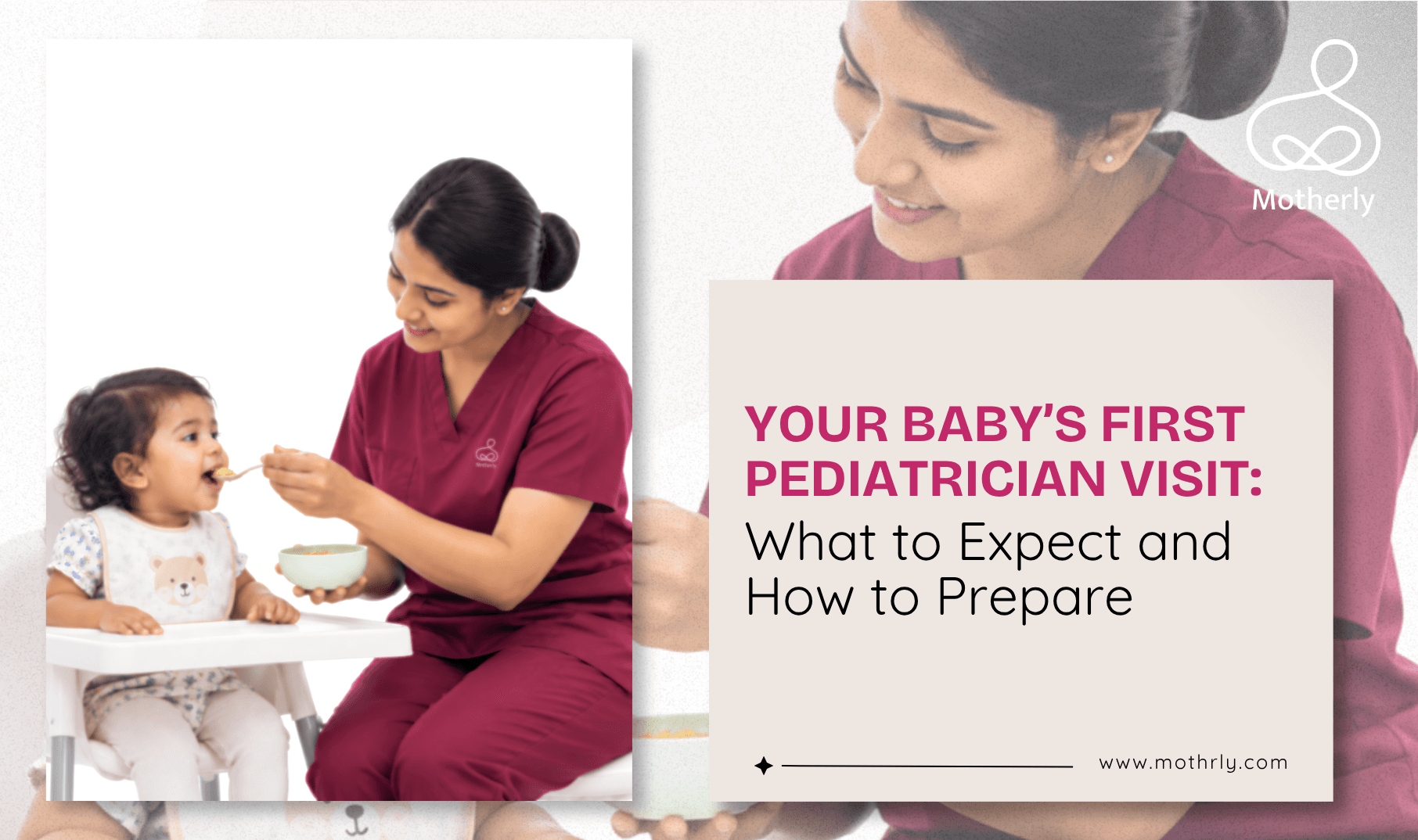
Your baby’s first paediatrician visit is an important step in those early weeks. After the early days of birth and settling in at home, you finally get a professional set of eyes on your baby, along with answers to the many questions running through your mind. It can feel a little nerve-racking, especially if you are a first-time parent. Knowing what to expect makes the appointment far easier and far more useful.
Here is a practical guide to preparing for and getting the most out of this important visit.
Key Takeaways:
- Schedule the first visit within three to five days of birth.
- Bring documents, feeding supplies, and a written list of questions and diaper and feed logs.
- Expect weight, measurements, a head-to-toe exam, and a jaundice and feeding check.
- Losing up to 7 to 10 percent of birth weight early on is normal.
- Call the doctor sooner for fever, poor feeding, or breathing trouble.
Need a paediatrician for your newborn?
Book a consultation with an experienced doctor.
When Is the First Visit?
Most babies have their first paediatrician visit within three to five days after birth, often within 48 hours of leaving the hospital. Some babies may need to be seen sooner, especially if they are breastfed, born prematurely, have jaundice, or experienced complications during birth. Your hospital or birth centre will usually tell you when to schedule the visit. If they do not provide a date, contact your paediatrician's office to arrange an appointment.
This early check is important because newborns can change quickly. Feeding, weight, and jaundice are all closely watched in these first days.
Choosing a Paediatrician Before Birth
Ideally, you'll have chosen a paediatrician before your baby arrives. Ask friends, your obstetrician, or your midwife for recommendations, and consider:
- Location and clinic hours
- Availability for urgent questions or after-hours advice
- Approach to feeding, sleep, and vaccination
- Whether you feel heard and comfortable
Many paediatricians offer a free "meet and greet" visit during pregnancy, which is a great way to find the right fit.
How to Prepare
A little preparation goes a long way when you are sleep-deprived and managing a newborn. What to bring:
- Your baby's birth details and any hospital discharge papers
- Insurance card, ID, and any registration forms
- Vaccination record, if your baby received any in the hospital
- A list of medications you are taking, especially if breastfeeding
- Diapers, wipes, a change of clothes, and a spare outfit in case of spills
- Feeding supplies such as a bottle, formula, or a nursing cover
- A blanket and a pacifier if your baby uses one
- A notebook or your phone for notes
Track before you go:
- How often your baby feeds and for how long
- Number of wet and dirty diapers each day
- Sleep patterns and any unusual fussiness
- Any concerns, such as skin changes, breathing sounds, or feeding trouble
Write down your questions. With so much going on, it is easy to forget them once you're in the room. Jot them down as they come up during the week.
What Happens During the Visit
Every clinic is a little different, but the visit generally follows this pattern.
1. Weight, Length, and Head Circumference
Your baby will be weighed, measured, and have their head circumference recorded. It is normal for newborns to lose up to about 7 to 10 per cent of their birth weight in the first few days. Most regain it by around 10 to 14 days. The paediatrician will plot these measurements on a growth chart to track your baby's development over time.
2. A Full Head-to-Toe Examination
The doctor will gently check your baby from top to bottom. This typically includes:
- Head and fontanelles: the soft spots on the skull
- Eyes, ears, nose, and mouth: including checking the palate and looking for signs of tongue-tie
- Heart and lungs: listening for normal rhythm and breathing
- Abdomen and umbilical stump: checking for tenderness and healing
- Hips: a gentle movement to screen for hip dysplasia
- Genitals and skin: including checking for rashes and jaundice
- Reflexes and muscle tone: such as the startle, rooting, and grasp reflexes
Most findings, such as baby acne, birthmarks, or peeling skin, are harmless and temporary. The doctor will let you know if anything needs follow-up.
3. Jaundice Check
Mild jaundice is common in the first week. The paediatrician will look at your baby's skin and eyes and may order a bilirubin test if needed. Frequent feeding helps clear jaundice, so keep feeds regular.
4. Feeding Assessment
Expect questions about how feeding is going and whether you are breastfeeding or formula feeding. The doctor may ask about latch, frequency, diaper counts, and your baby's energy between feeds. If you are struggling, this is the perfect time to ask for help or a referral to a lactation consultant.
5. Newborn Screening and Vaccinations
Your baby may have newborn screening tests, including a heel-prick blood test, hearing screening, and a heart screening, often done at the hospital. The paediatrician will confirm these were completed or arrange them if not.
Some vaccines, such as the first dose of hepatitis B, are usually given at birth. The doctor will review your baby's schedule and explain what comes next. Vaccination schedules vary by country, so follow the guidance from your local health authority.
6. Guidance on Sleep, Safety, and Care
Expect practical advice on safe sleep, which includes placing your baby on their back on a firm, flat surface with nothing loose in the crib. You'll also likely discuss car seat use, cord care, bathing, and how to handle fevers. Ask whether and when to give vitamin D drops, which are commonly recommended for breastfed babies.
Questions Worth Asking
If you're unsure what to raise, consider these:
- Is my baby's weight gain on track?
- How often should I feed, and how do I know it's enough?
- What temperature counts as a fever, and when should I call you?
- How should I care for the umbilical cord and circumcision site, if applicable?
- What symptoms should send me to the emergency room?
- When is the next appointment?
- How can I reach you after hours?
Taking Care of Yourself, Too
Paediatricians often check in on the parents as well. Be honest about how you're feeling. If you're overwhelmed, tearful, or anxious beyond the usual newborn adjustment, say so. Postpartum mood changes are common and treatable, and your paediatrician can point you toward support.
When to Call the Doctor Before the Appointment
Don't wait for the scheduled visit if your baby:
- Has a fever of 38°C (100.4°F) or higher, especially under three months
- Is unusually sleepy and hard to wake for feeds
- Refuses to feed repeatedly
- Has fewer wet diapers than expected
- Shows yellowing that seems to be spreading or deepening
- Has trouble breathing, a bluish tinge, or persistent vomiting
When in doubt, call. It is always better to ask.
Have questions about feeding after your visit?
Speak to a lactation expert at home.
You Deserve Proper Care Too — Not Just Your Baby
Book online or download the app to find your verified support specialist in Chennai.
Free to download · Android & iOS · Book in under 2 minutes · mothrly.comFrequently Asked Questions
1. How long does the first paediatrician visit take?
Plan for 30 to 60 minutes, including paperwork, measurements, and the exam. Allow extra time for questions, feeding, and diaper changes.
2. Should both parents attend?
It's not required, but having both present can help. One parent can focus on asking questions while the other holds the baby or takes notes.
3. What if my baby cries throughout the exam?
This is completely normal. Newborns often protest being undressed and handled. Paediatricians are used to it and can still complete a thorough exam. A pacifier, a feed, or a soothing voice can help.
4. My baby has lost weight since birth. Should I worry?
A drop of up to about 7 to 10 per cent in the first few days is expected. Your paediatrician will monitor whether weight is being regained on schedule and advise if extra feeding support is needed.
5. How often will we visit the paediatrician in the first year?
Schedules vary, but babies are commonly seen in the first week, then around 1, 2, 4, 6, 9, and 12 months for checkups and vaccinations. Your doctor will give you a personalised schedule.
Related Reads
- Pediatrician Consultation. Book a consultation with an experienced paediatrician.
- Baby's First Month Paediatrician Visit. What the first month of checkups looks like.
- Pediatrician Consultation in Chennai. How to choose and consult a paediatrician locally.
- Lactation Consultants. Get help with feeding concerns raised at the visit.
- Newborn Care in the First Days. Simple guidance for the early days at home.
Useful Resources & Guides
Keep Reading
DOULA CARE
The Complete Guide to Choosing the Right Doula for Your Birthing Journey
Choosing a doula? Learn what a doula does, how to interview candidates, check training and costs, and spot red flags be…
September 30, 2026

BREASTFEEDING
Overcoming Early Breastfeeding Challenges: Expert Advice from Lactation Consultants
Struggling with early breastfeeding? Lactation consultants explain how to fix latch problems, sore nipples, low milk wo…
September 30, 2026